Four hours in the city; add the volcano for the full day
🧢
Bring: Water and a Hat
Ancient Rome provides almost no shade
🌋
The Pairing: Vesuvius
Buses climb from Ercolano or Pompei to the crater walk
🧭 Why Visit
Walk streets frozen mid-morning in 79 AD, bakeries with ovens loaded, frescoes still red on the walls, ruts worn by cart wheels, then climb the volcano that did it and look into the crater. No site on earth collapses two thousand years like this one.
🏛️ A Little History
Vesuvius buried Pompeii under six meters of ash in a single day; rediscovery began in 1748 and rewrote how Europe understood antiquity. The Grand Tour, Neoclassicism, and modern archaeology all trace lines back to these excavations.
💡 Did You Know?
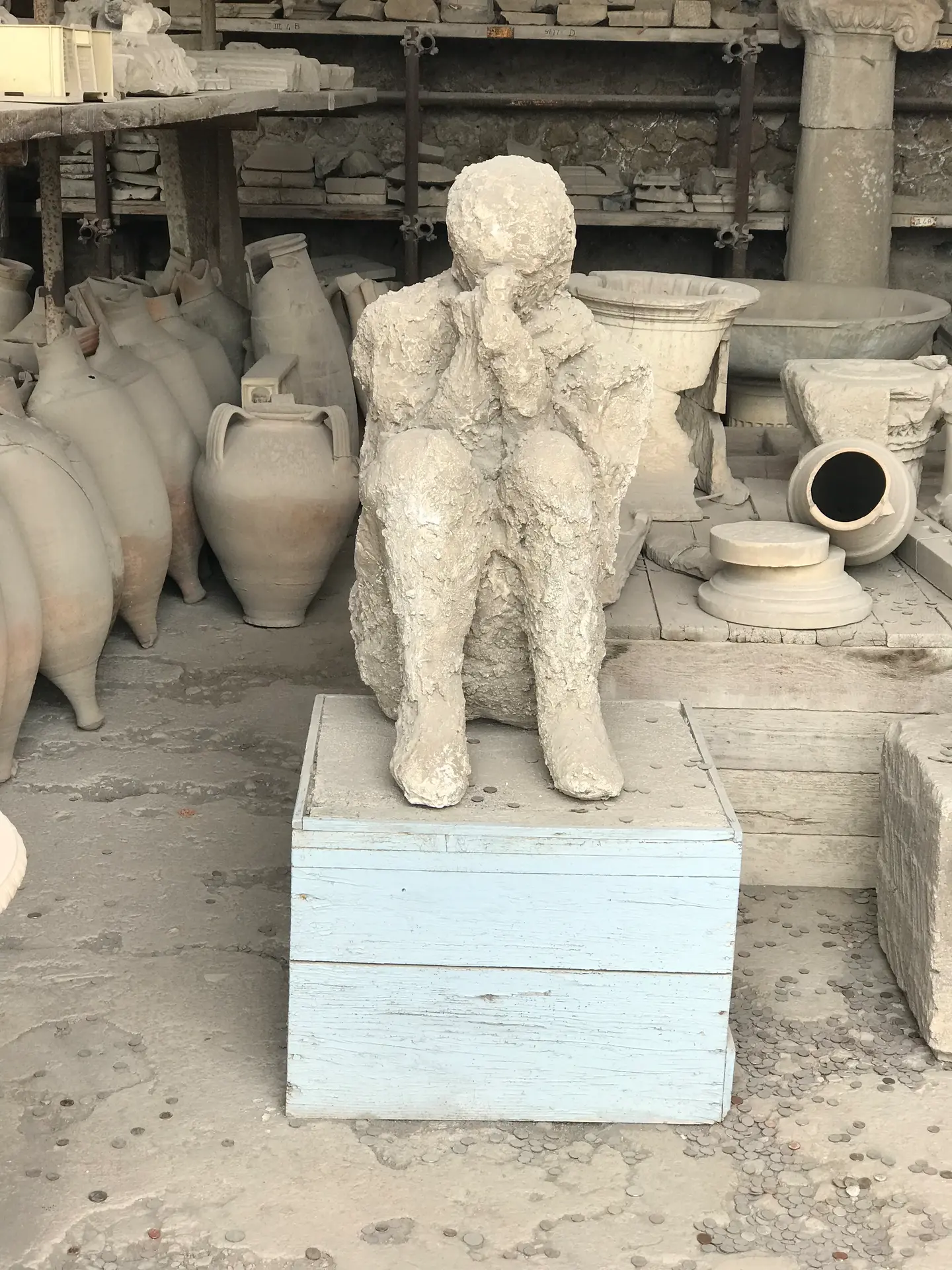
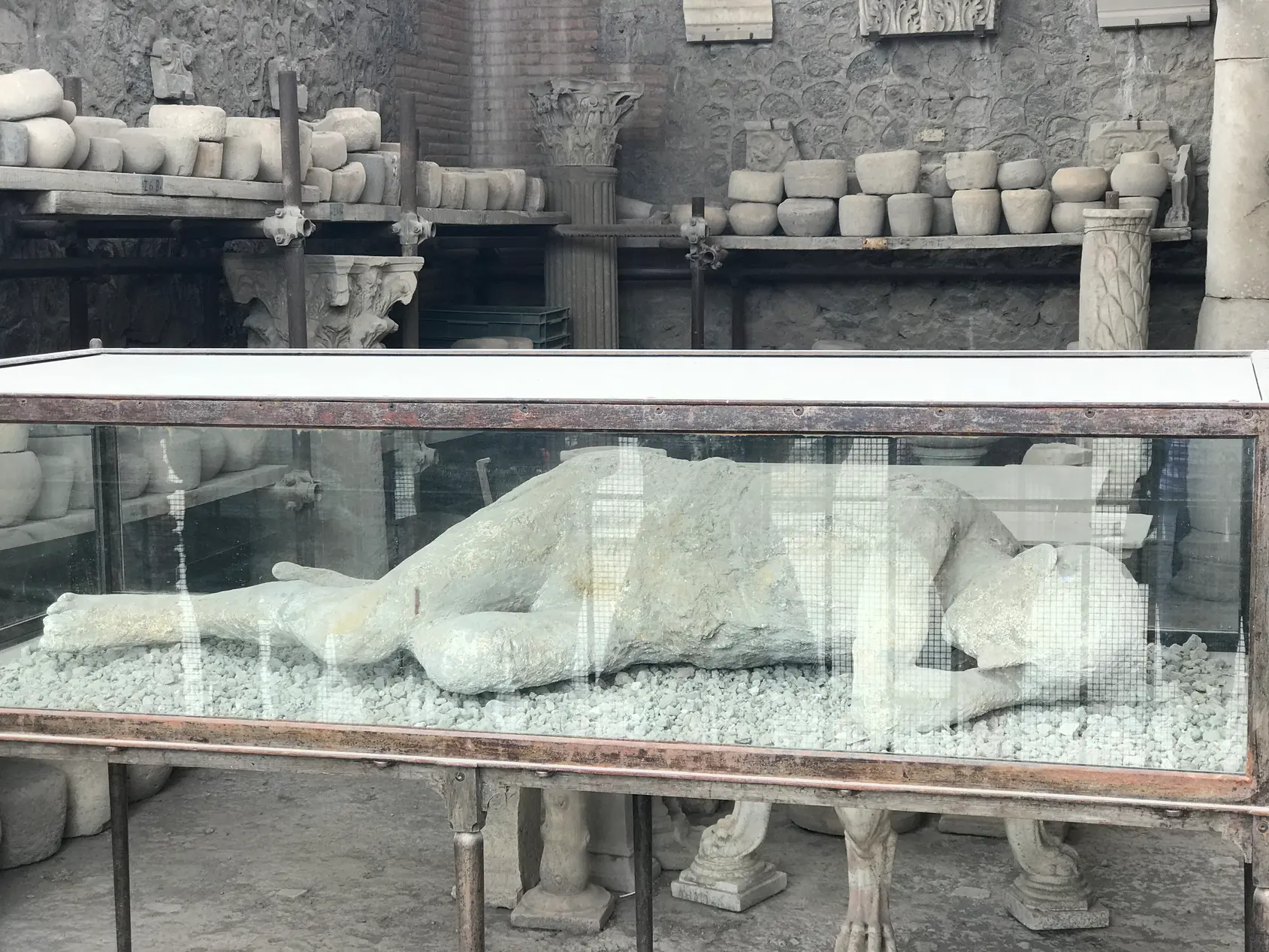
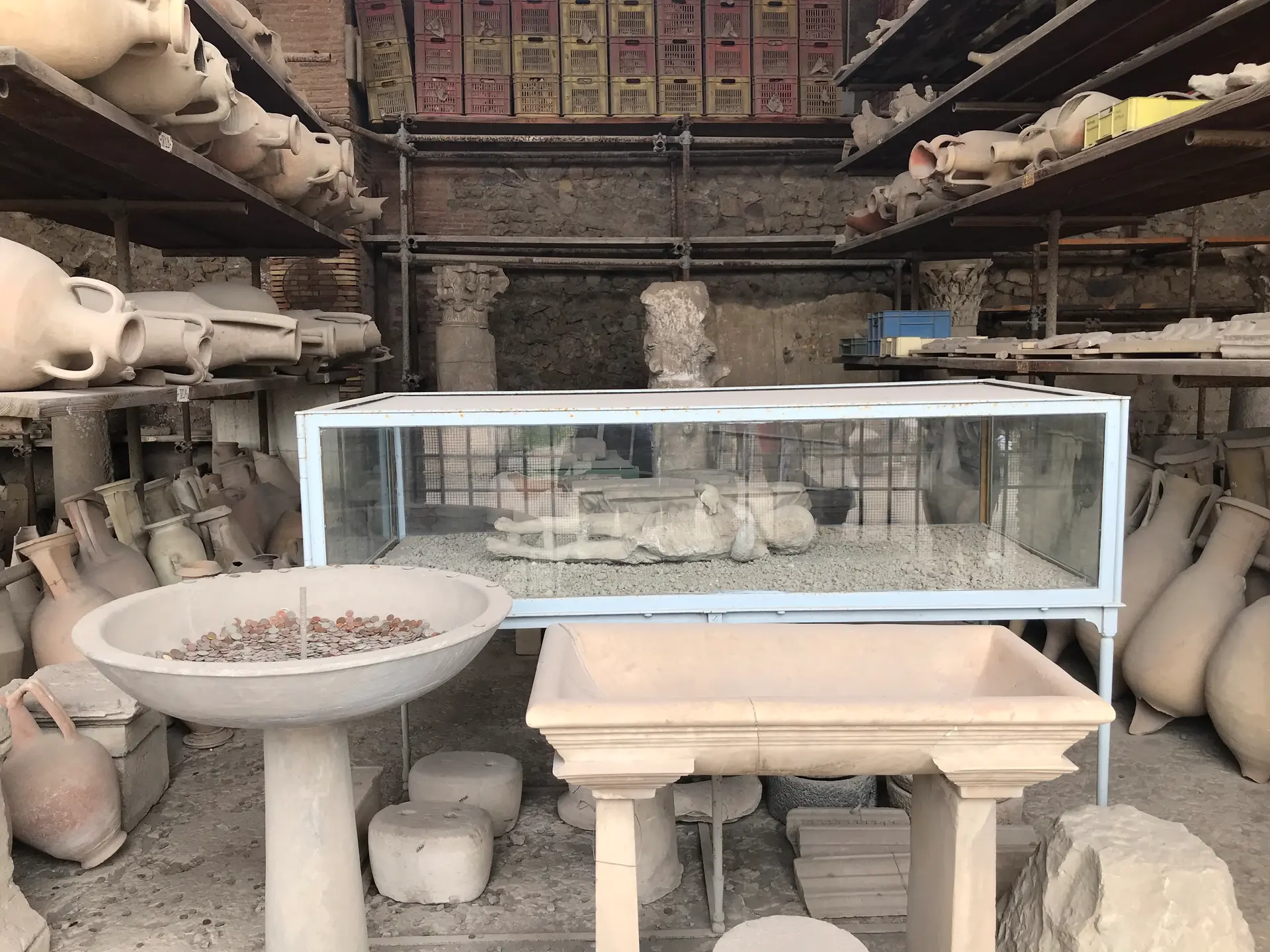
The famous 'bodies' are plaster casts. Excavators found voids where victims decomposed in the hardened ash and filled them, capturing final gestures. About a third of the city is still unexcavated, deliberately left for future archaeologists with better tools.
Where to stay nearby
🛏️ Base for the Buried Cities
Sleep in Naples or Sorrento and both sites sit on your train line; stay near modern Pompei only if dawn-gate ambitions outrank…
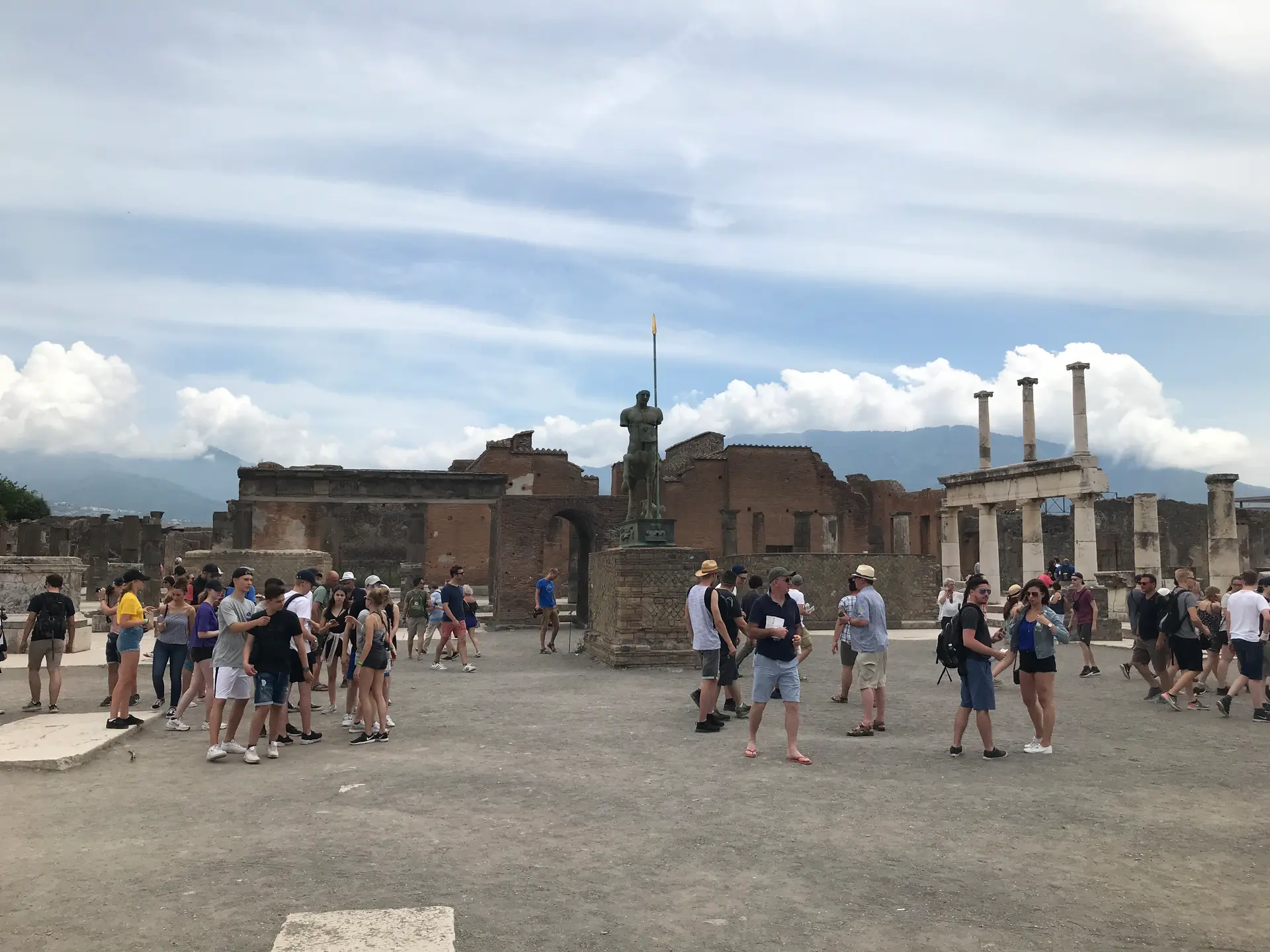
The square Pompeii was built around, and the mountain standing at the end of it.
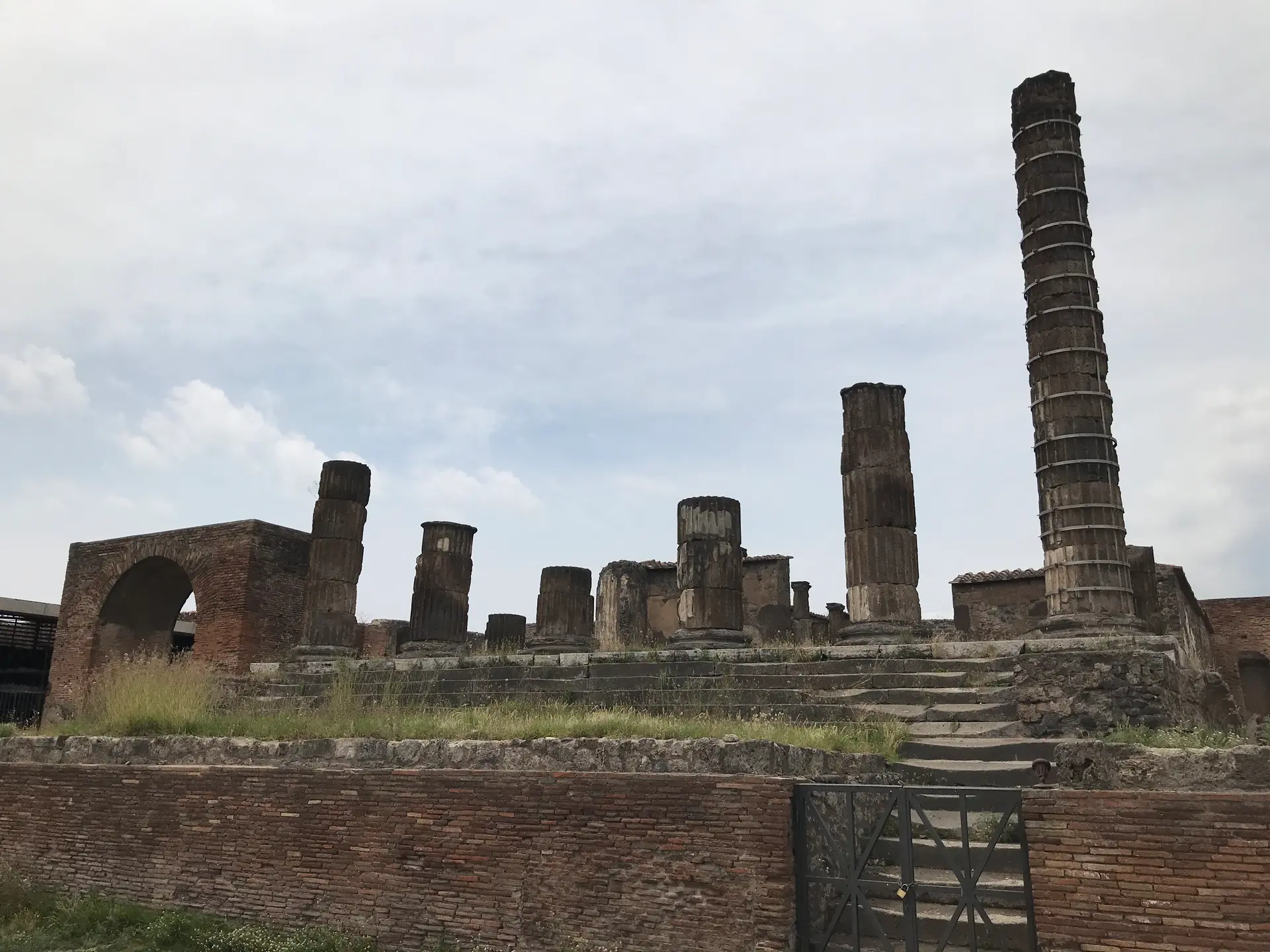
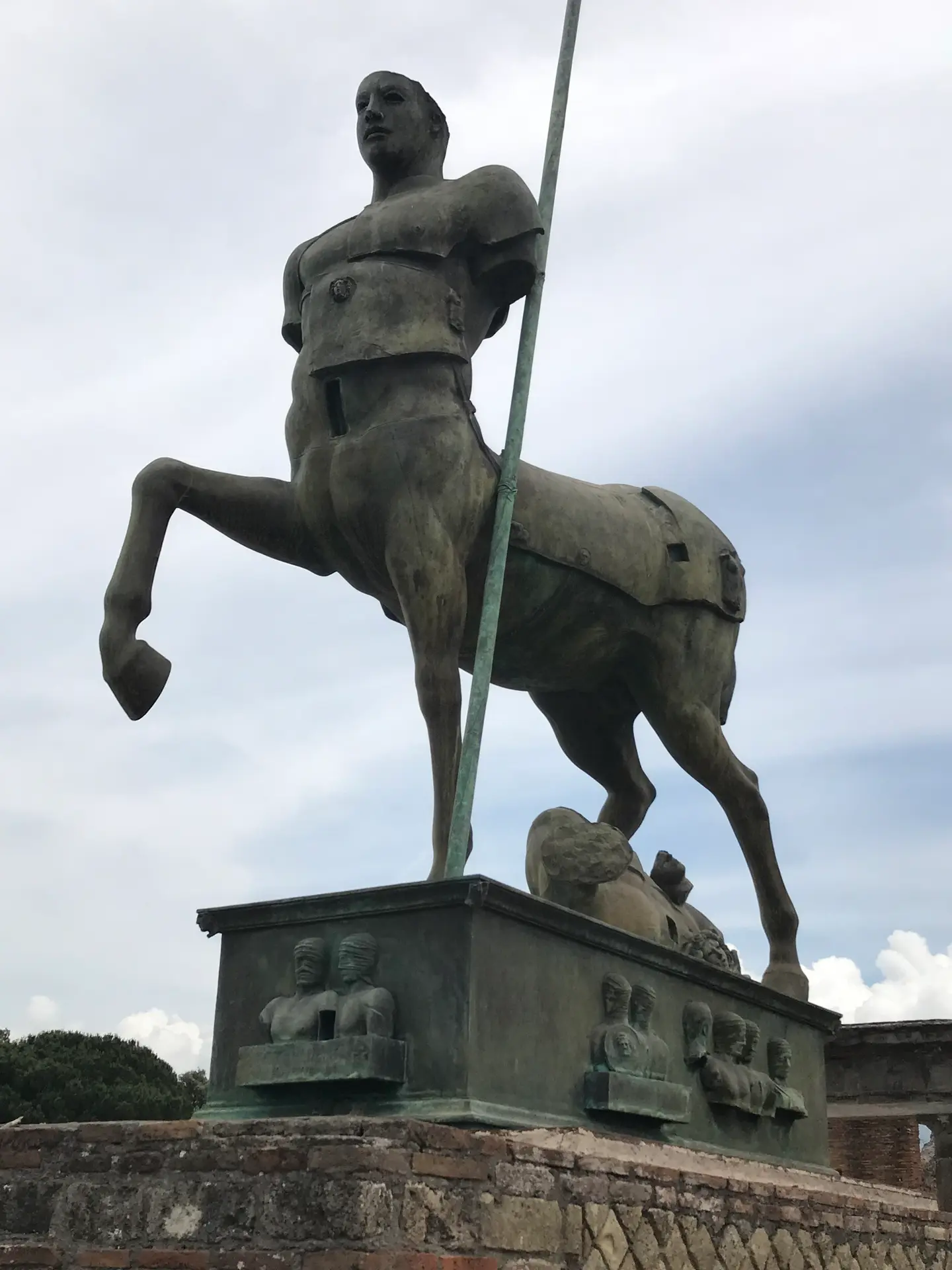
The Forum and the MountainVesuvius closes the north end of the forum, which is the whole story of this city in one view. The crowd is the June afternoon crowd; the site takes about two and a half million visitors a year and there is no honest way to photograph this square empty.The Temple of JupiterThe temple platform at the head of the forum, its columns broken off at different heights. It was still under repair from the earthquake of 62 AD when the eruption came seventeen years later.The CentaurIgor Mitoraj's bronze Centauro, one of a group of the sculptor's works brought into the excavations and left standing here. Modern, and clearly so, but it holds the forum better than anything else in it.
The People
The Casts
Not bodies. Voids in the hardened ash, filled with plaster, holding the shape of the last moment.
Hands at the FaceA seated figure with both hands raised to the face. The excavators found a cavity where the body had decomposed inside the set ash and poured plaster into it, and this is what came out.The Reclining FigureA second cast, laid out full length in a glass case. The technique dates from 1863 and it is the reason Pompeii feels different from every other ruin.Kept Among the AmphoraeThe casts are stored in the Granai del Foro, the forum granary, on shelves and trestles between rows of amphorae and stacked marble. It is a storeroom, not a shrine, and the ordinariness of it is startling.
The Grand House
The House of the Faun
A mansion filling a whole city block, begun in the second century BC.
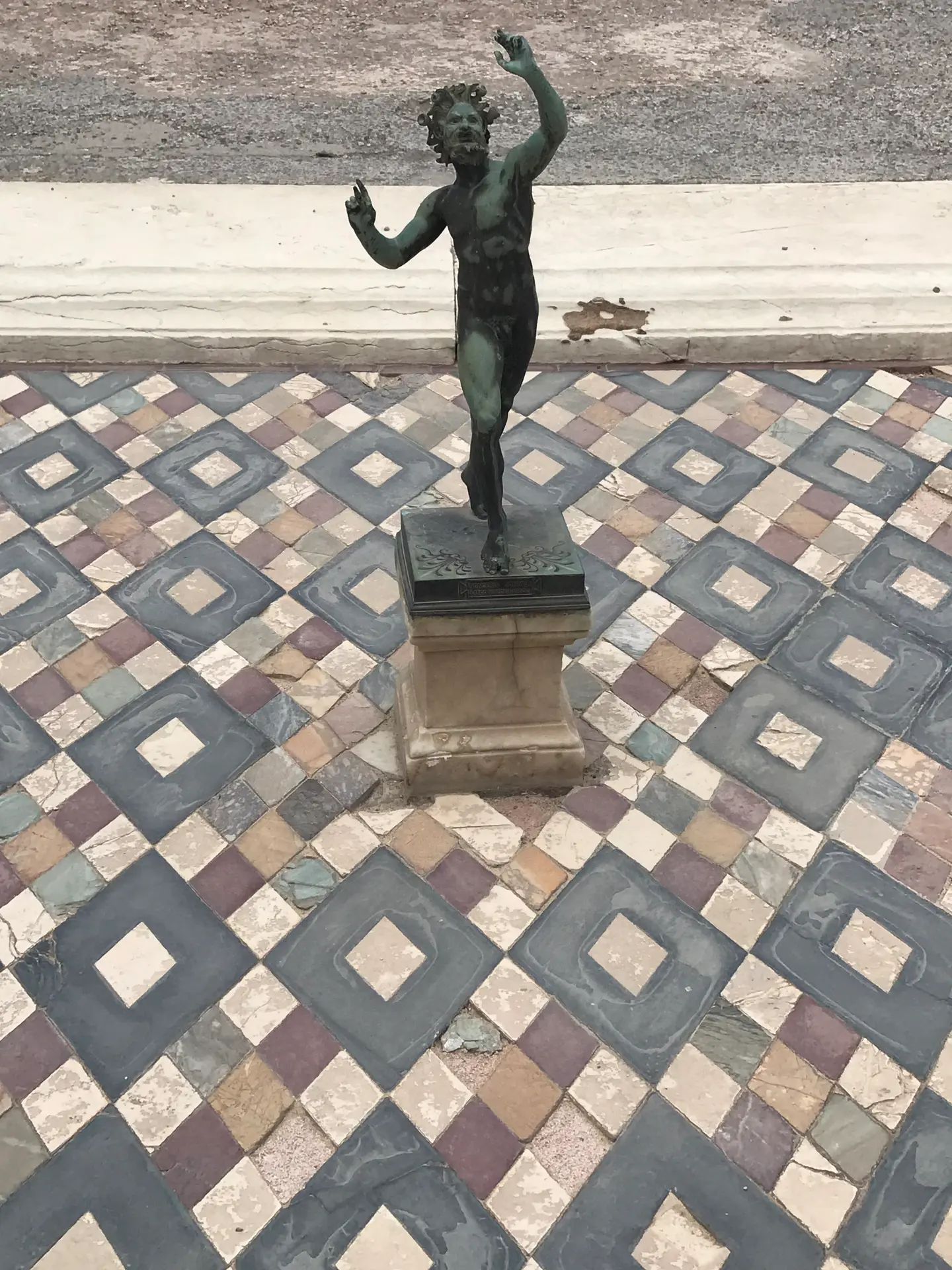
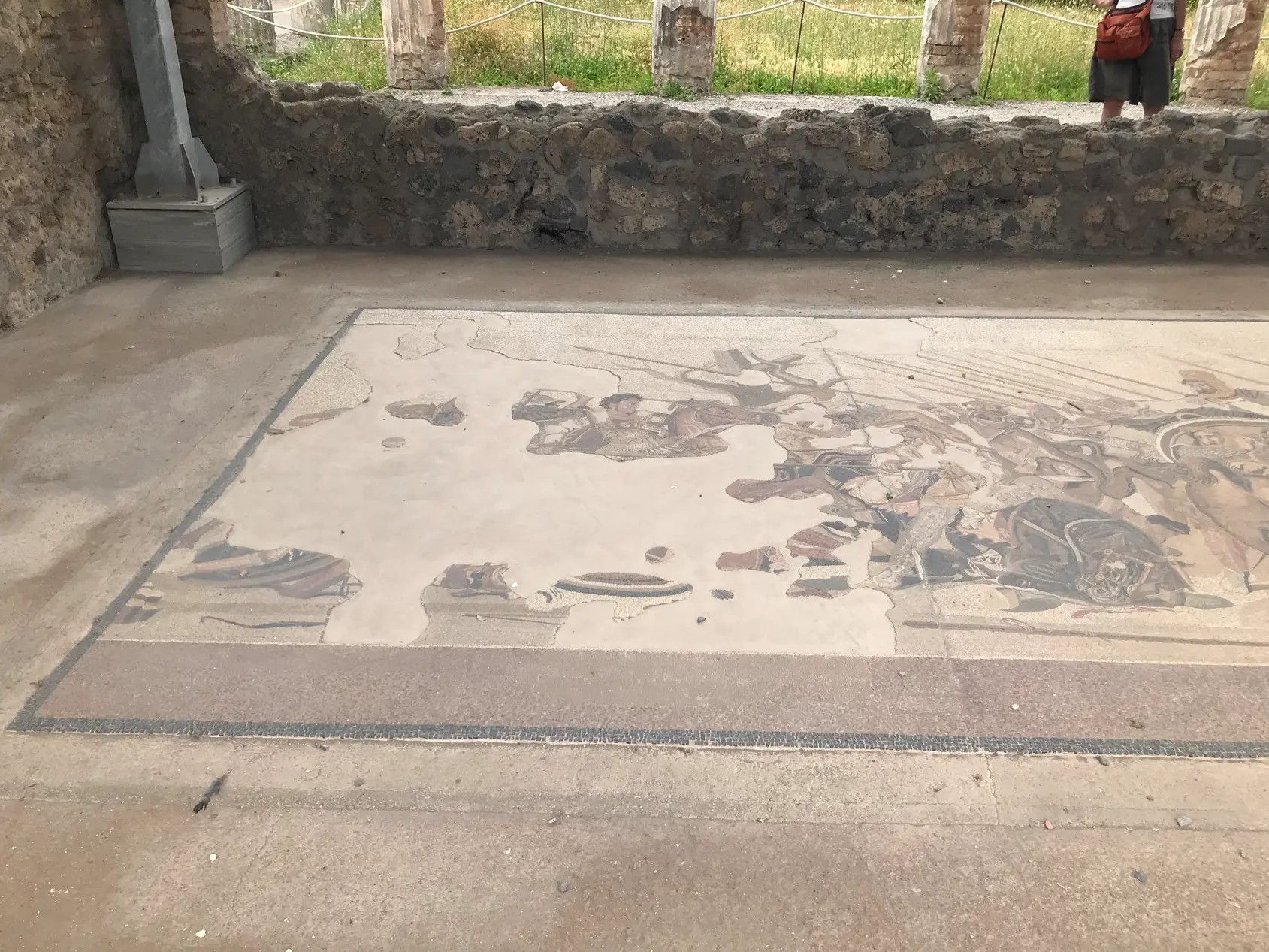
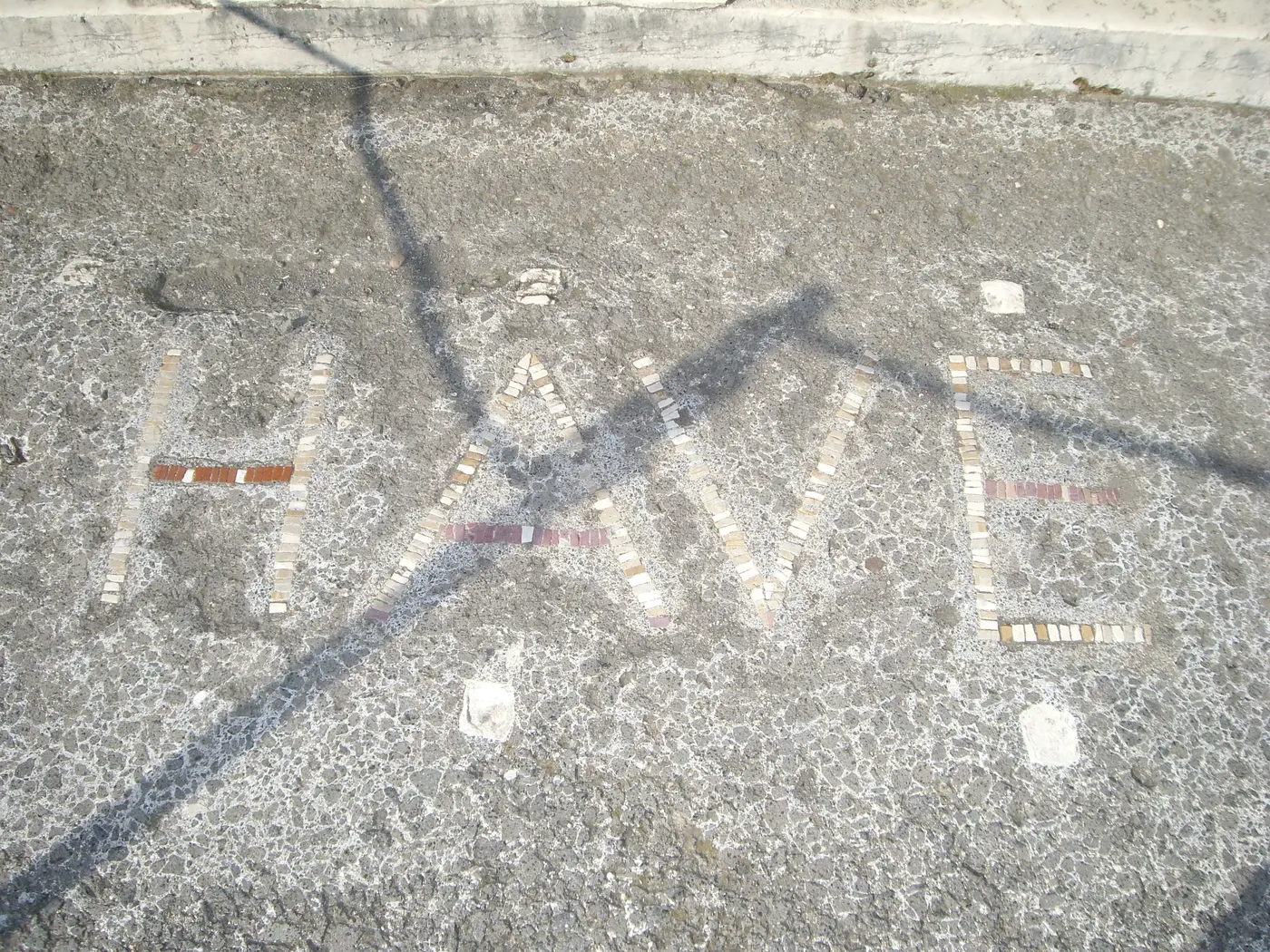
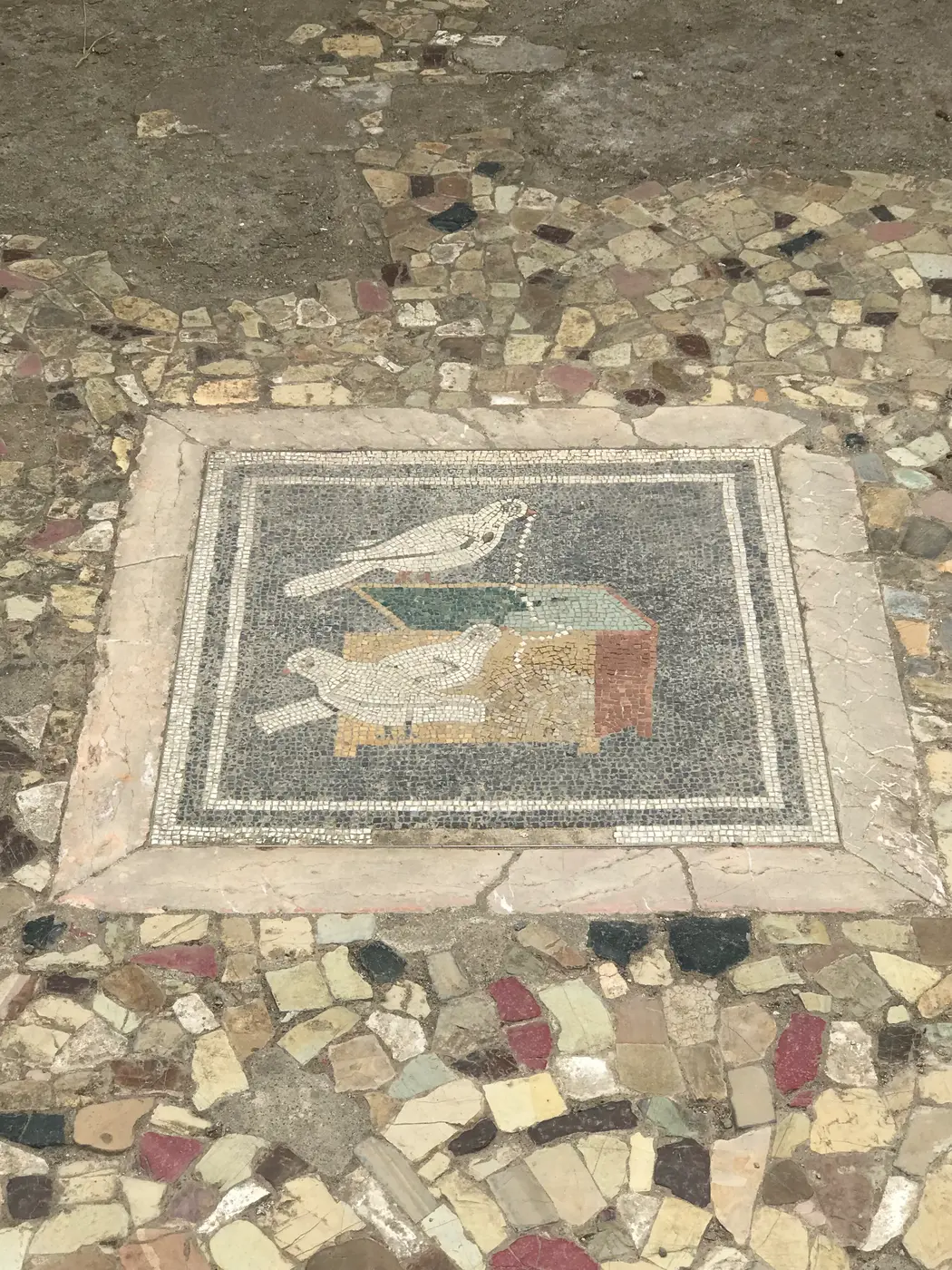
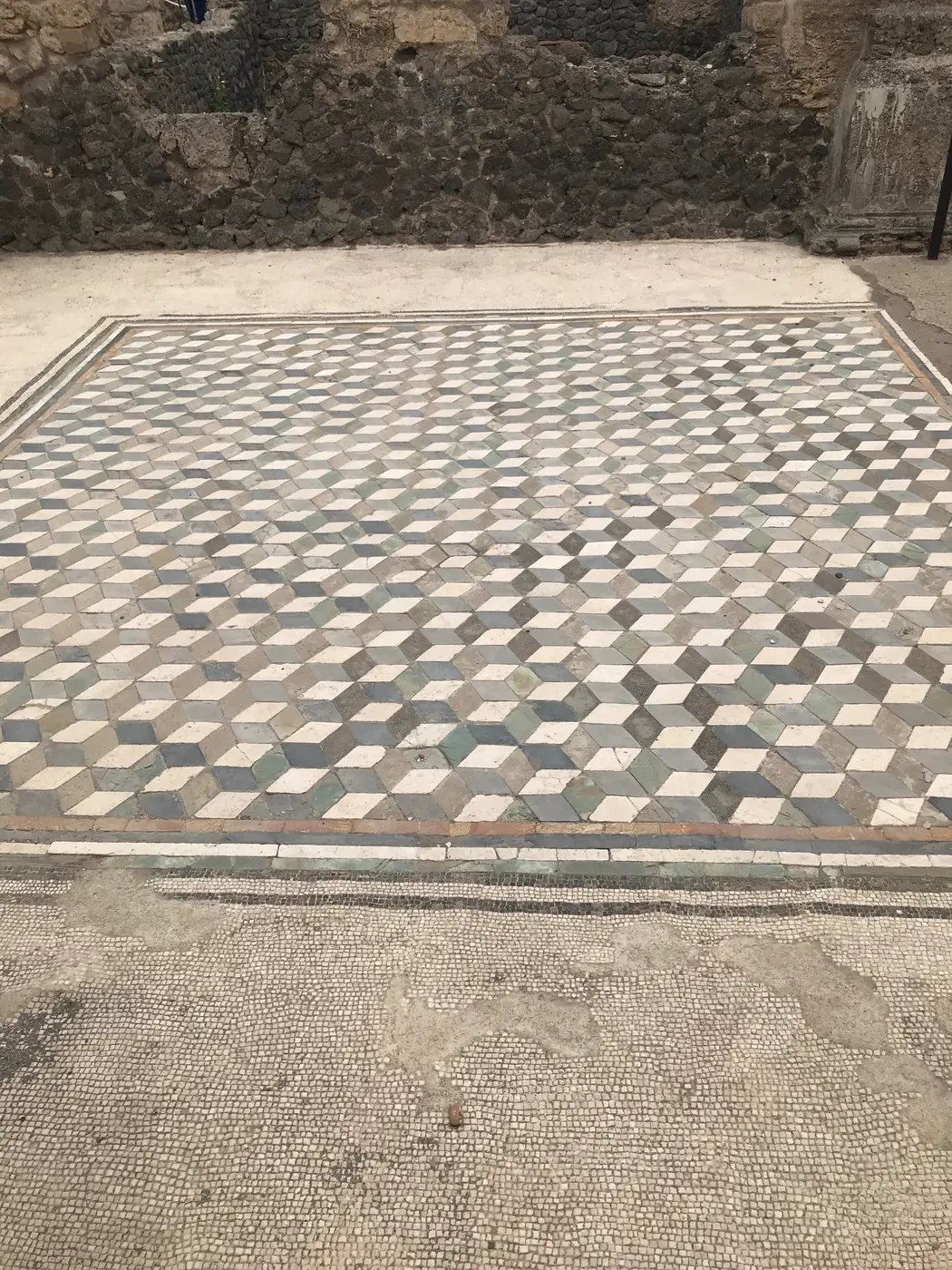
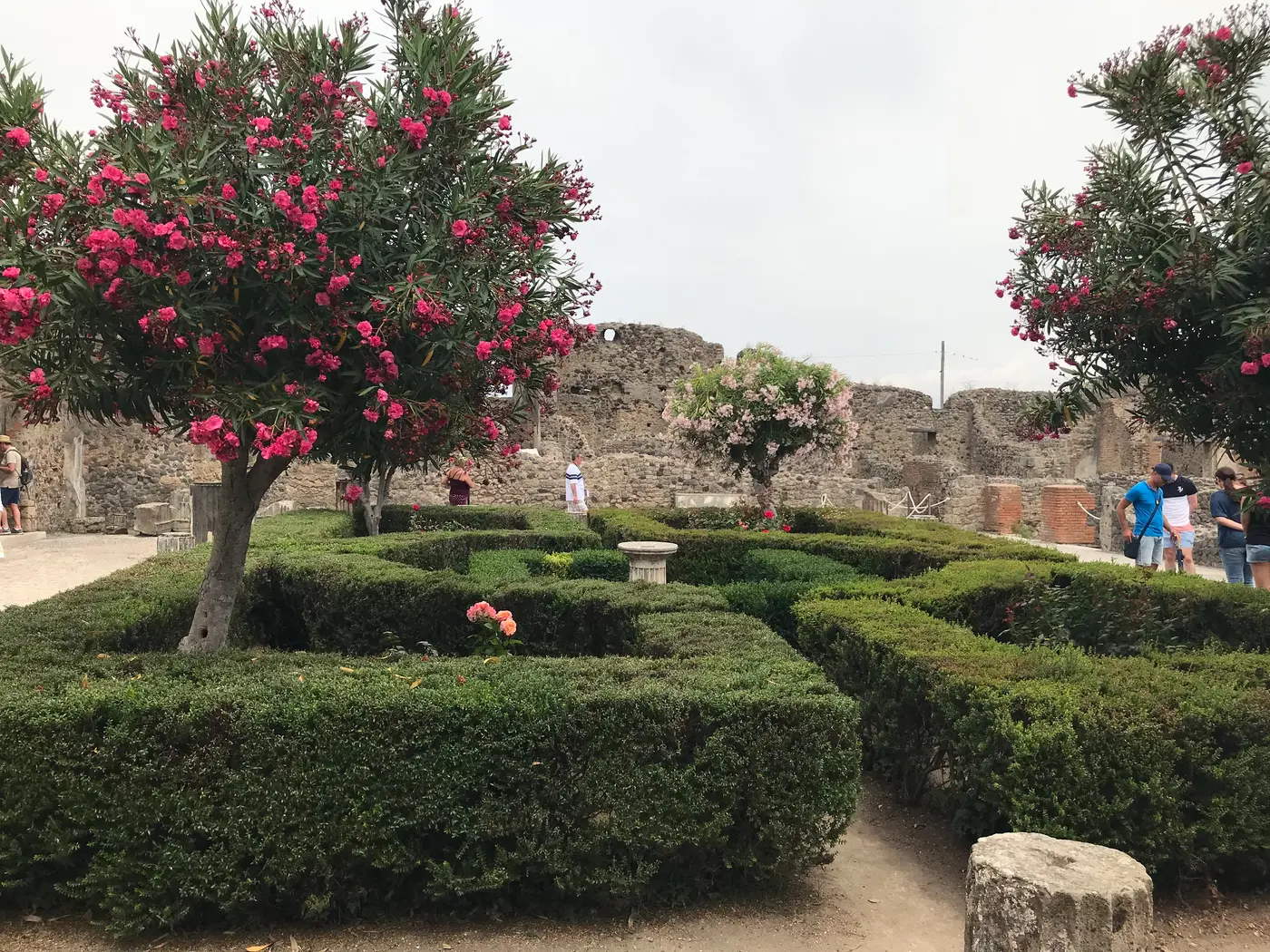
The Dancing FaunThe bronze that gave the house its name, arms flung up mid-step, standing in the impluvium on a floor of coloured marble lozenges. The one here is a copy. The original is in the archaeological museum in Naples.The Alexander MosaicAlexander charging Darius at Issus, something over a million tesserae, laid in the floor of the exedra. This is a reproduction laid in place. The original came up in 1831 and is in Naples.HAVEThe word means welcome, set into the pavement at the front door in coloured stone. Captured on a November afternoon in 2006.The Bird PanelA small emblema of birds at a dish, dropped into a surround of coloured marble offcuts cut into irregular shapes.Cubes UnderfootColoured stone cut so that a flat floor reads as a field of solid cubes. The trick is two thousand years older than the op art it looks like.The GardenOleander and clipped box in the peristyle, planted in the modern era over the house's own garden beds.
Underfoot
Mosaics and Floors
The floors survived better than almost anything above them.
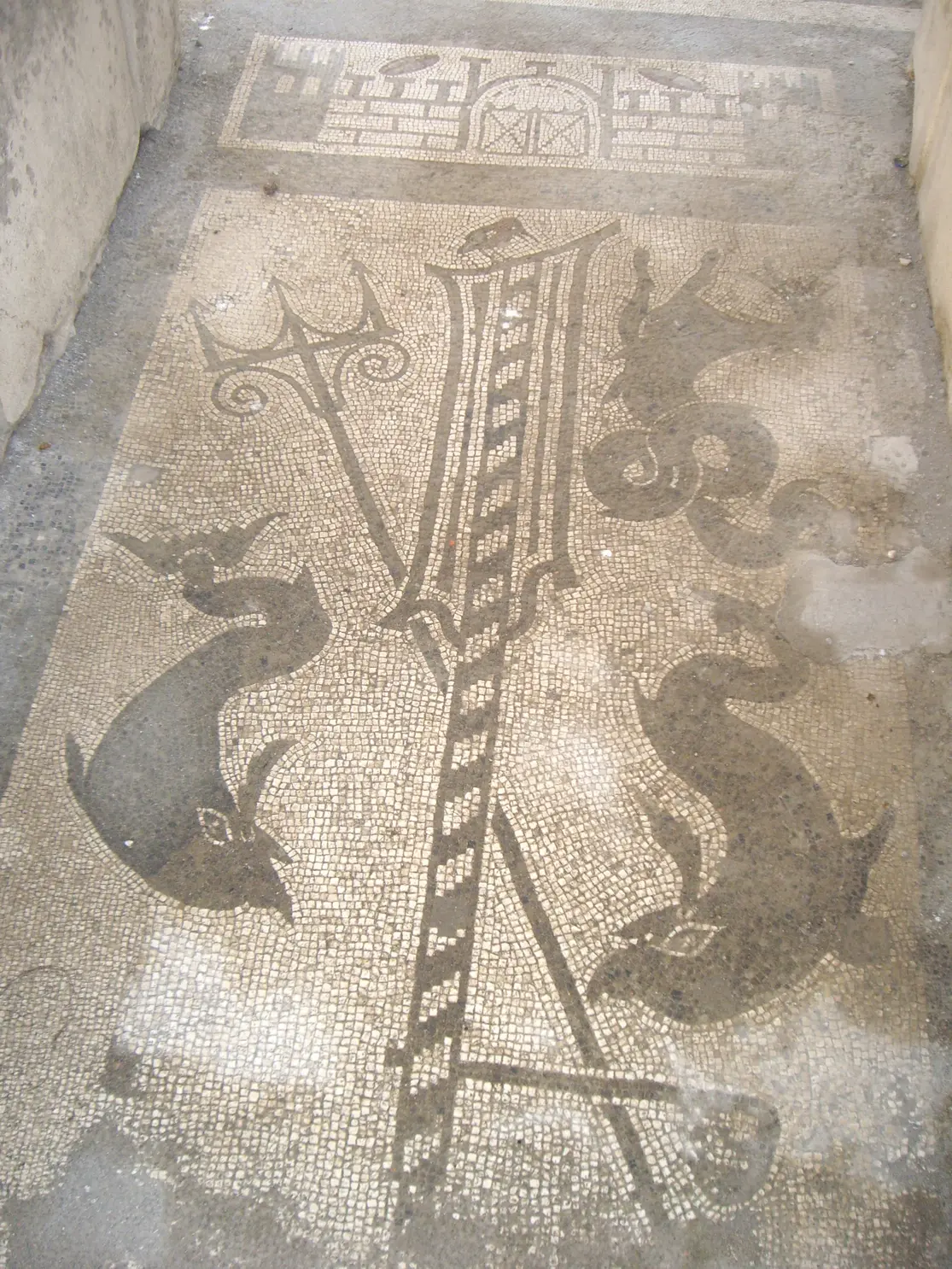
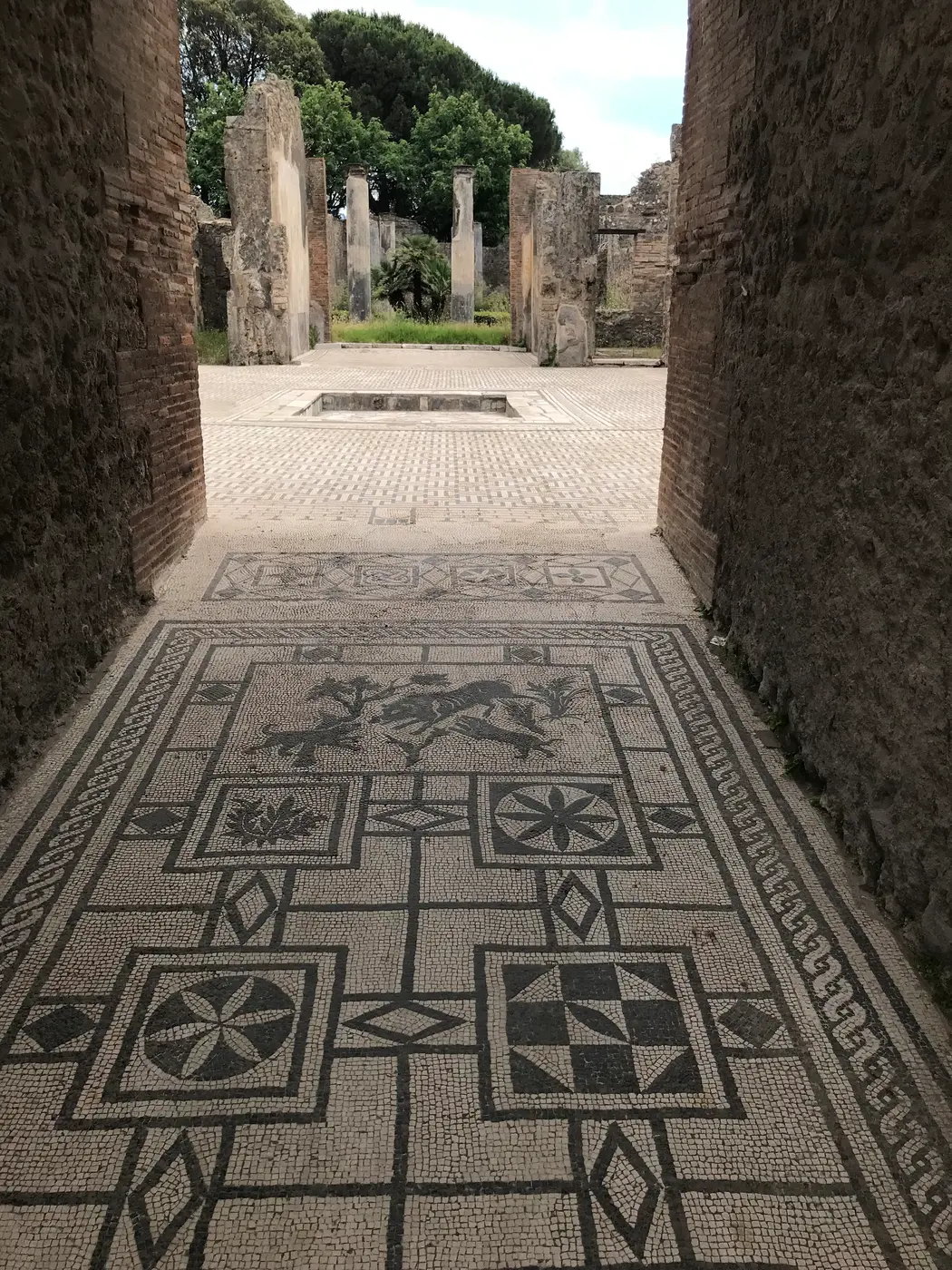
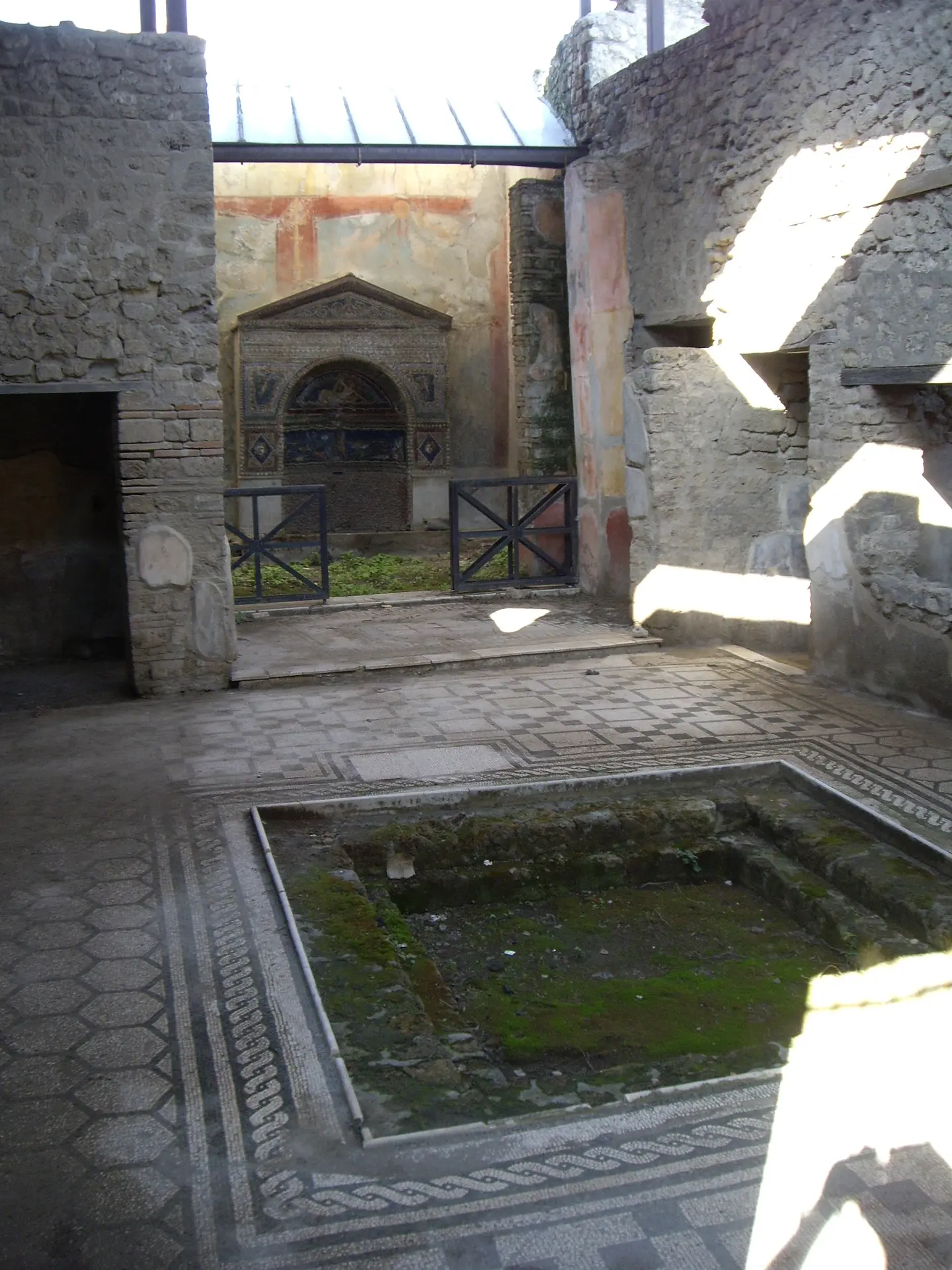
Trident and DolphinsA threshold panel in black and white, the trident wrapped by two dolphins. Sea imagery at the door of a house well inland.The Long ThresholdA patterned entrance corridor running from the street door to the atrium, the impluvium catching light at the far end.
Colour
Painted Rooms
Paint that has spent most of two thousand years underground.
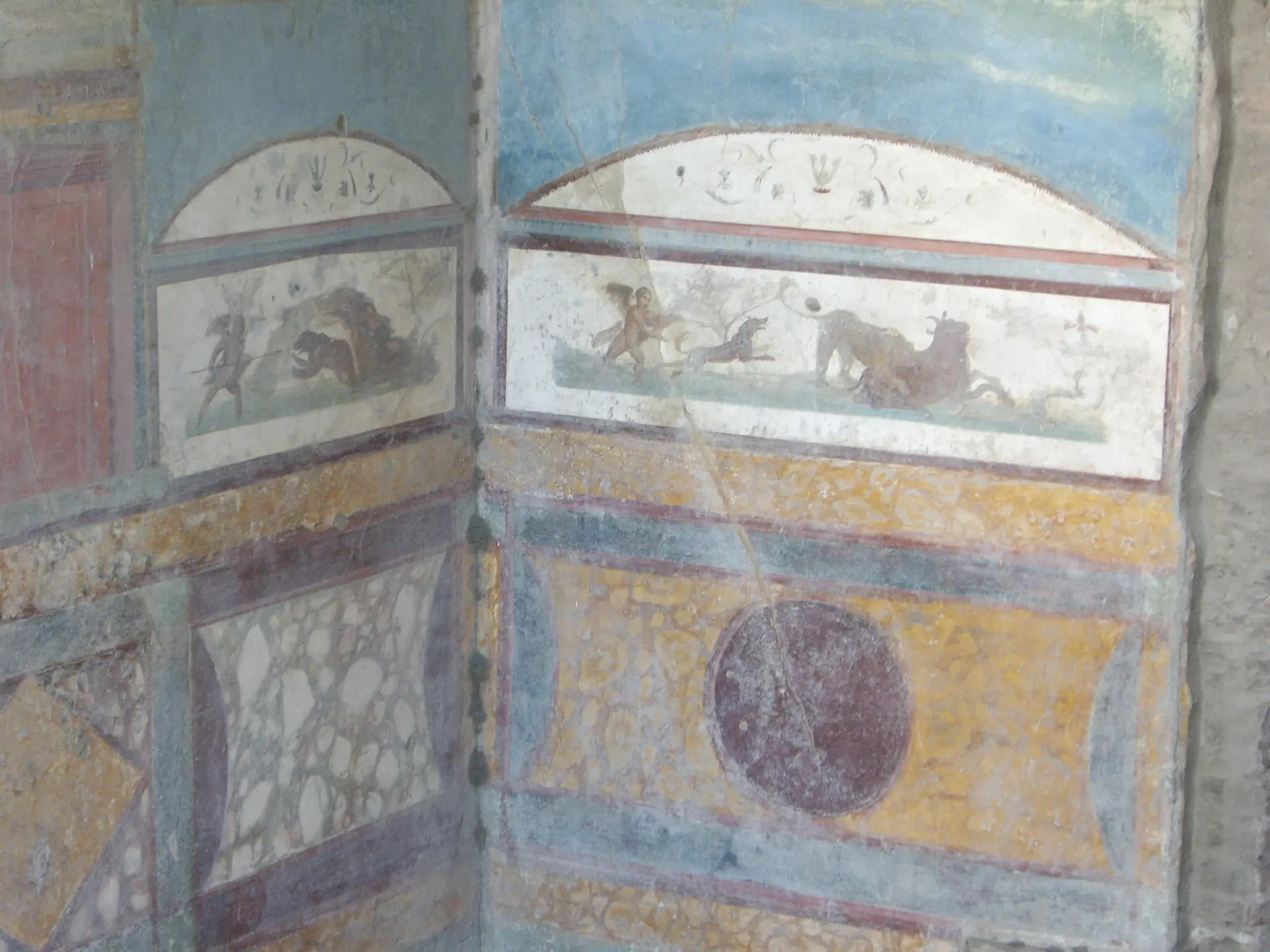
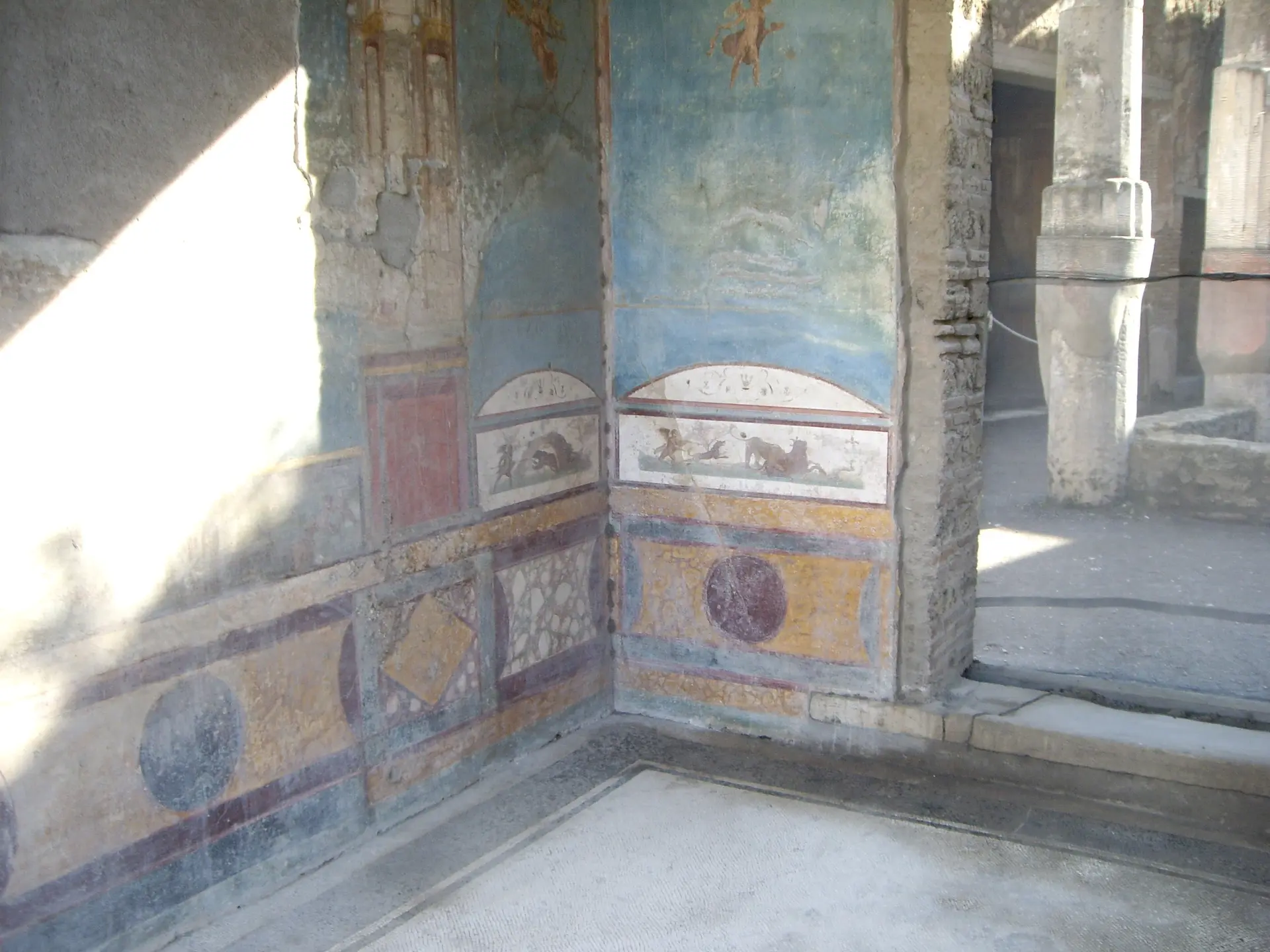
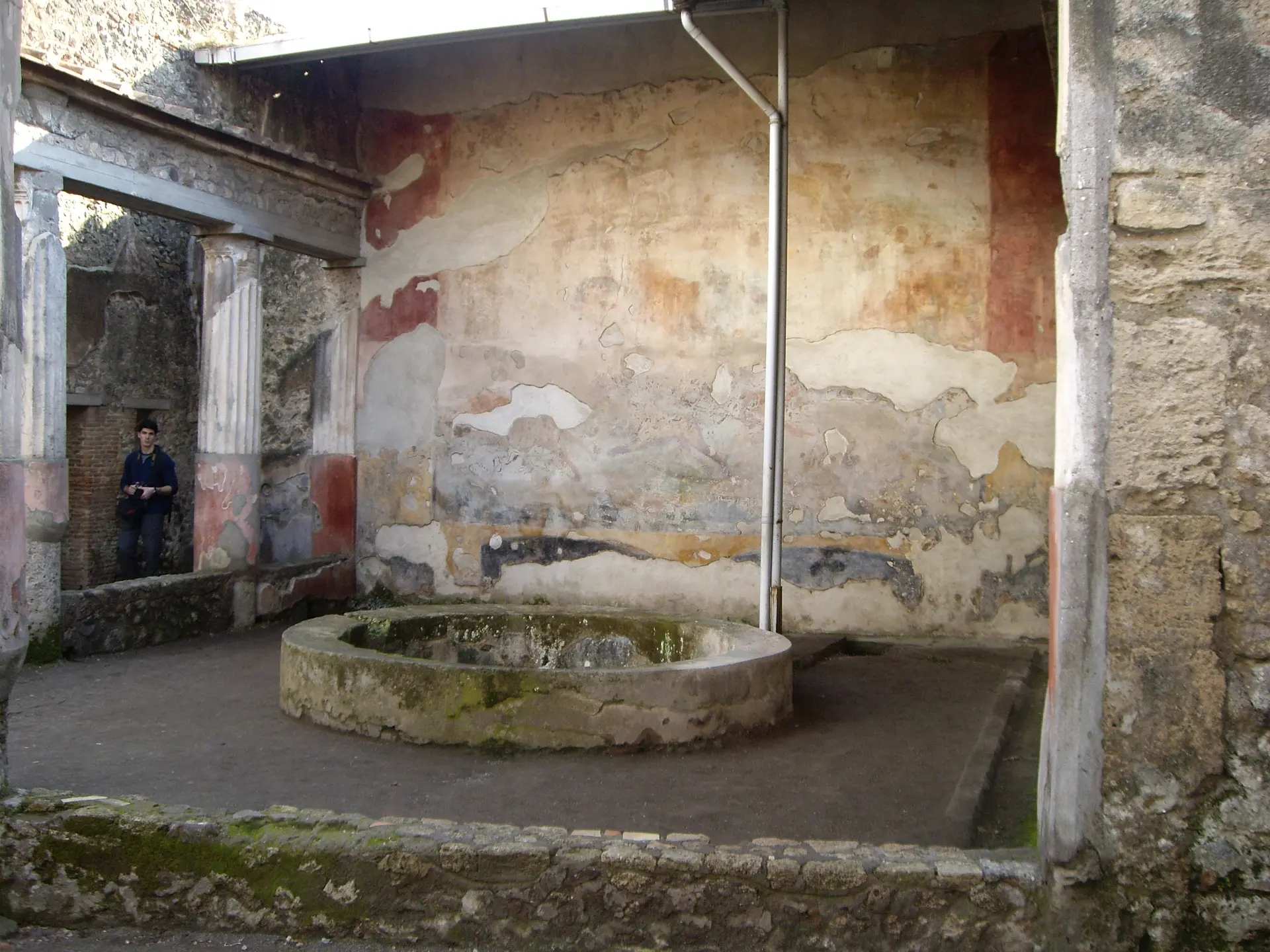
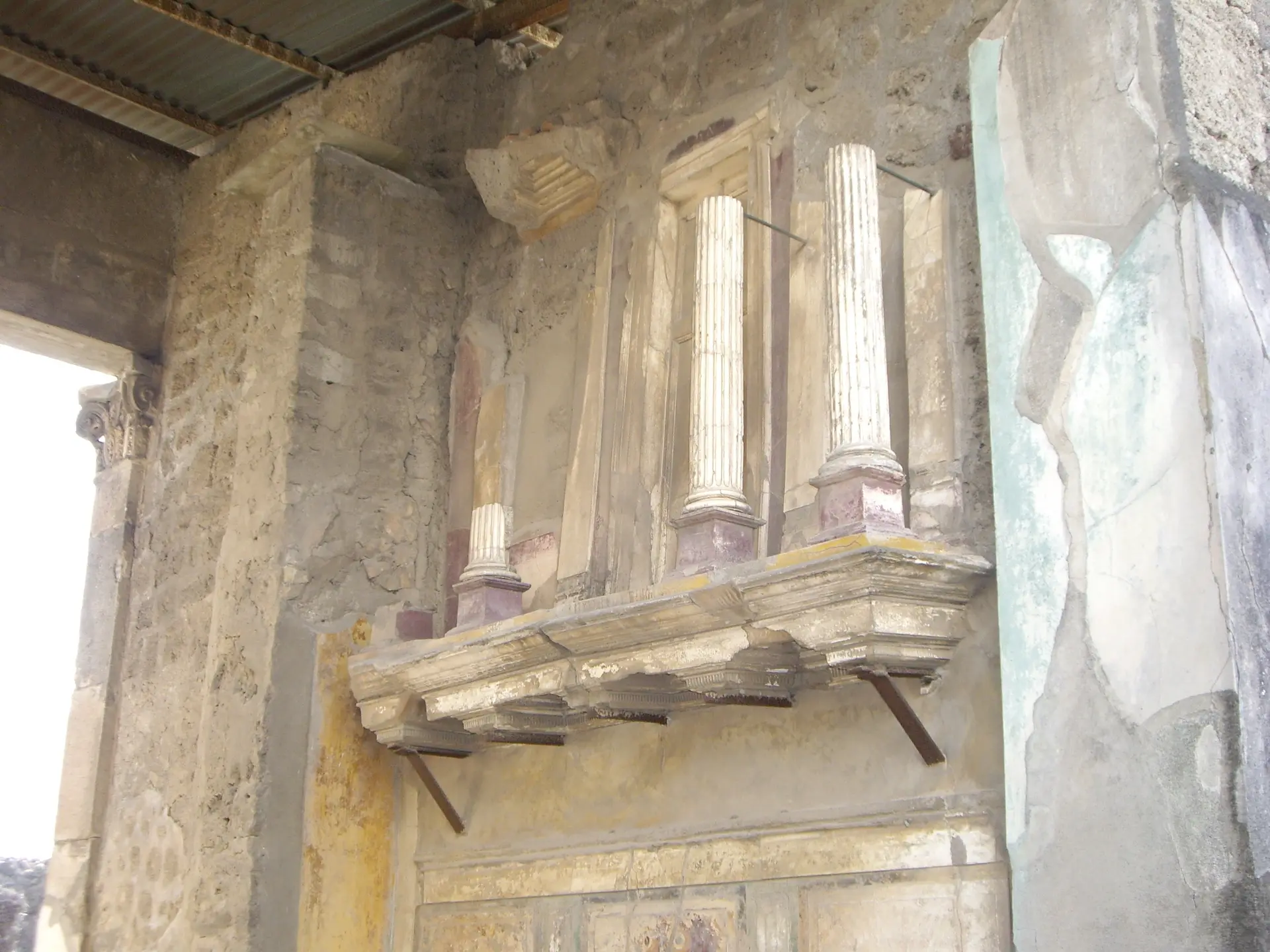
The Animal FriezeLions, boar and deer running along a narrow band above the dado, the blues and ochres still holding.November LightThe same room with low afternoon sun reaching across it and out toward the columns of the garden. Photographed in November 2006, which is why the light is like this; the summer frames on this page are flat by comparison.The AtriumThe formal front room of a Roman house, its basin set directly beneath the opening in the roof.The Household ShrineA small aedicula with its own columns and pediment, where the household gods were kept.The Garden PoolA water basin in the peristyle with its fountain niche still carrying mosaic, the winter sun cutting across the columns.
The Working City
Streets and Shops
Paving, crossings and counters, the parts of Pompeii people actually touched.
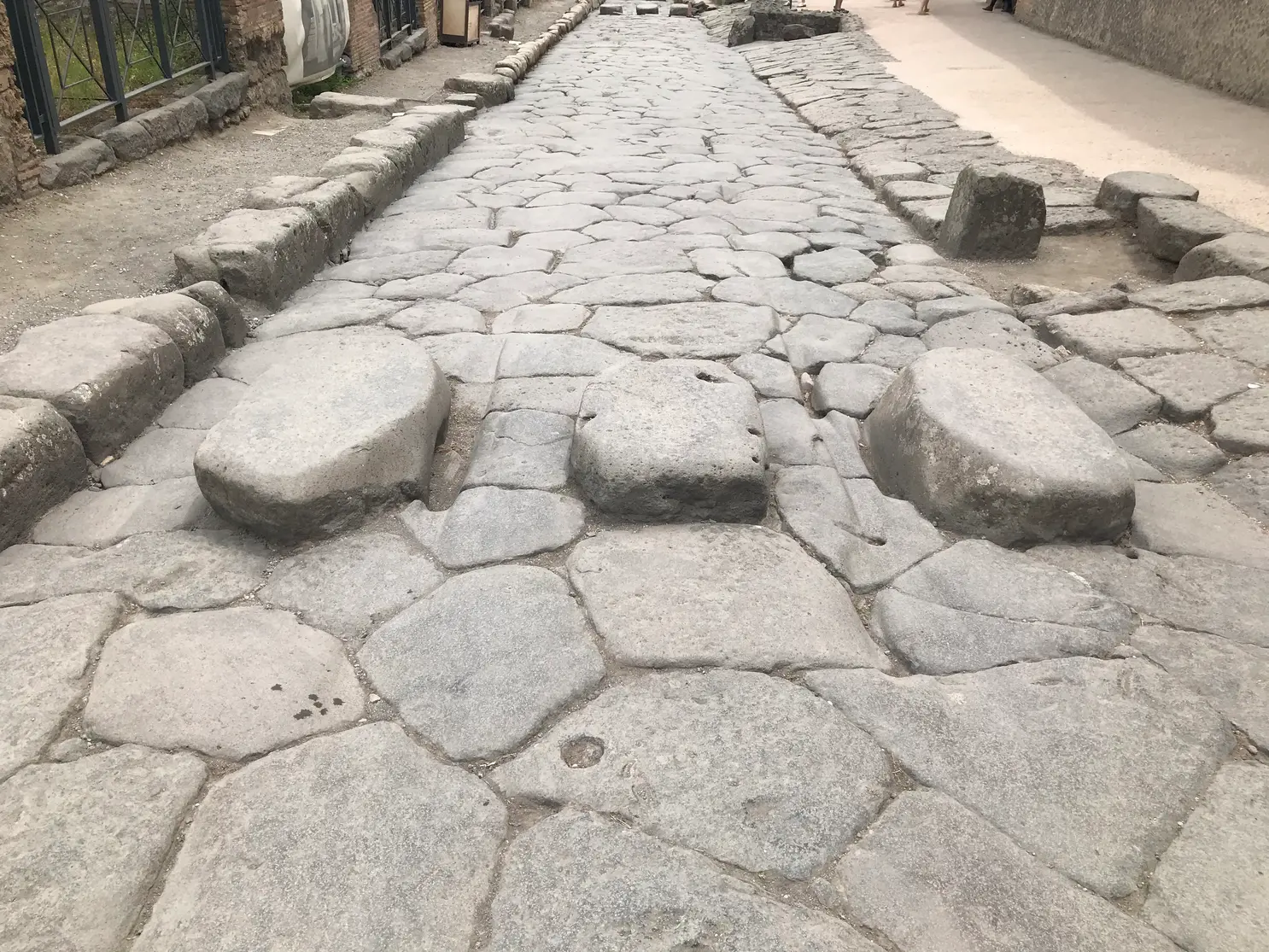
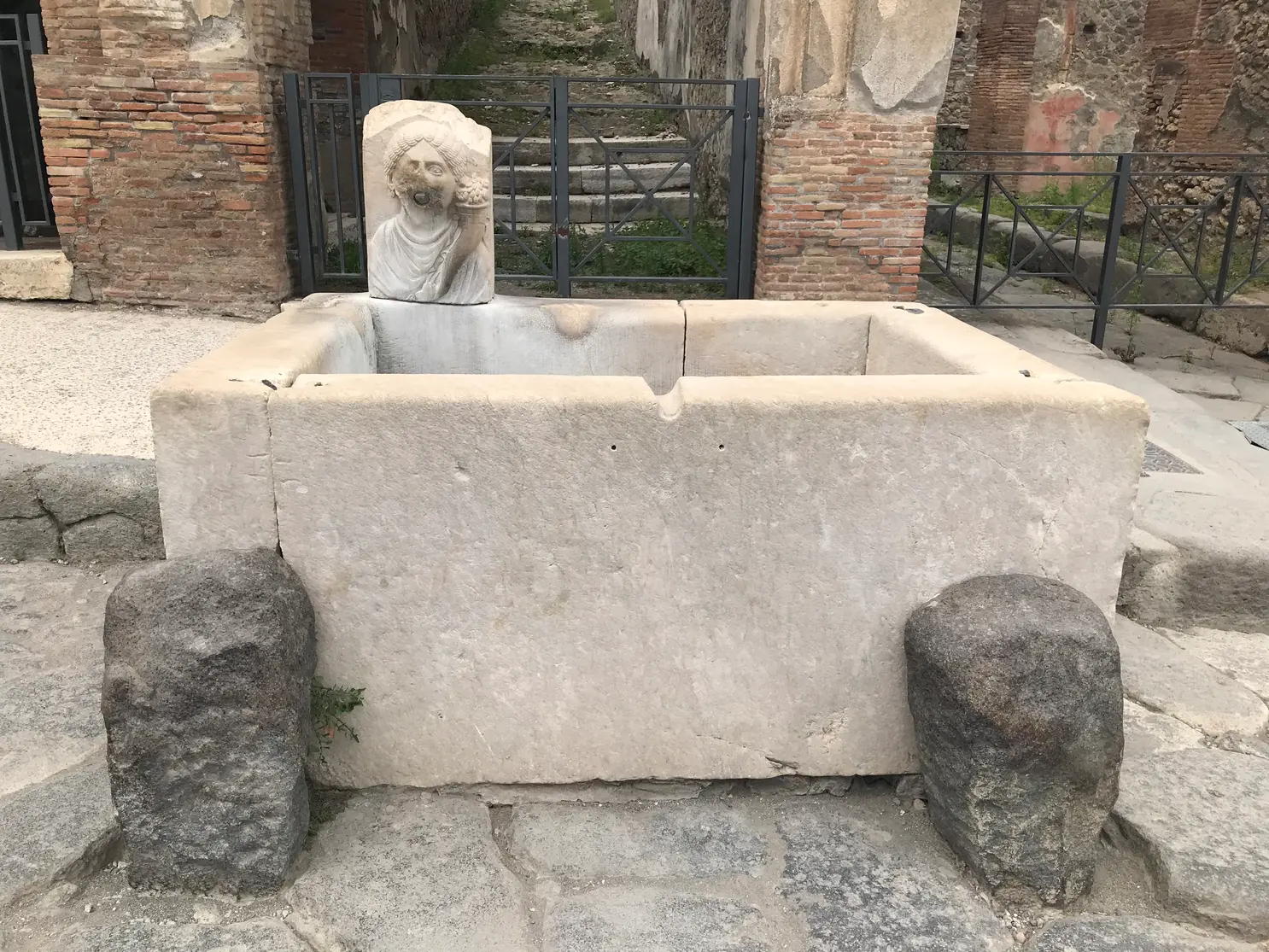
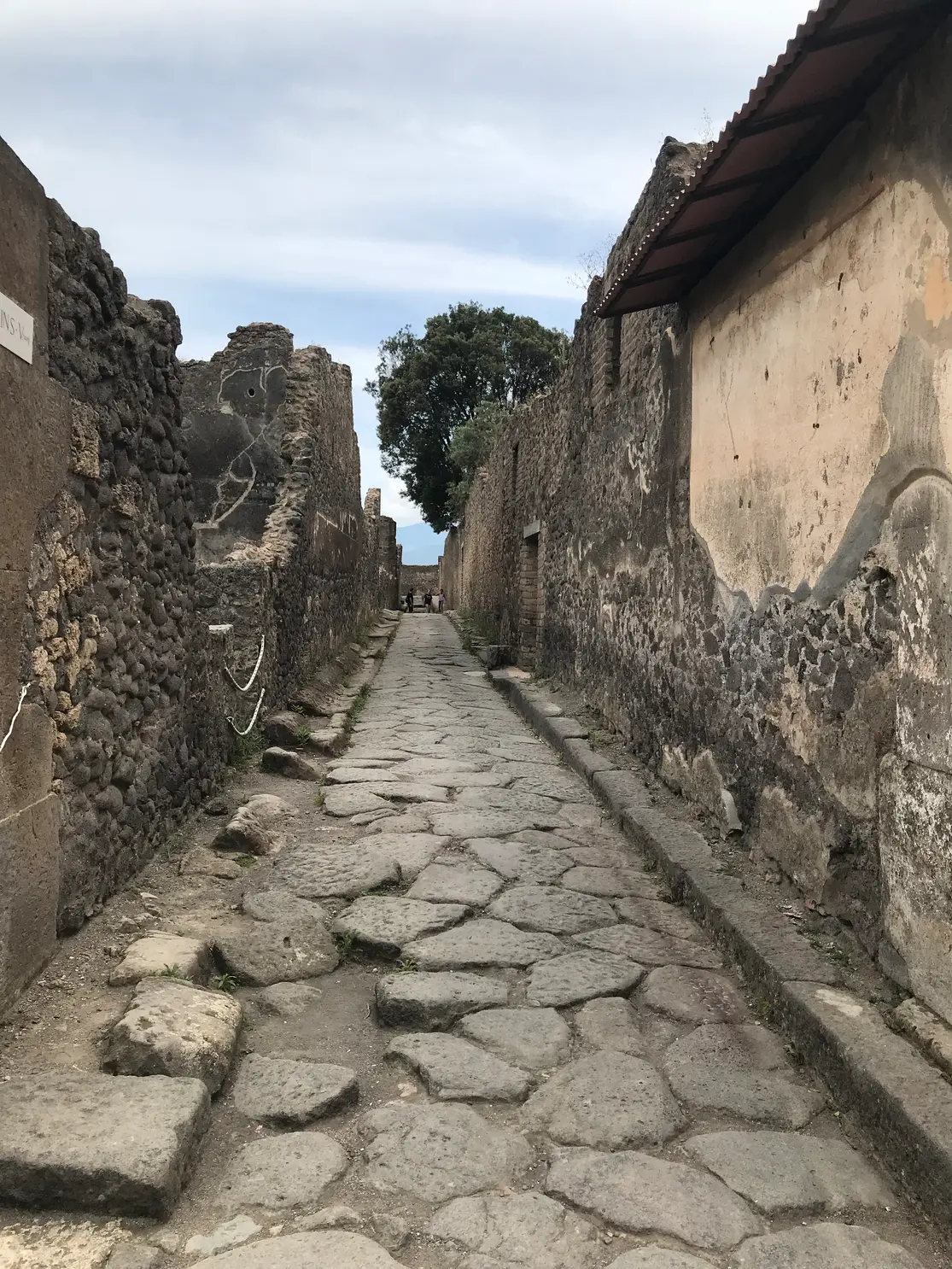
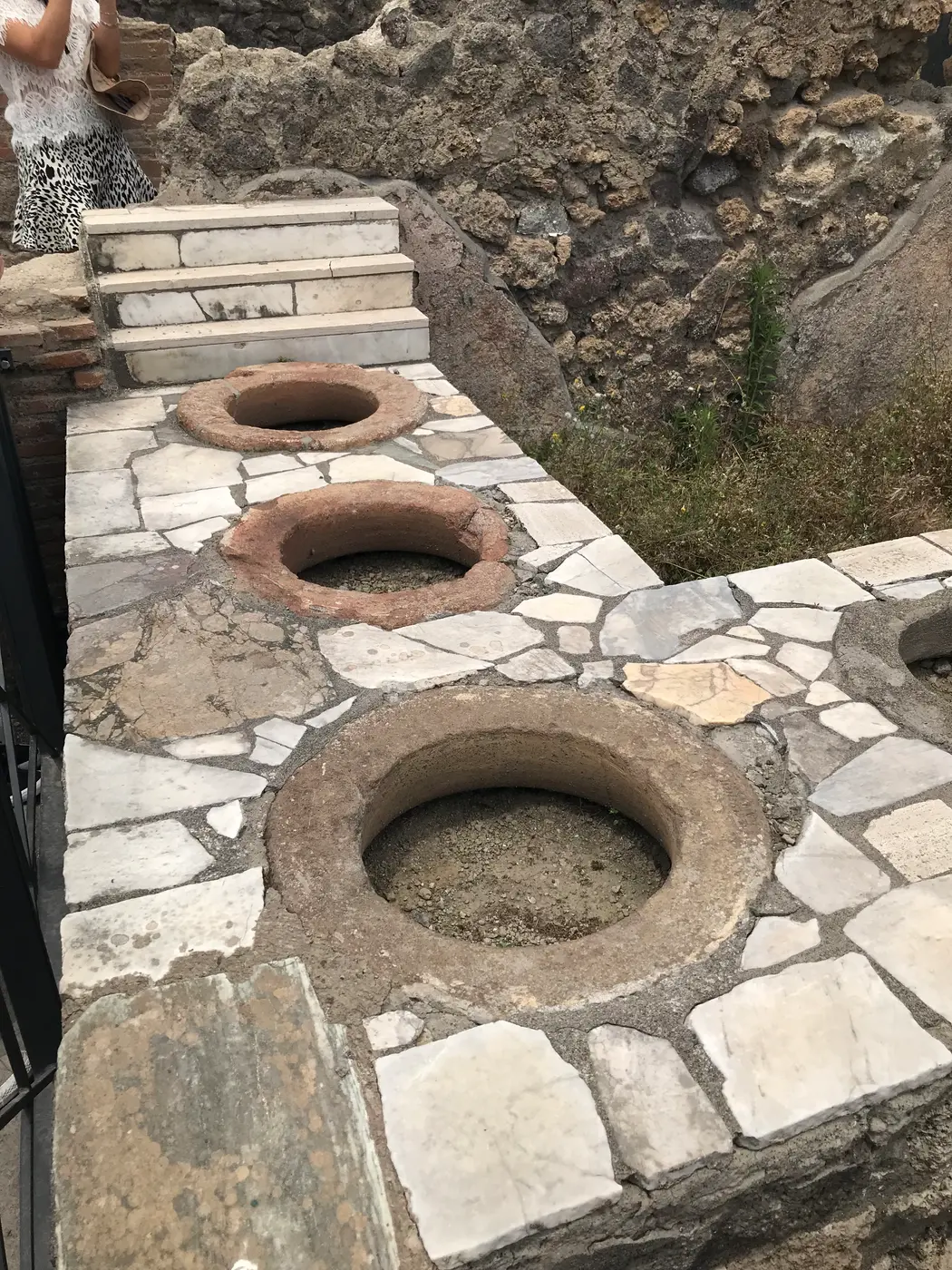
Stepping StonesRaised blocks let people cross without stepping into the water and waste below, and the gaps between them line up exactly with a cart's wheels. The ruts are worn deep into the stone on either side.The Street FountainA public fountain on a corner, its spout cut as a face, worn smooth where hands and mouths went. There were dozens of these and nobody in the city lived far from one.A Narrow StreetBasalt paving running between high walls, the crown of the road shaped to carry water.The Bar on the CornerA thermopolium counter, its sunken jars once holding food kept warm for a city that largely ate out.
Trade
Bread and Business
Mills, ovens and storage jars: the working city rather than the grand one.
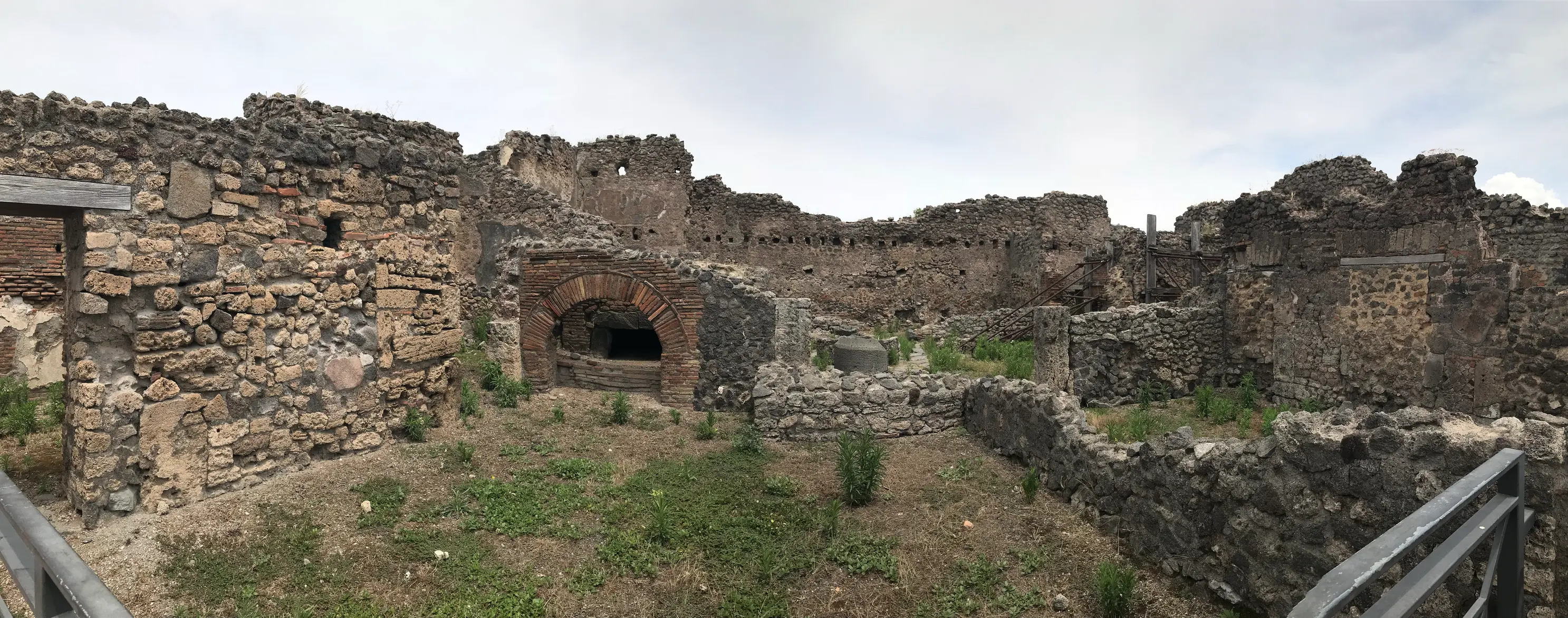
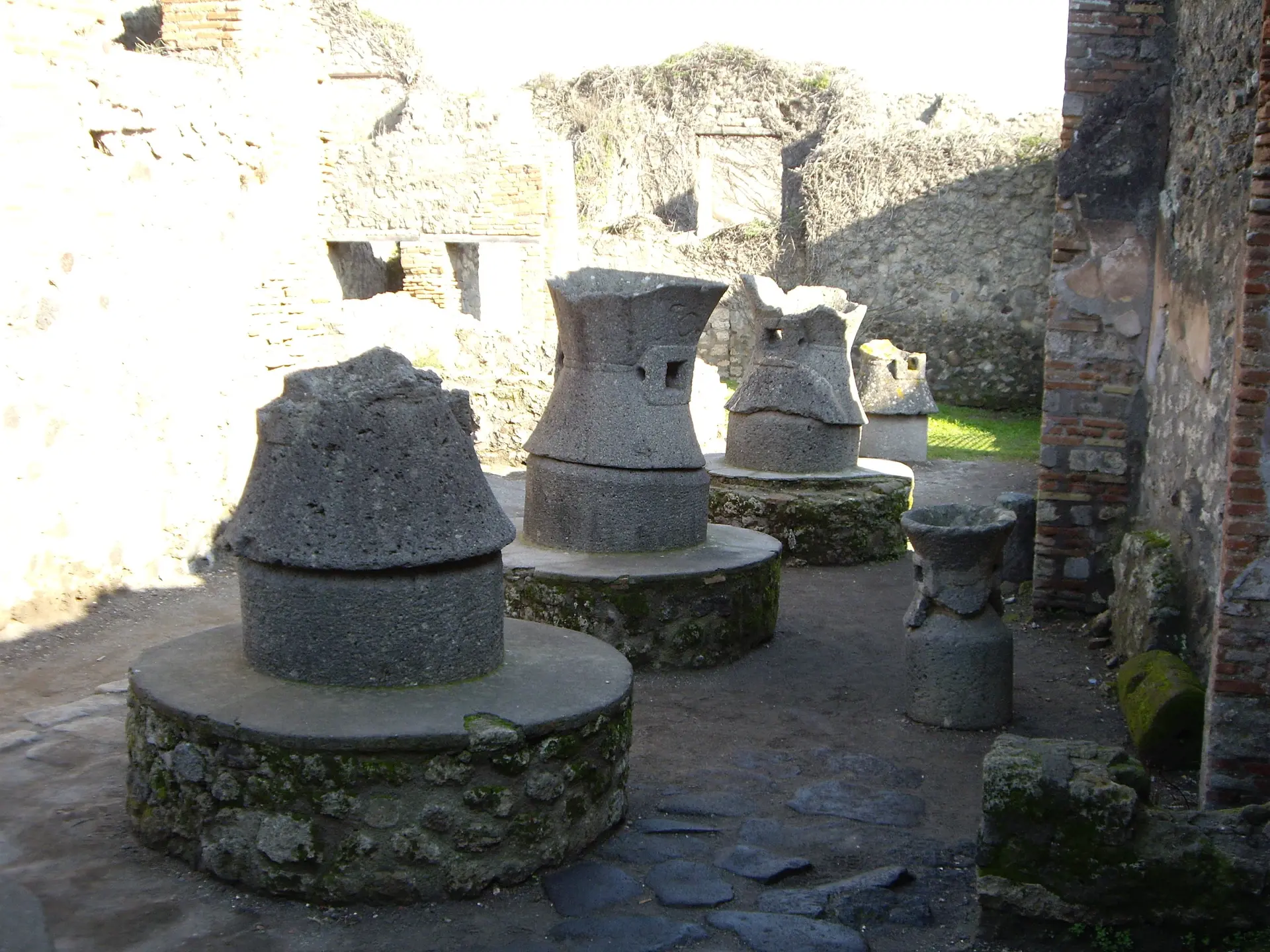
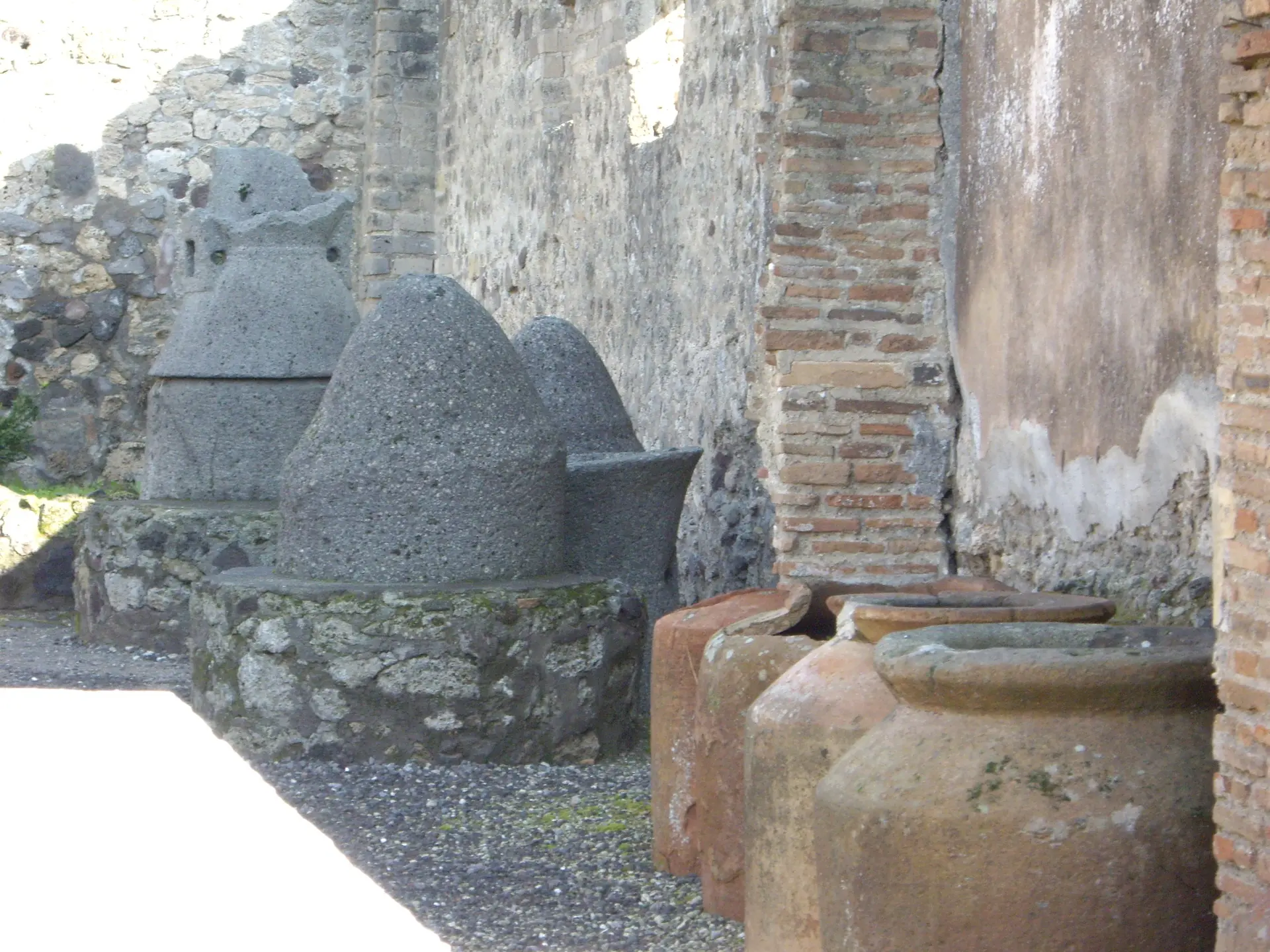
The BakeryThe whole bakery in one frame: the brick oven under its arch, a millstone standing in the yard, and the ruined rooms around them. The oven mouth is the same shape a pizza oven still takes in Naples today.The MillsHourglass mills of hard volcanic stone, turned by donkey or by hand to grind the city's grain.Mills and DoliaMills standing next to the big terracotta dolia that held what came out of them.
Warmth
The Baths
Where Pompeii went to be comfortable, and where the ceilings came down intact.
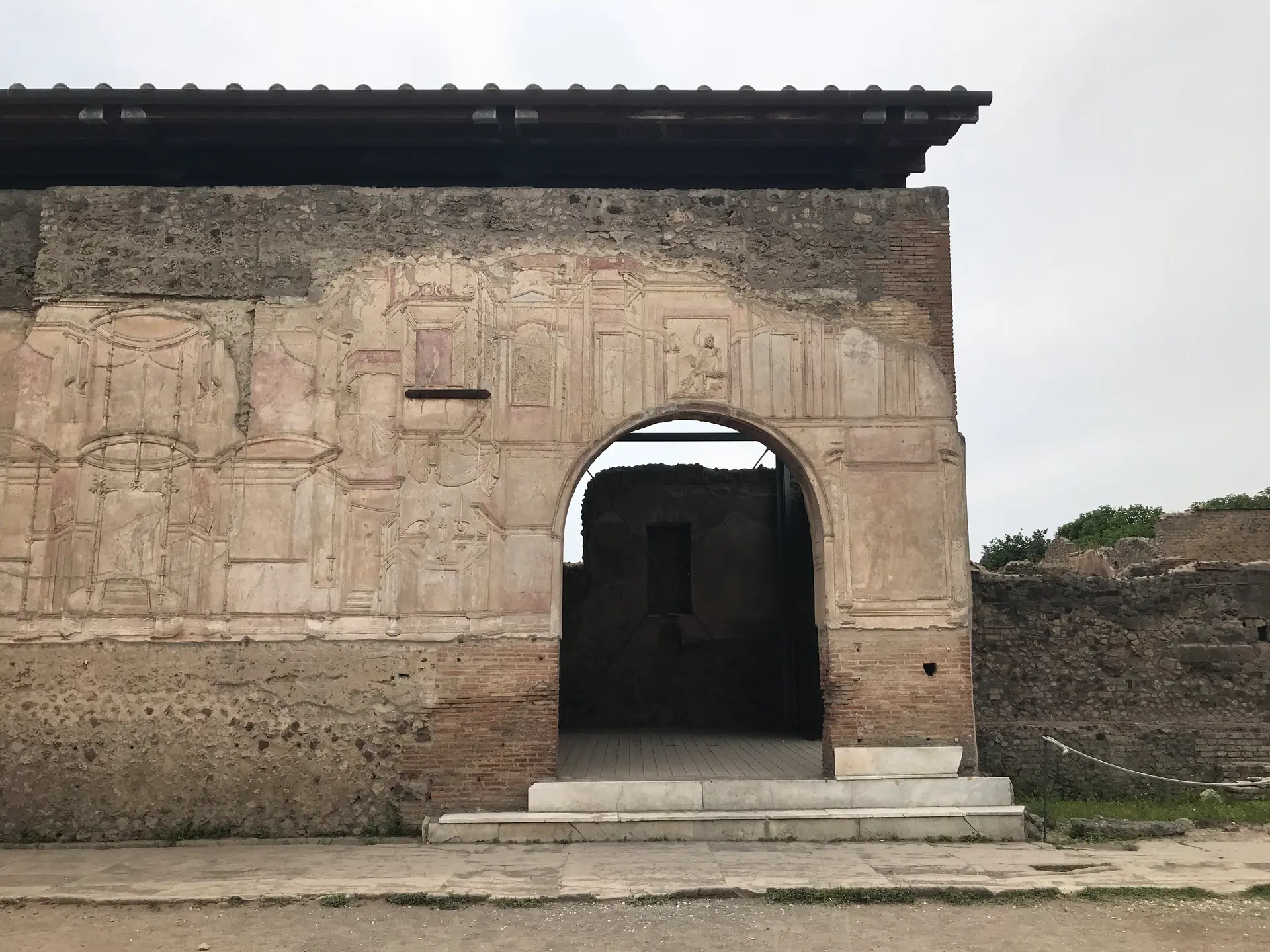
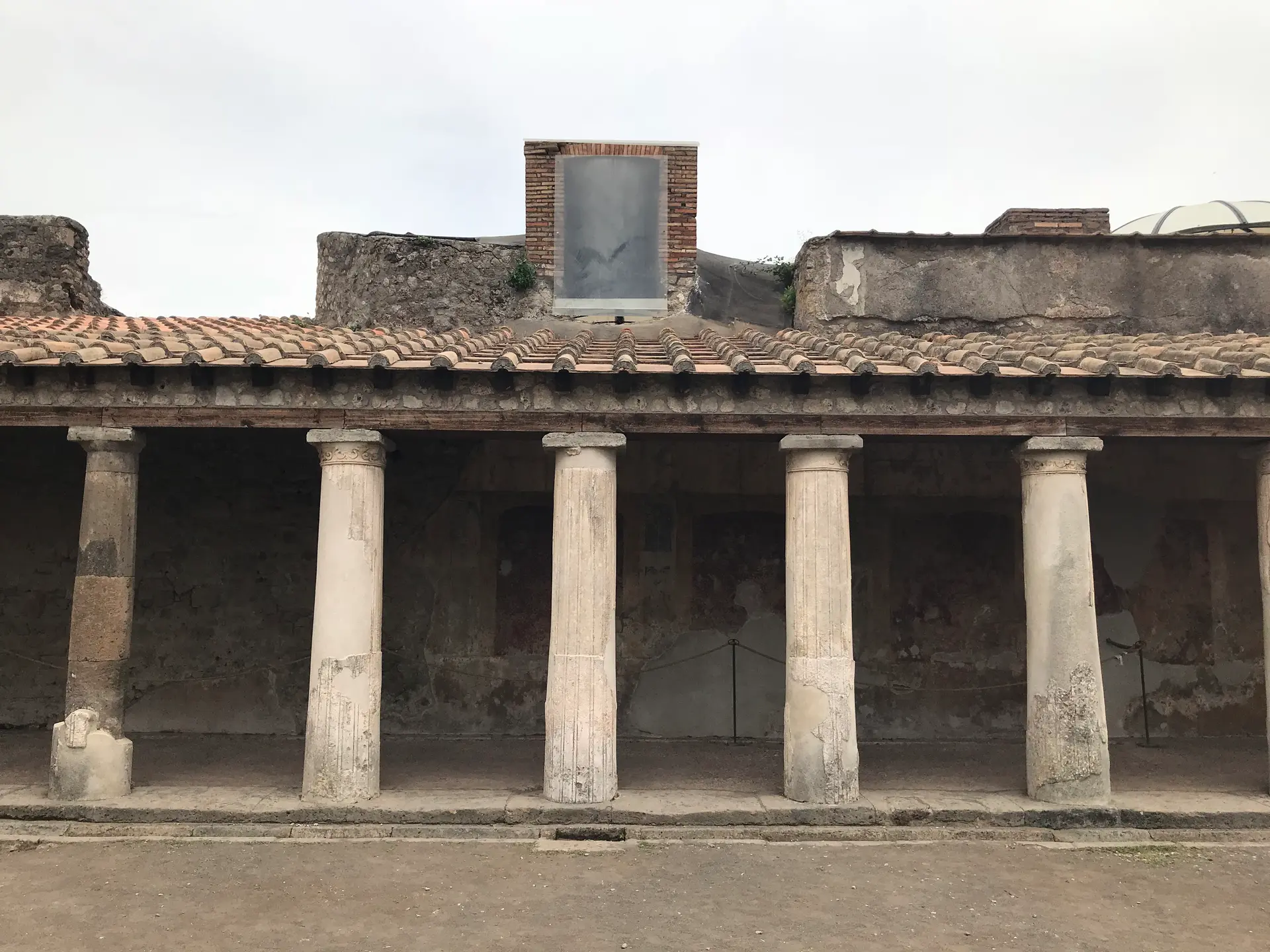
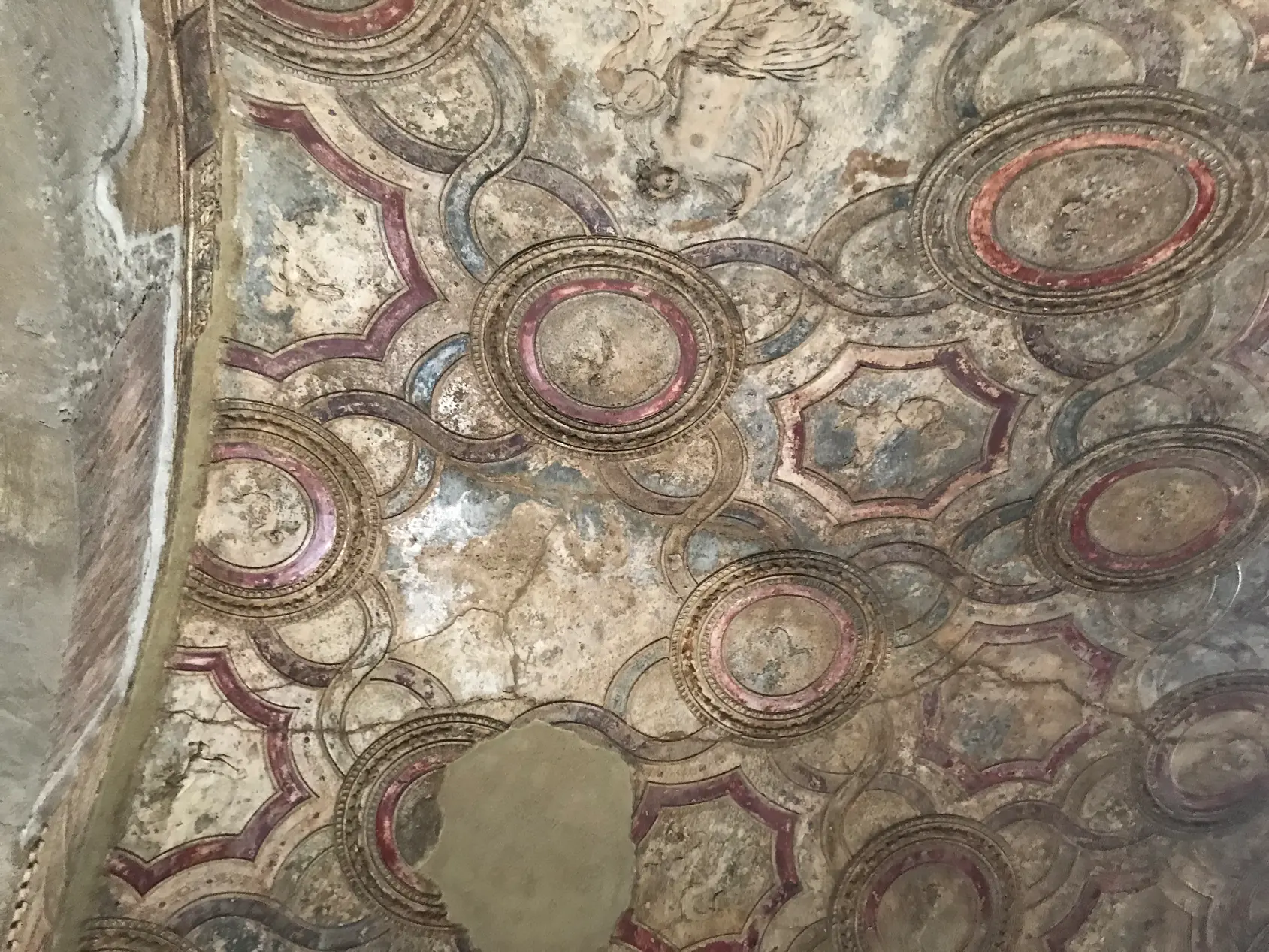
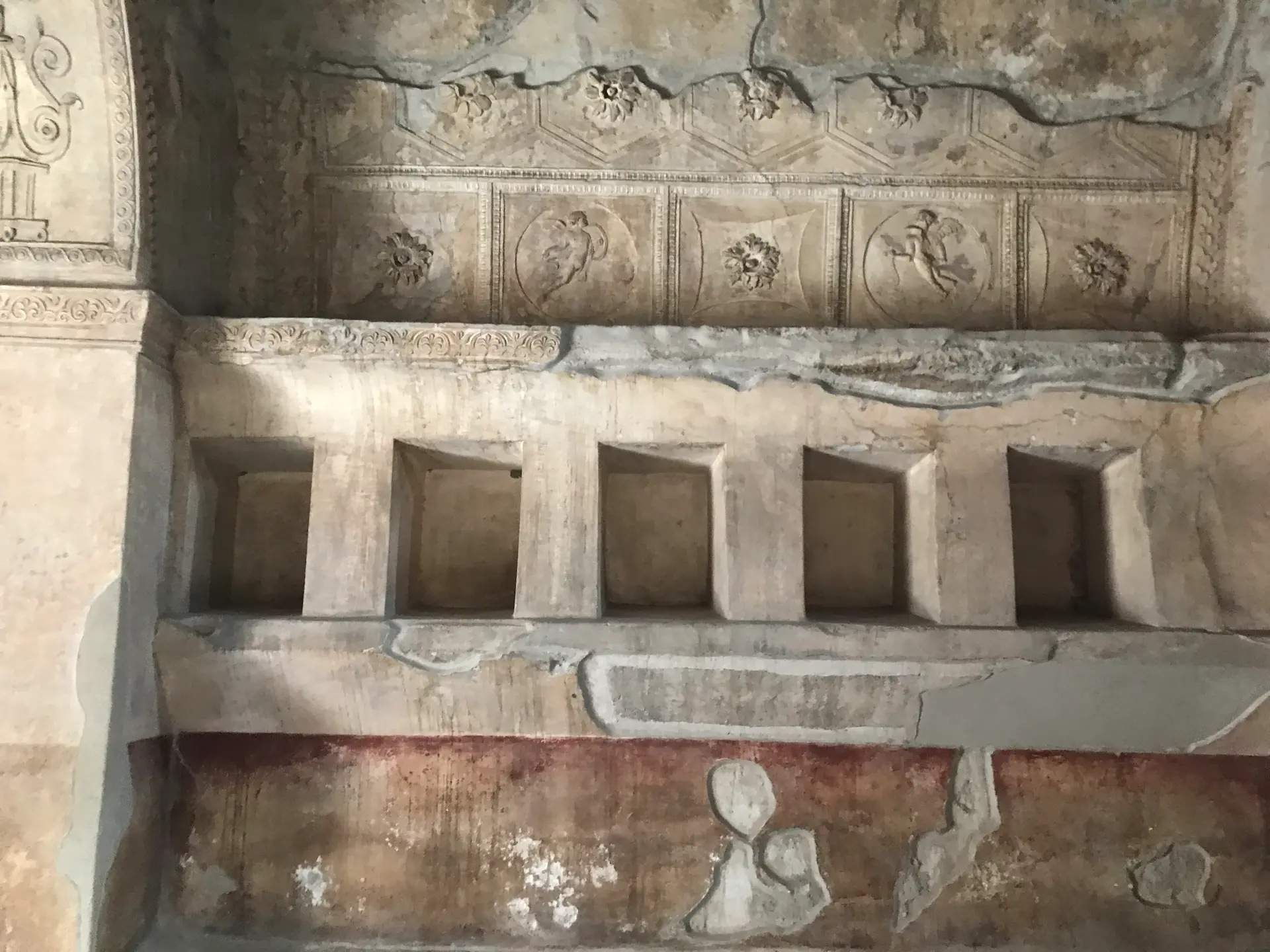
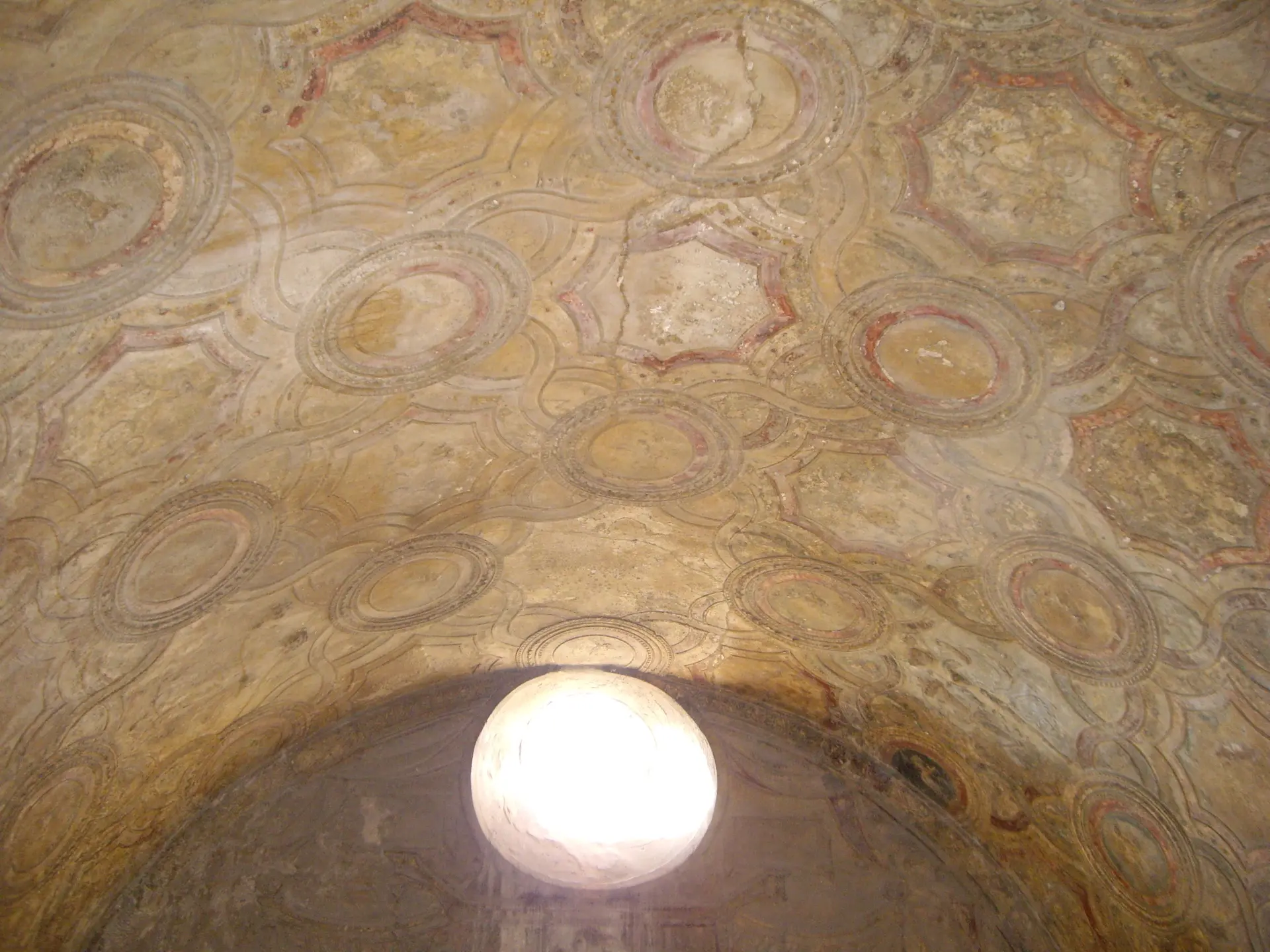
The Stuccoed FrontA wall finished in stucco worked to imitate cut stone, with a high arched doorway through it.The ColonnadeThe exercise yard of the Stabian Baths, its columns rendered in stucco and its roof restored in modern tile.The Stucco VaultThe vault of the changing room, panelled in octagons and hexagons with cupids and rosettes moulded into them. It survived because the ceiling came down whole.Where the Clothes WentA row of niches cut into the wall for bathers' clothes, under a moulded frieze and above a red painted dado.The OculusA bath chamber's dome with its single round opening, the only light the room ever needed.
Social History
The Lupanare
The city's purpose-built brothel, presented on site as a matter of record.
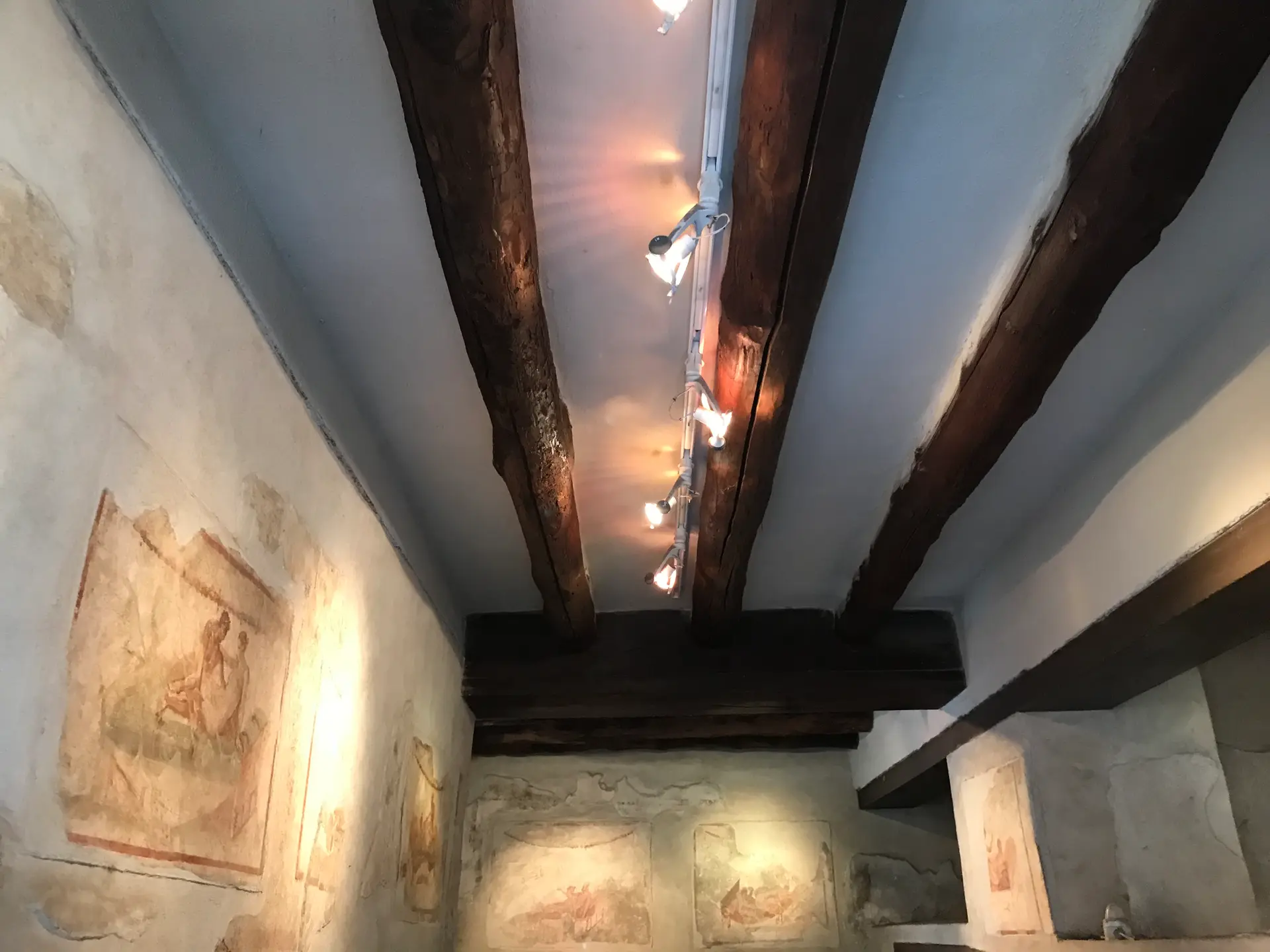
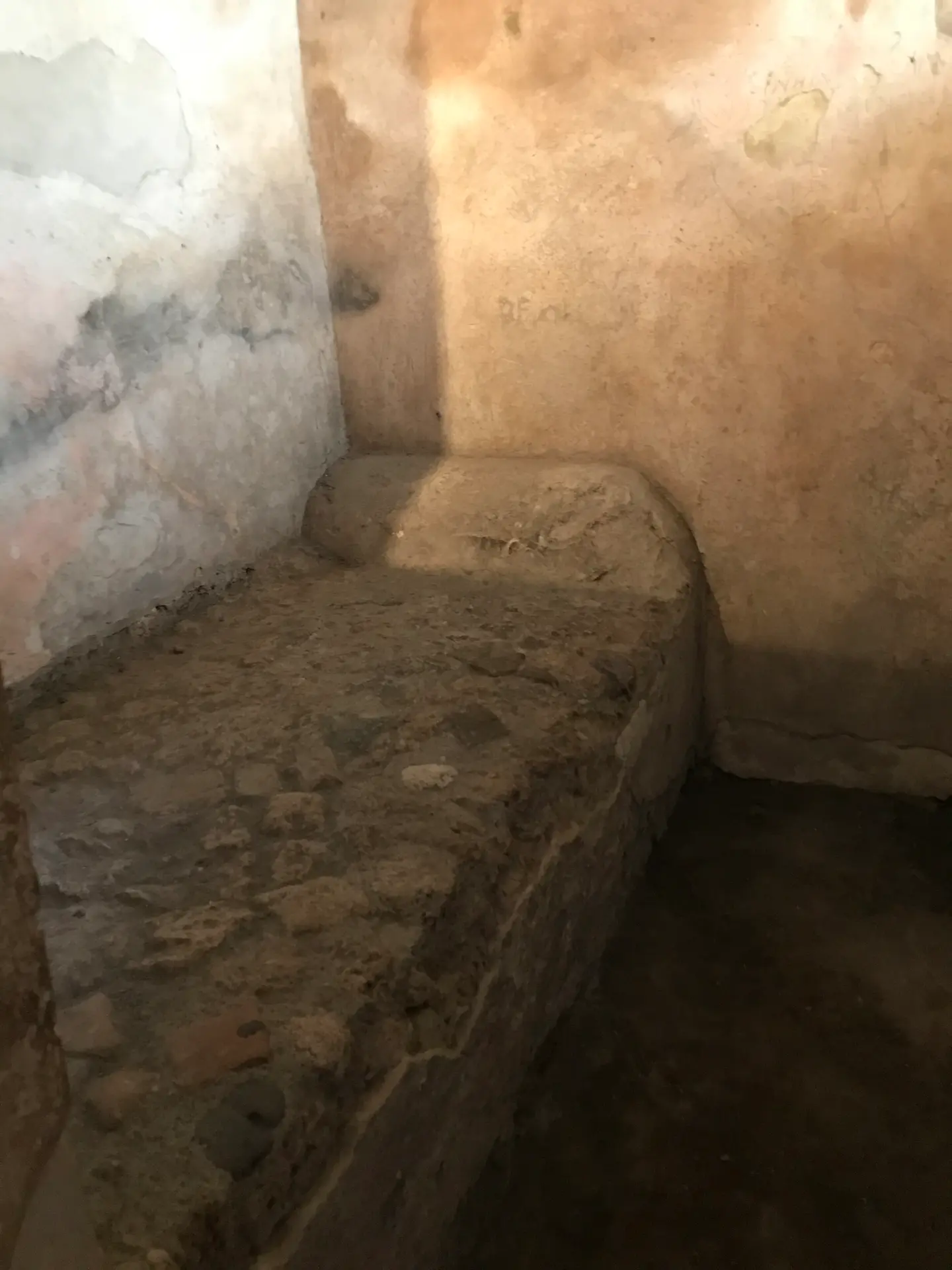
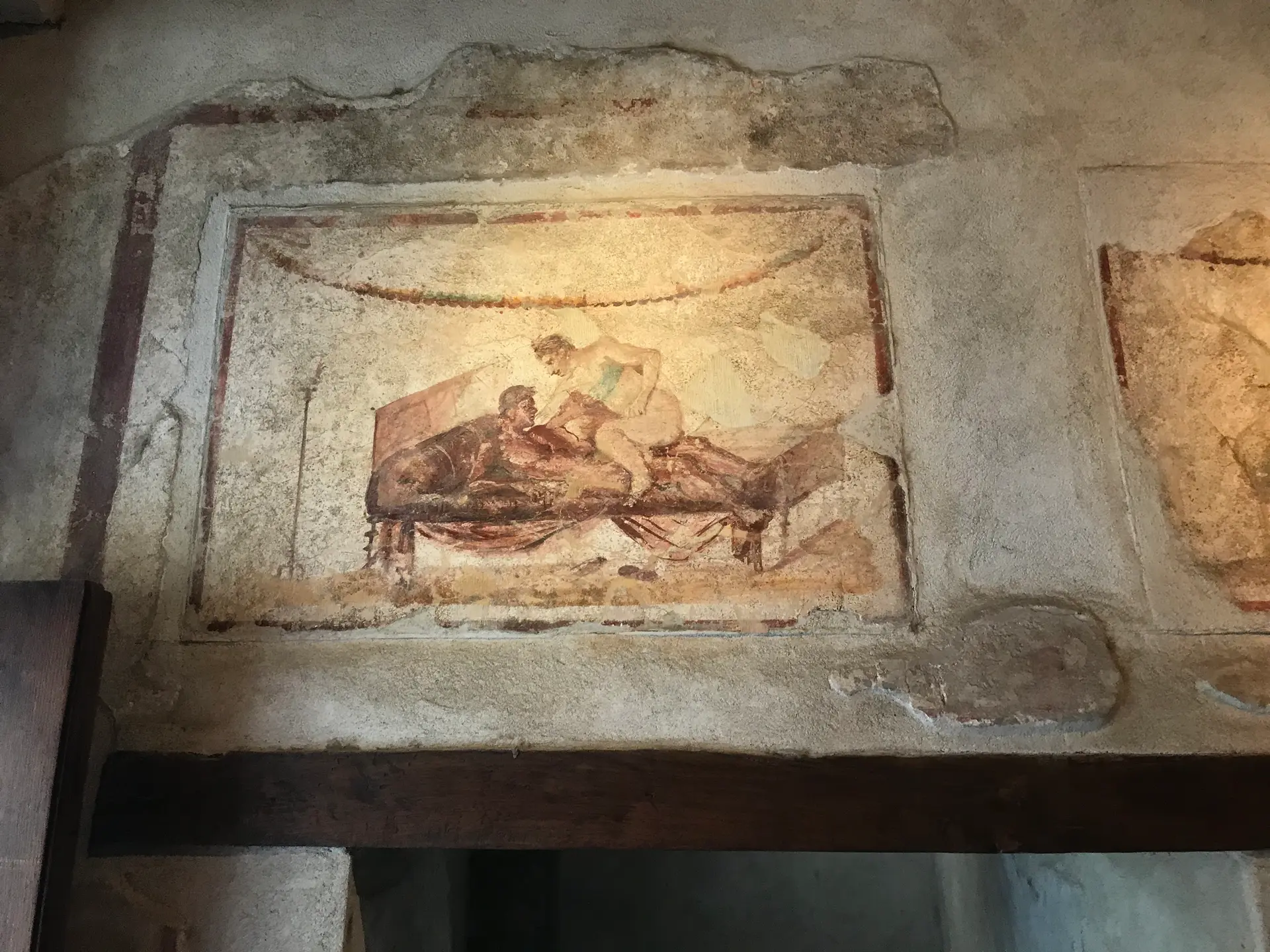
The CorridorSmall cells off a central passage, with painted panels set high on the walls between the doors.The BedEach cell holds a masonry platform. A mattress went on top and nothing else needed to.A Painted PanelOne of the panels above the doors. They are read variously as advertising and as decoration in keeping with the trade. Pompeii treated commercial sex as an unremarkable part of city life and the building sits on an ordinary corner among shops and houses.
Gathering
Theatres and the Palaestra
The places built to hold crowds.
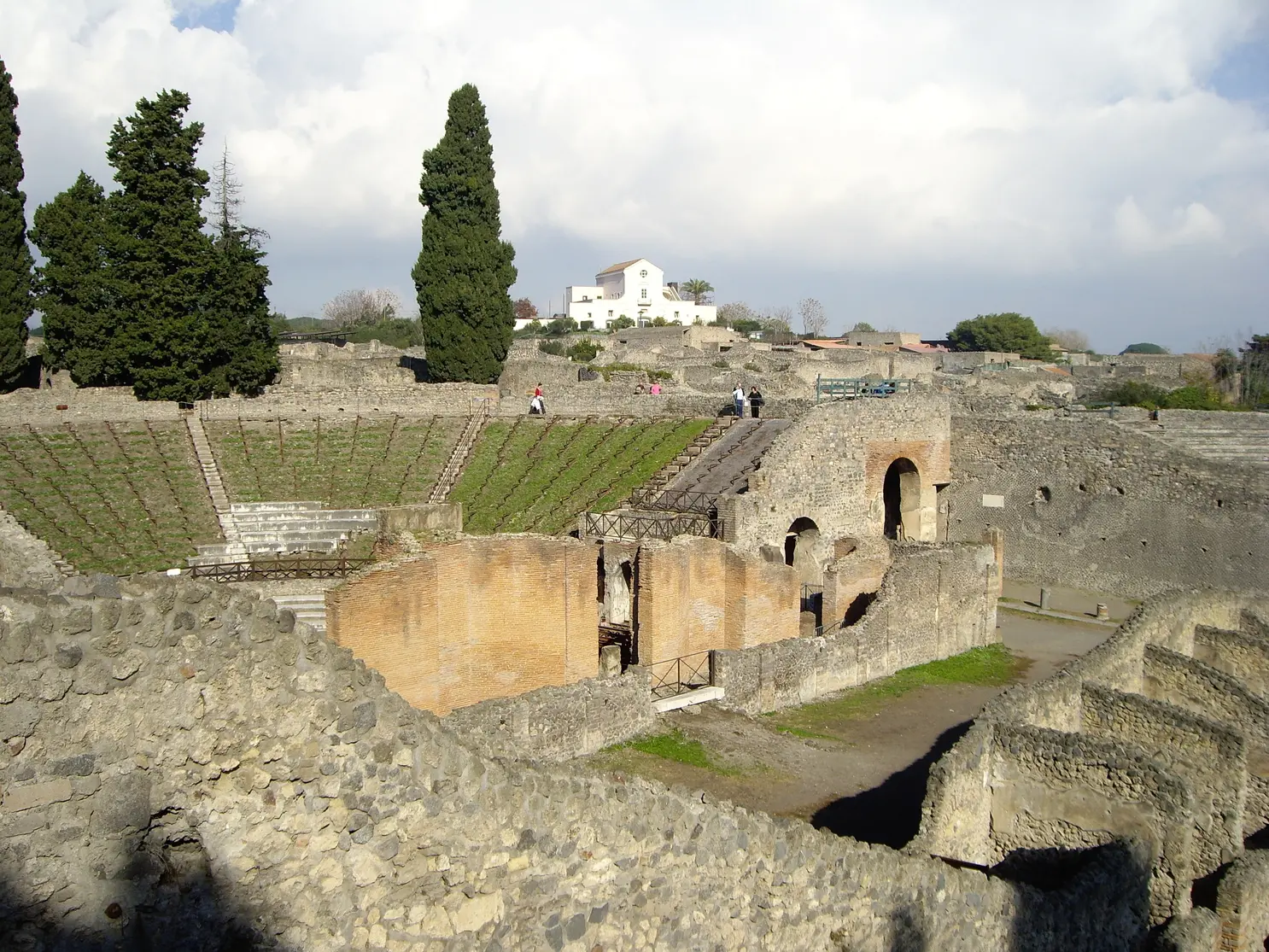
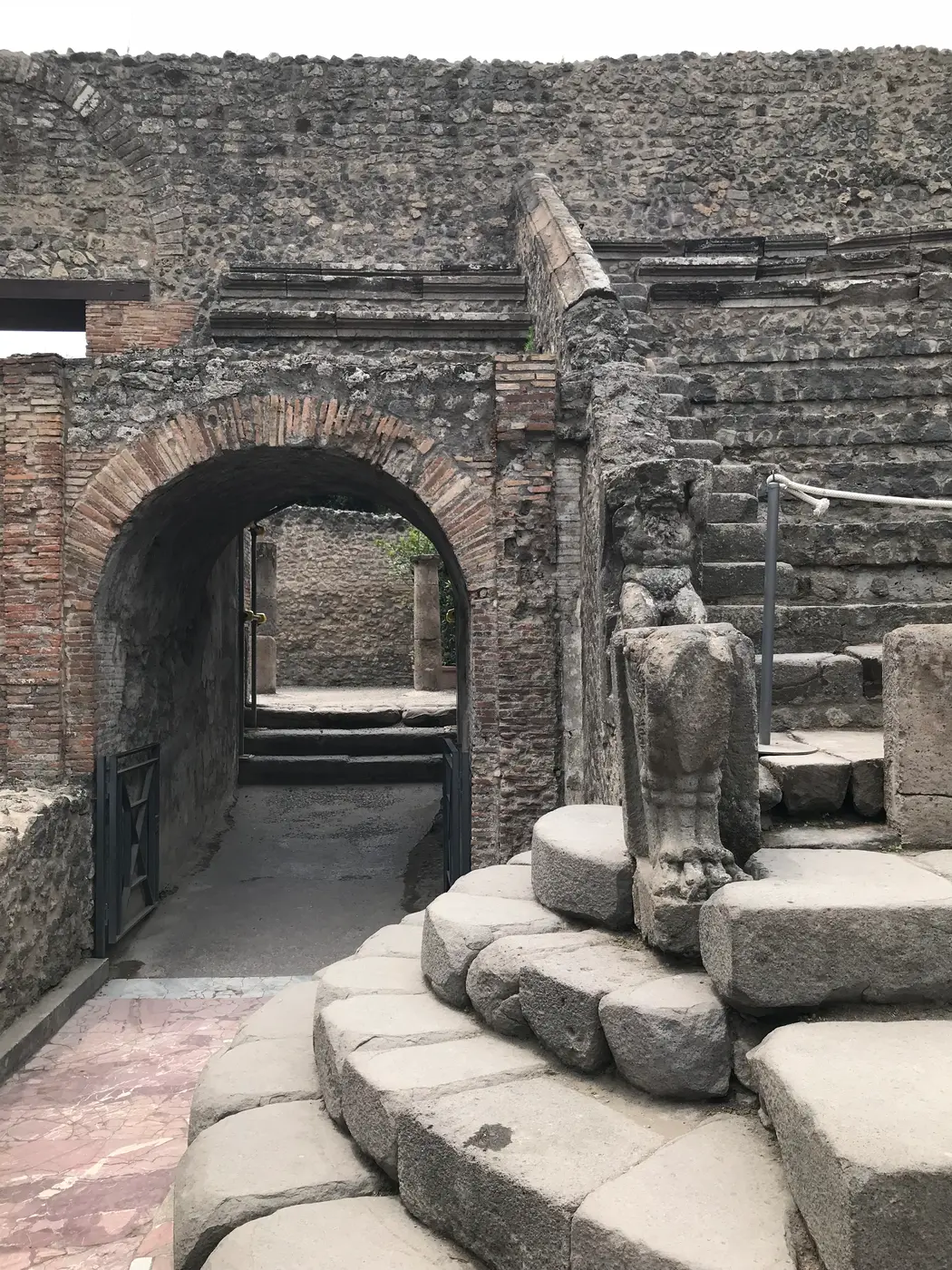
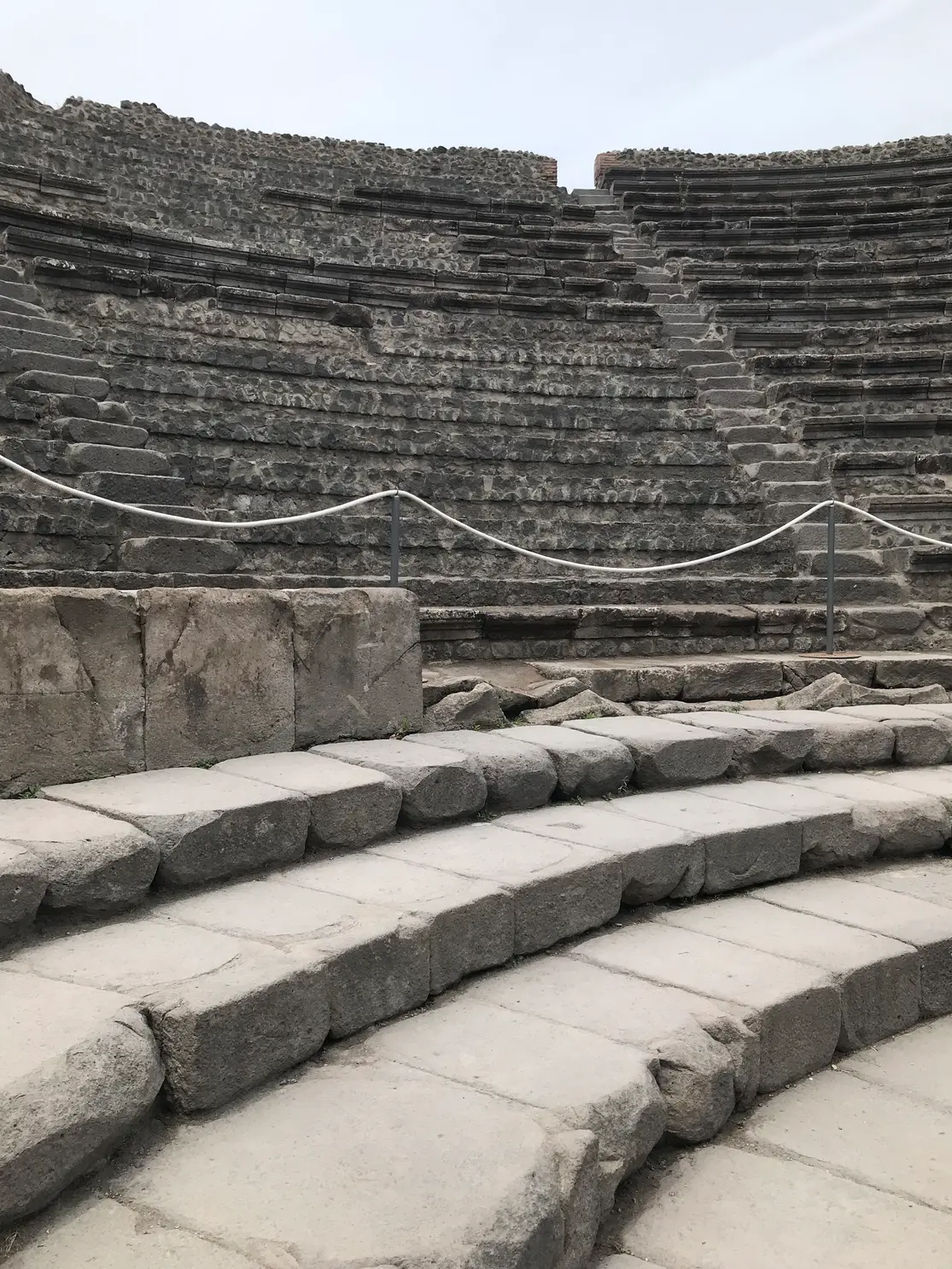
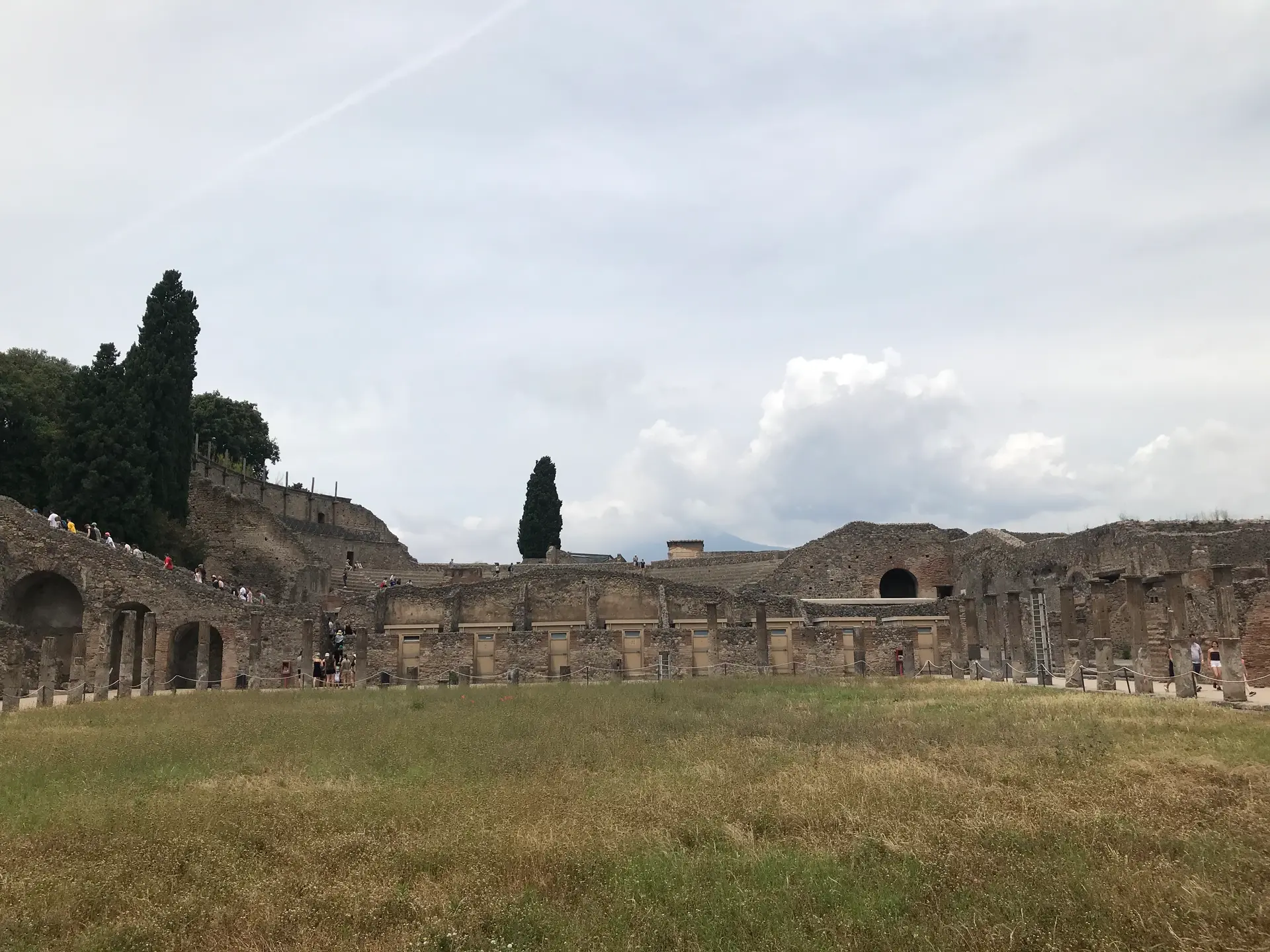
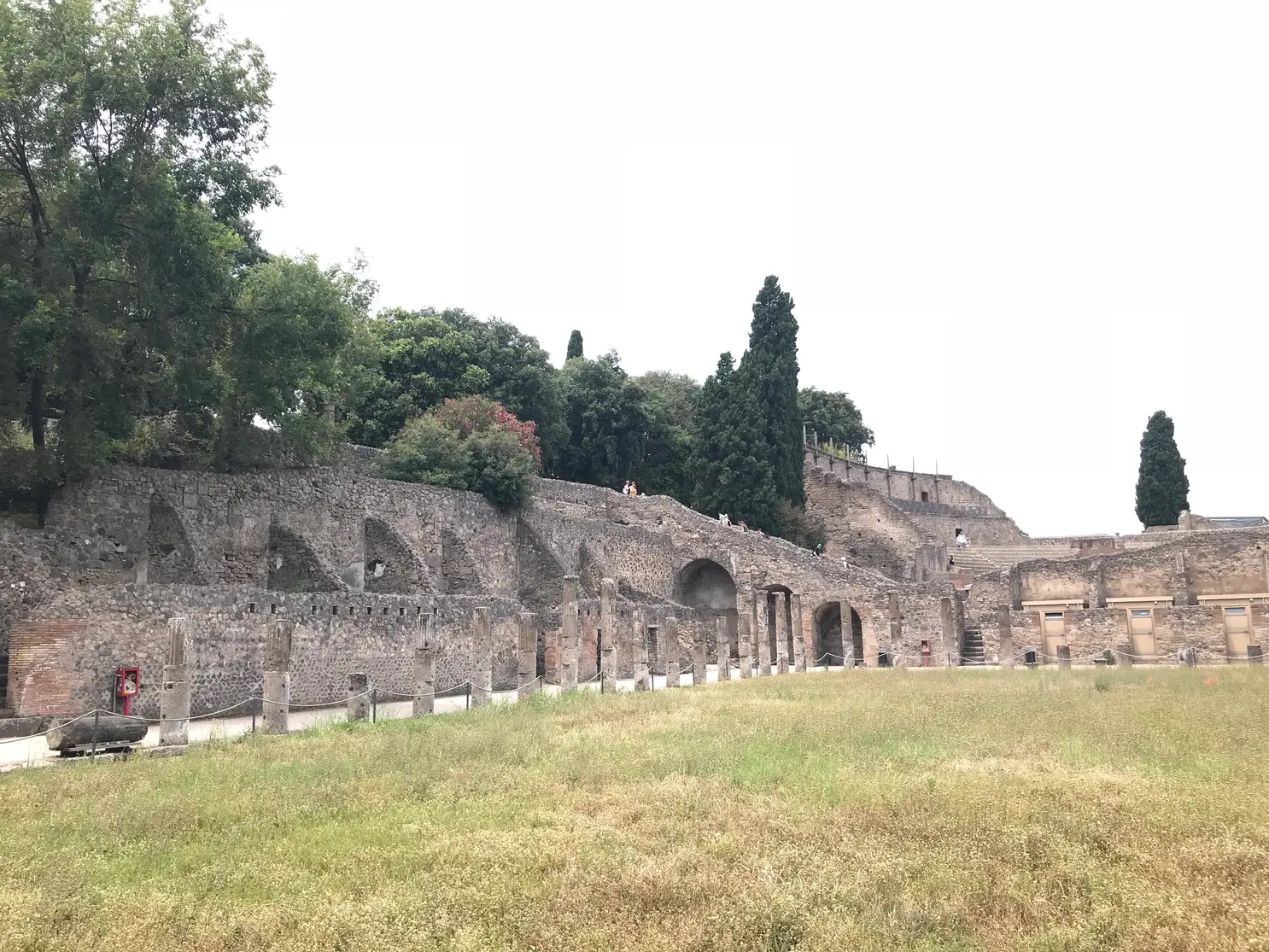
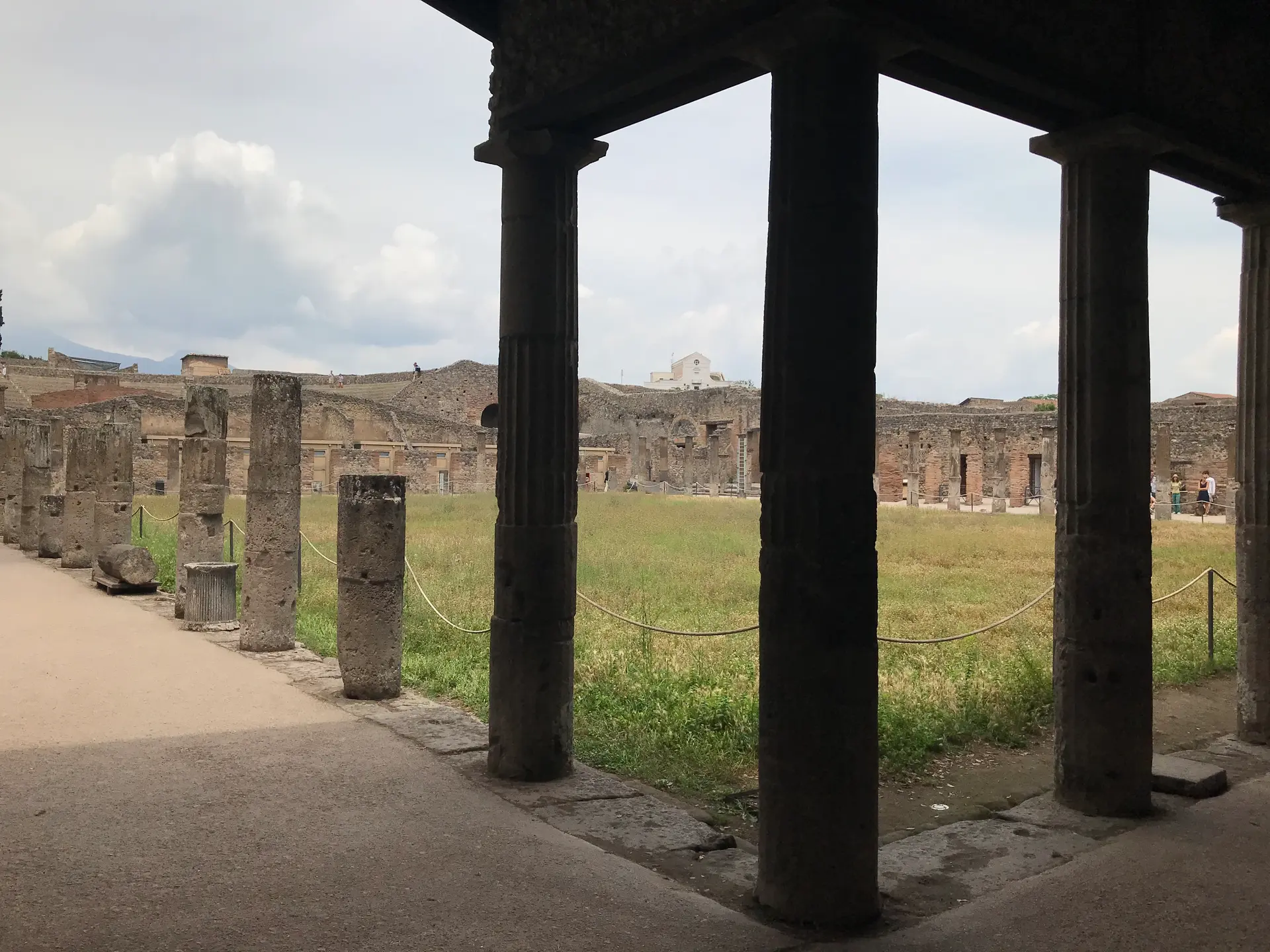
The Theatre QuarterThe curve of seating and the buildings packed around it, seen from above with cypresses standing where the city ended.The Vaulted EntranceA brick-arched passage into the seating, with worn steps and a herm standing at the turn.The TiersRows of stone seating running down toward the stage.The Barrack YardA great rectangle of open ground behind the theatres, ringed by an arcaded wall. It began as a portico for theatre crowds and ended as quarters for gladiators.The ArcadeThe arcading along the far side, with pines and cypresses on the bank above it.Through the ColonnadeThe yard seen out between the surviving columns of the portico that ran around it.
Now
The Site Today
Where the excavation stops and the modern ground begins.
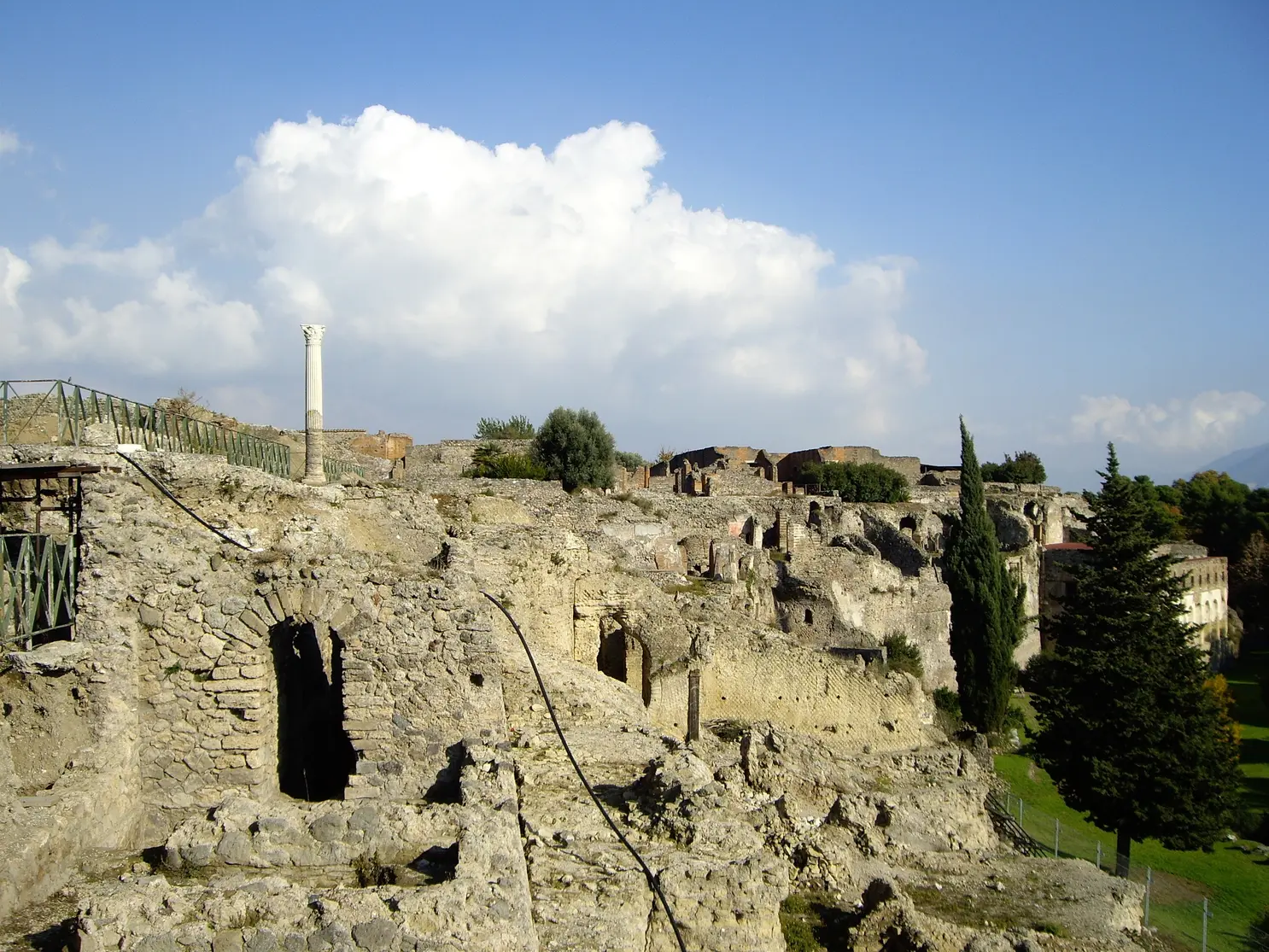
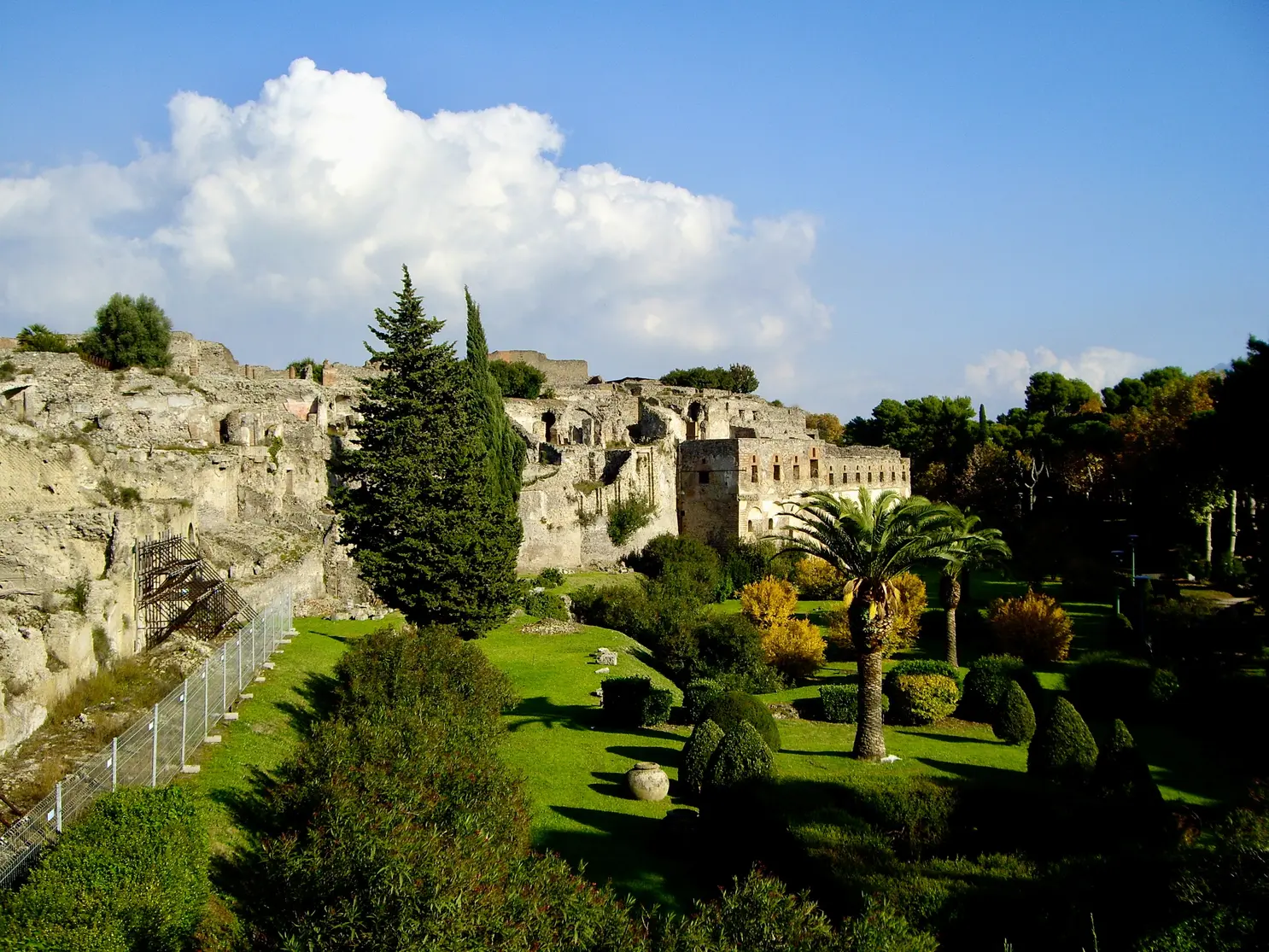
The CutThe excavation ends in a wall of earth. Everything above that line is where the city sat for centuries under the ash.The Edge of the CityPlanted terraces below the walls, with a large part of Pompeii still unexcavated beyond them.
Some links may earn us a commission at no cost to you. We only recommend places we would stay.
Local Tips
Enter early through Porta Marina, or use the quieter Piazza Anfiteatro gate and walk the city against the flow.
Wear real shoes. Two thousand year old paving stones are beautiful and ankle-testing in equal measure.
Stand with the casts a moment. The plaster figures are the site's conscience, and hurrying past them misses what Pompeii is.
Do the crater the same day if your legs agree: city in the morning, volcano in the afternoon, and the eruption story told in the right order.
Frequently Asked Questions
How long does Pompeii take?
Four hours covers the greatest hits at a human pace; completists spend a full day and still miss streets. Decide your version before you enter and the site stops feeling infinite.
Pompeii or Herculaneum?
Pompeii for scale and fame, Herculaneum for preservation and calm; they answer different questions about the same day in 79 AD. Our full comparison lives on the Herculaneum page.
Do I need a guide at Pompeii?
The site makes sense alone with a map and patience, but a good guide turns streets into stories. Two hours guided plus two hours wandering is the best of both.
Can I climb Vesuvius the same day?
Yes: buses run from both Ercolano and Pompei to the crater path, an easy uphill half hour to the rim. Morning city, afternoon volcano is the classic order.
Join thousands who discovered the real Naples. Get our comprehensive guide with the best pizzerias, safety tips, day trip planning, and authentic local experiences.
Some links on this site are affiliate links. If you book through them, we may earn a commission at no additional cost to you. We only recommend tours and stays we would book ourselves.