Circumvesuviana to Ercolano Scavi, then a short walk downhill
⏱️
Duration: Half a Day
Smaller than Pompeii and far easier to finish
🌋
Depth: About 20 Metres
Buried deeper than Pompeii, and better preserved for it
🏺
Also Here: The Antiquarium
The site museum holds the boat, the bronzes and the bread
🏛️ Why Visit
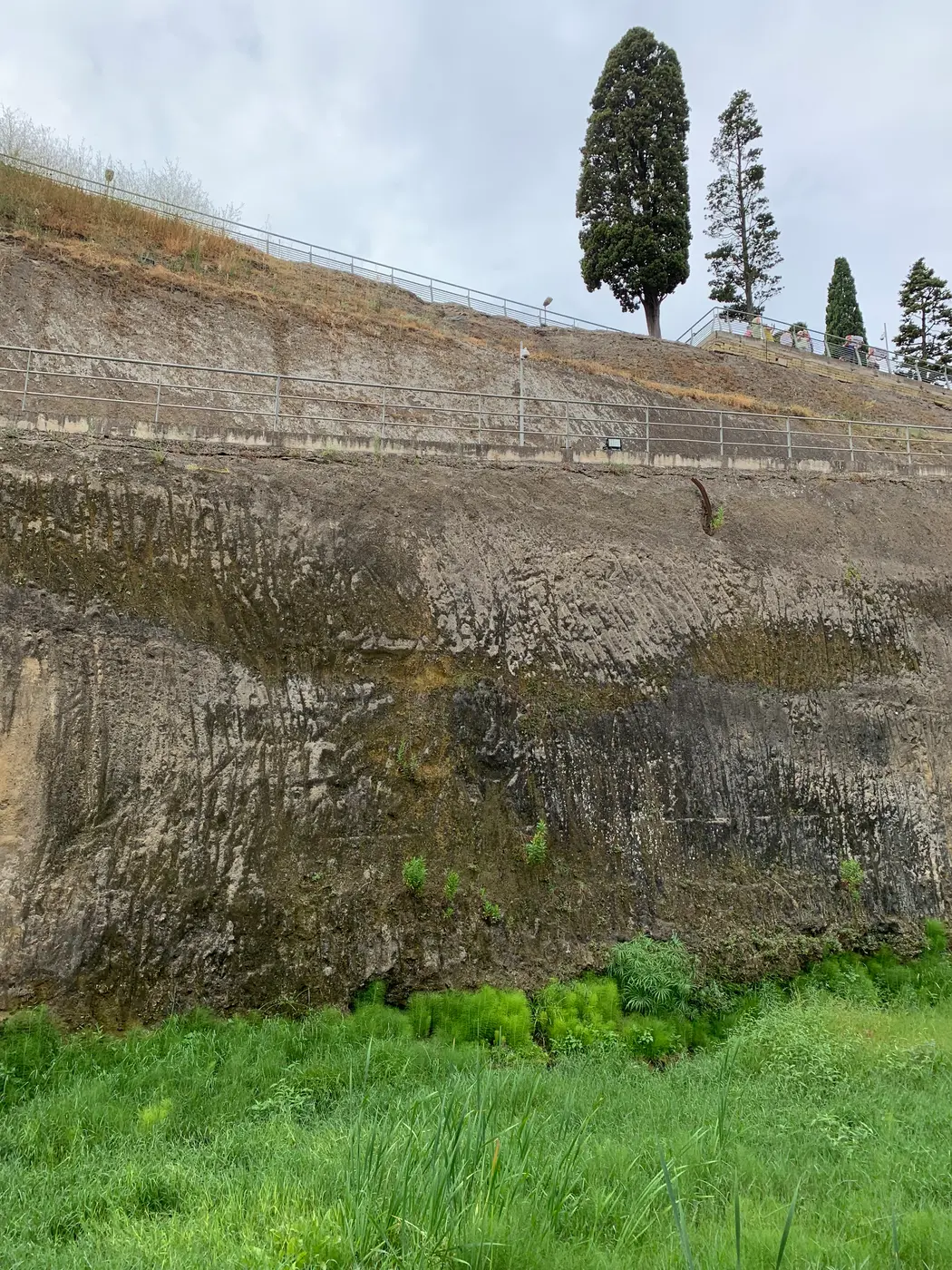
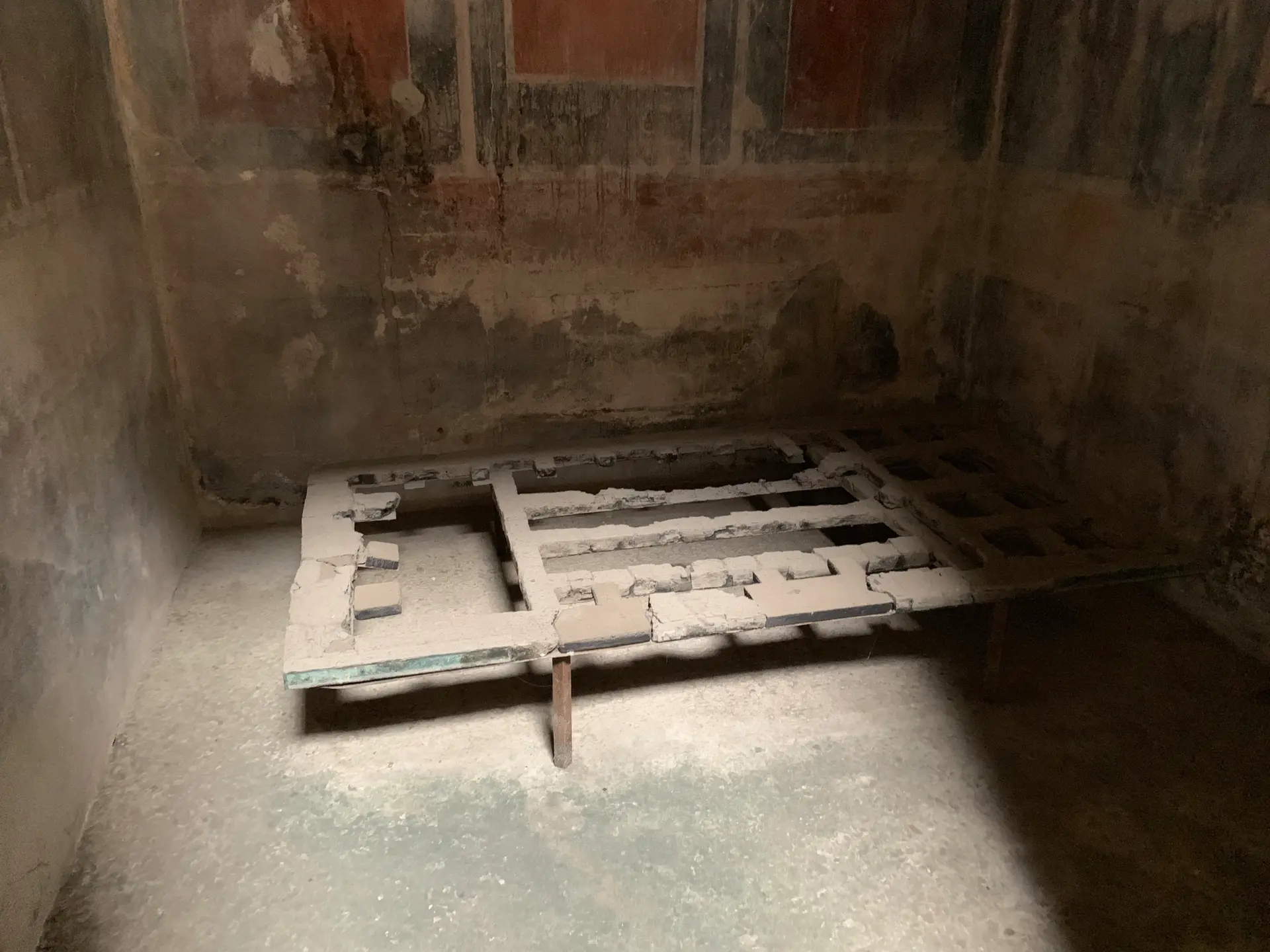
Pompeii was buried in ash and Herculaneum in a pyroclastic flow, which charred the wood instead of burning it and sealed the town under about twenty metres of rock. The result is a smaller site where doors, shelves, beams and upper floors are still standing, and where you can see all of it before lunch.
📜 A Little History
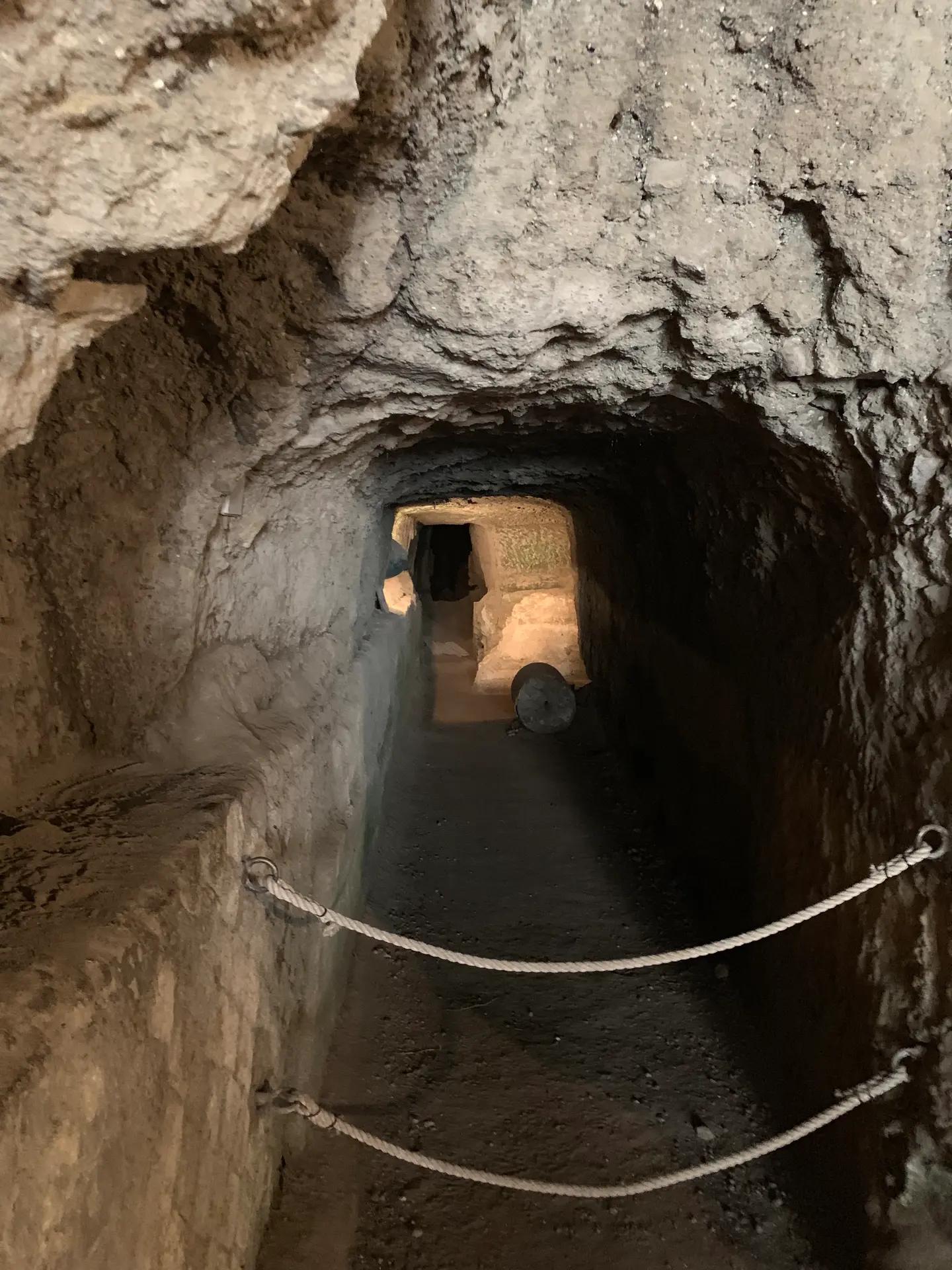
A wealthy seaside town of a few thousand people, closer to Vesuvius than Pompeii and buried deeper. Well diggers found it in the early eighteenth century and the first exploration was done by cutting tunnels through the deposit. Most of the town is still under the modern one.
💡 Did You Know?
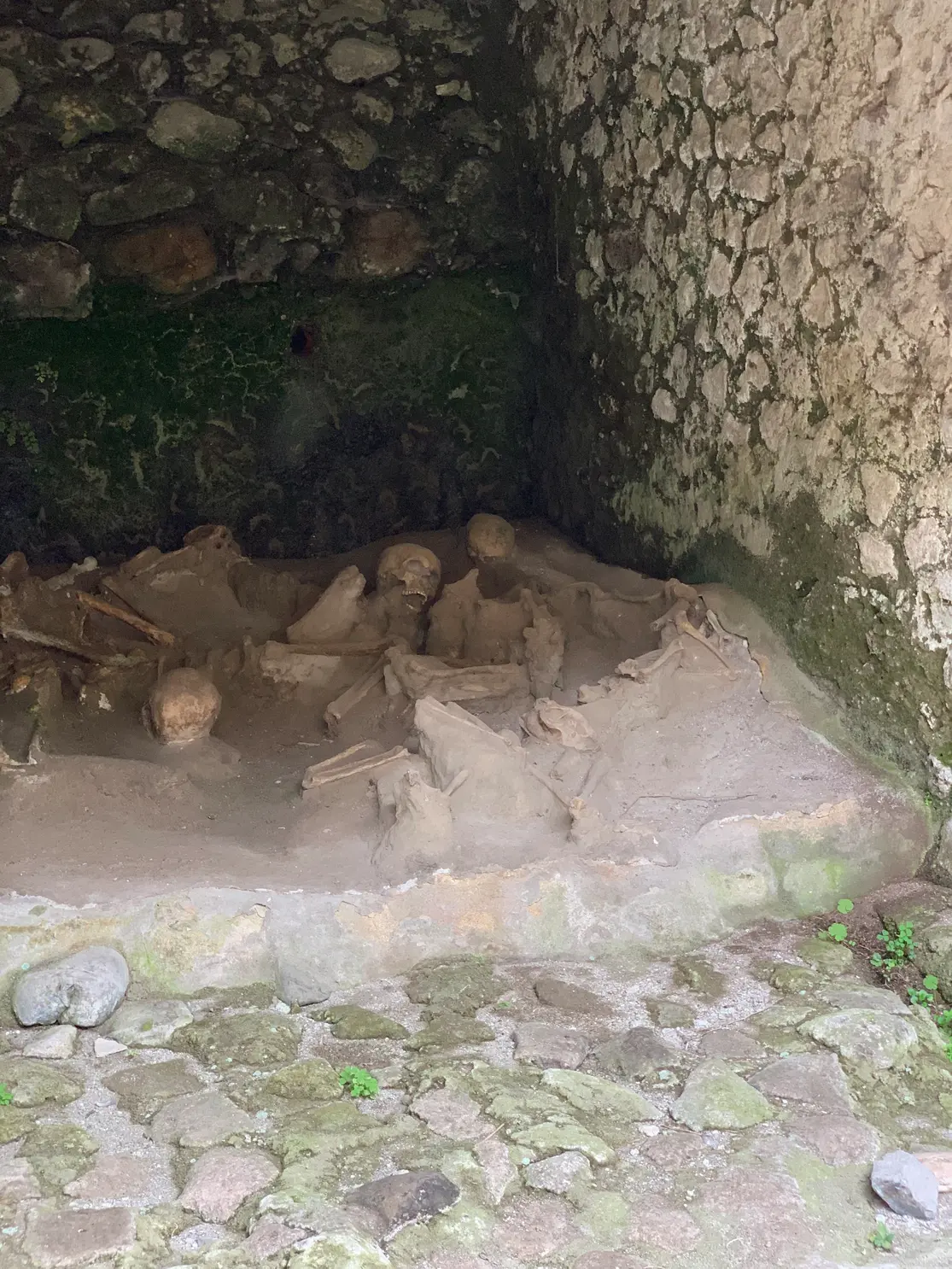
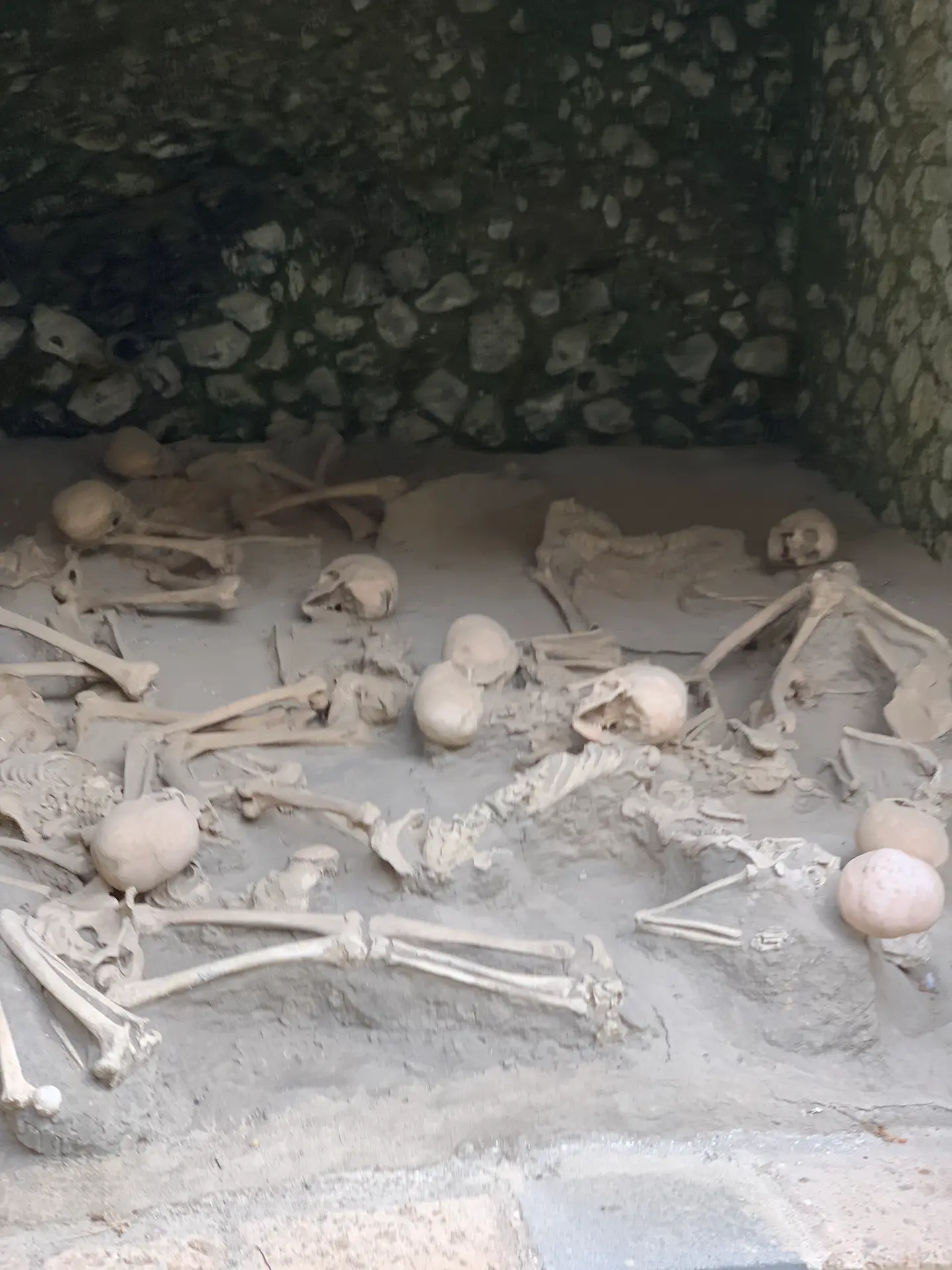
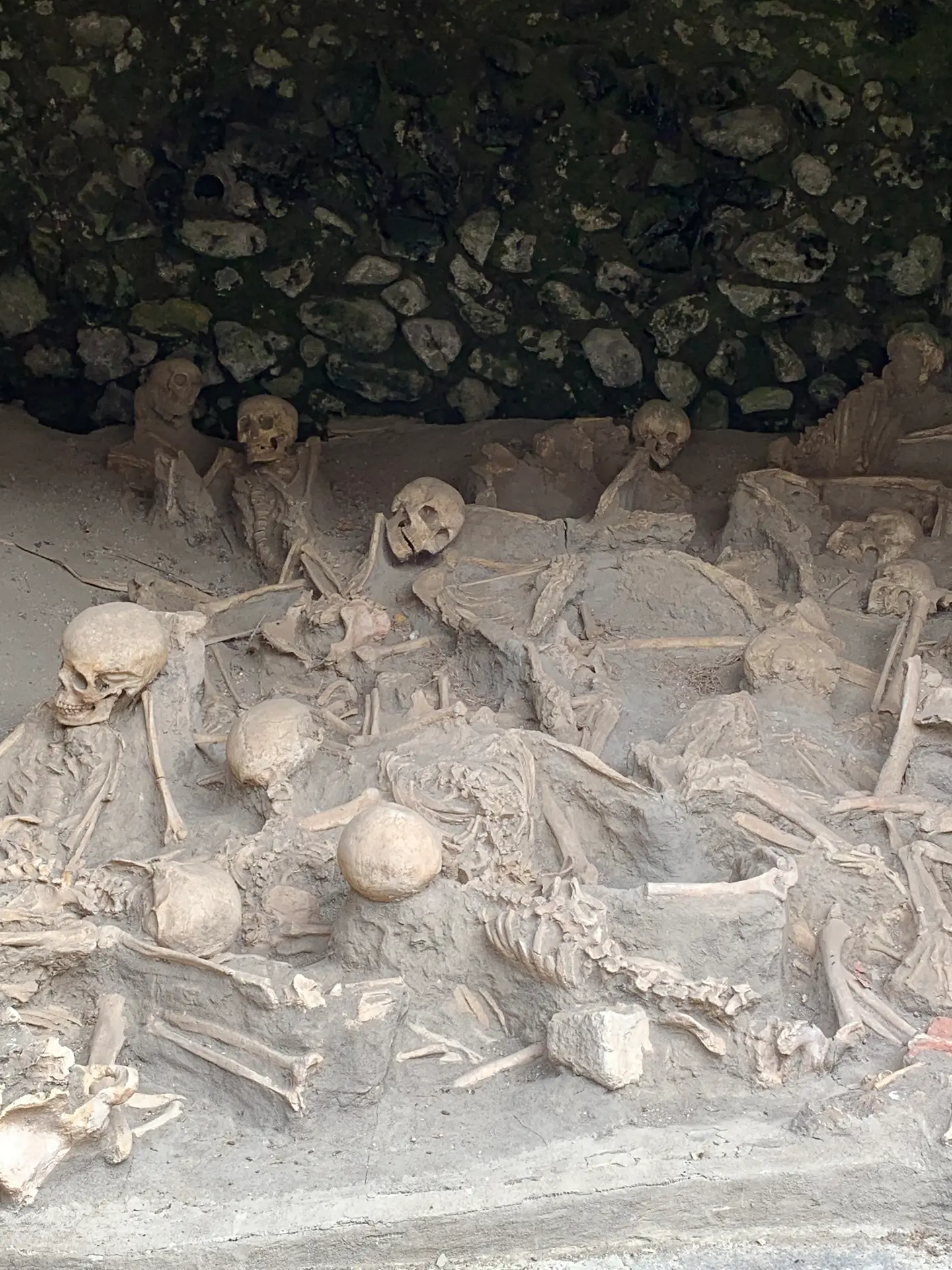
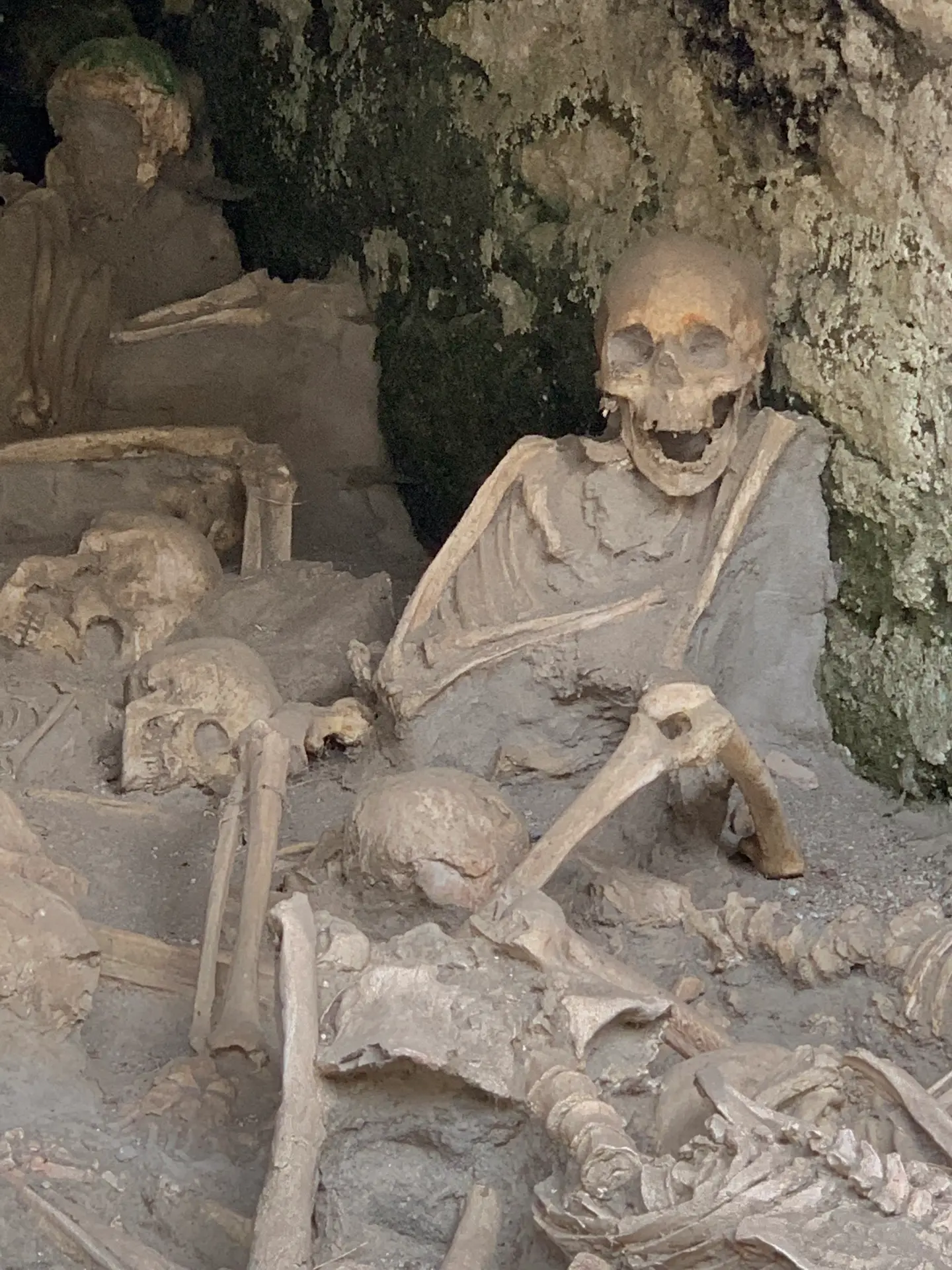
For two centuries it was assumed the population had escaped, because almost no remains were found. Then in the 1980s hundreds of skeletons turned up in the boat sheds on the ancient beach, where people had gathered to wait for rescue that never came.
Where to stay nearby
🛏️ Base Yourself in Naples
Nobody needs to sleep in Ercolano. Any centro storico or Lungomare base puts you twenty minutes from the gate on the Circumvesuviana,…
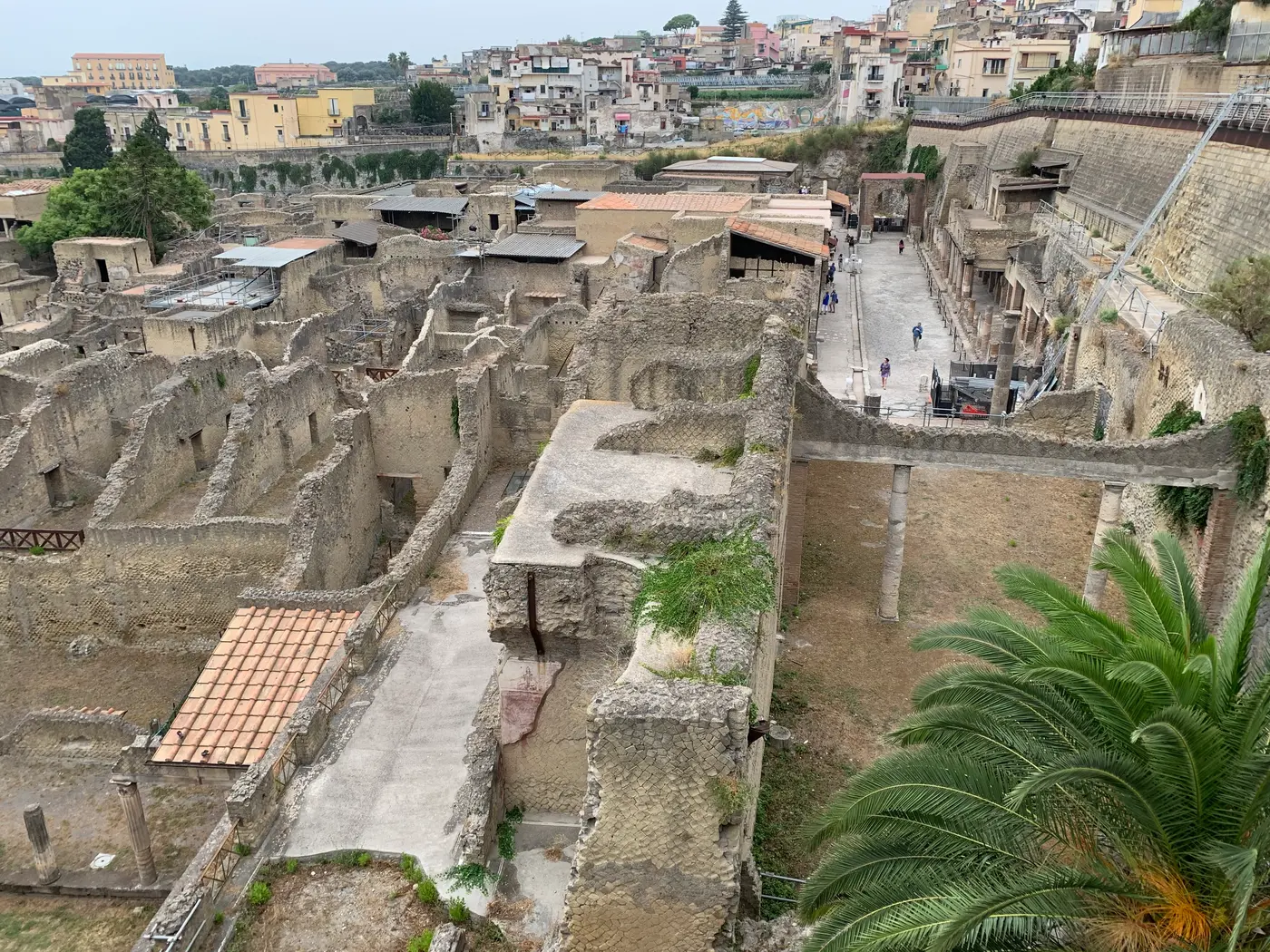
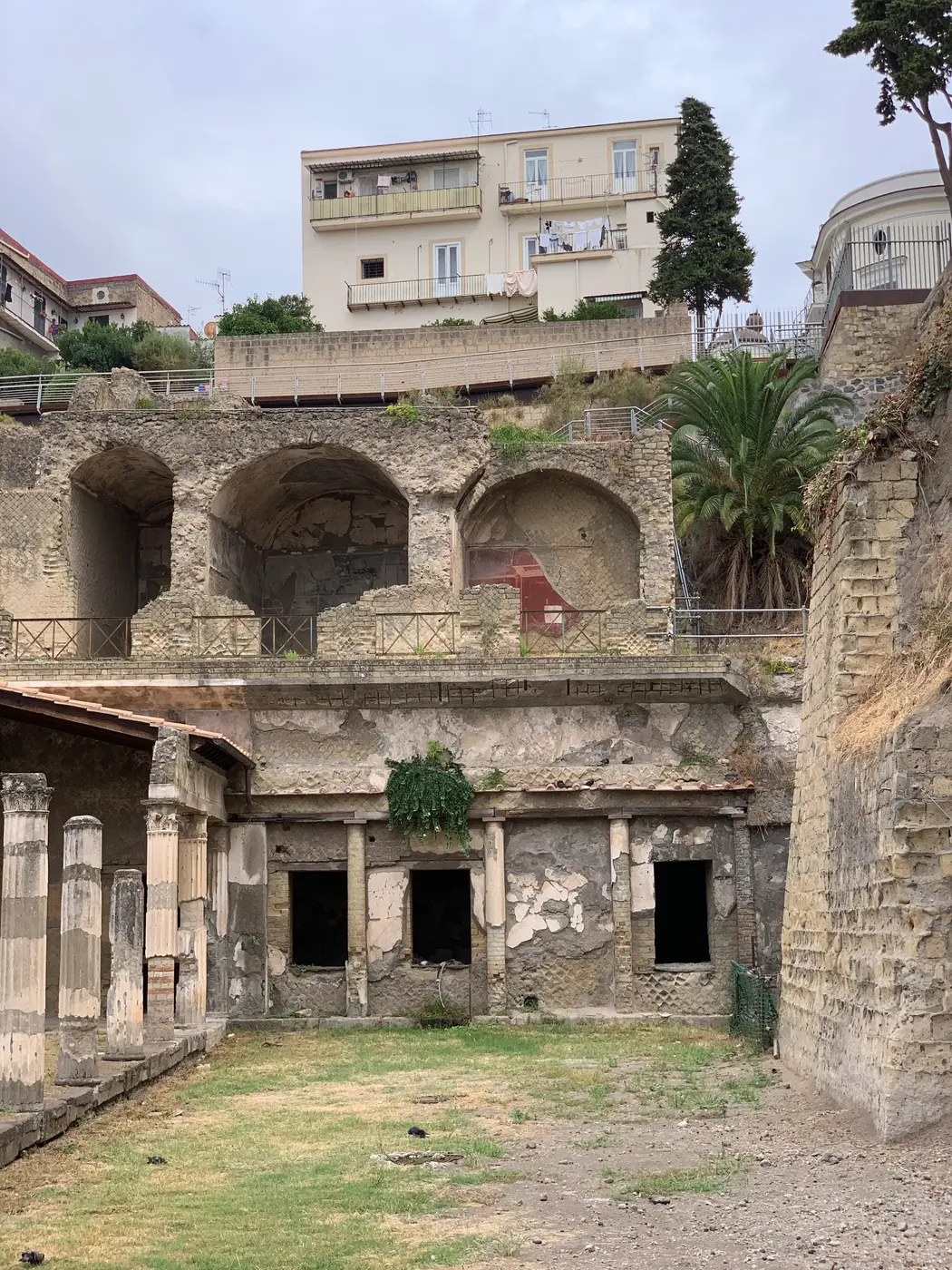
The site sits in a pit below the modern town, and you meet it from above.
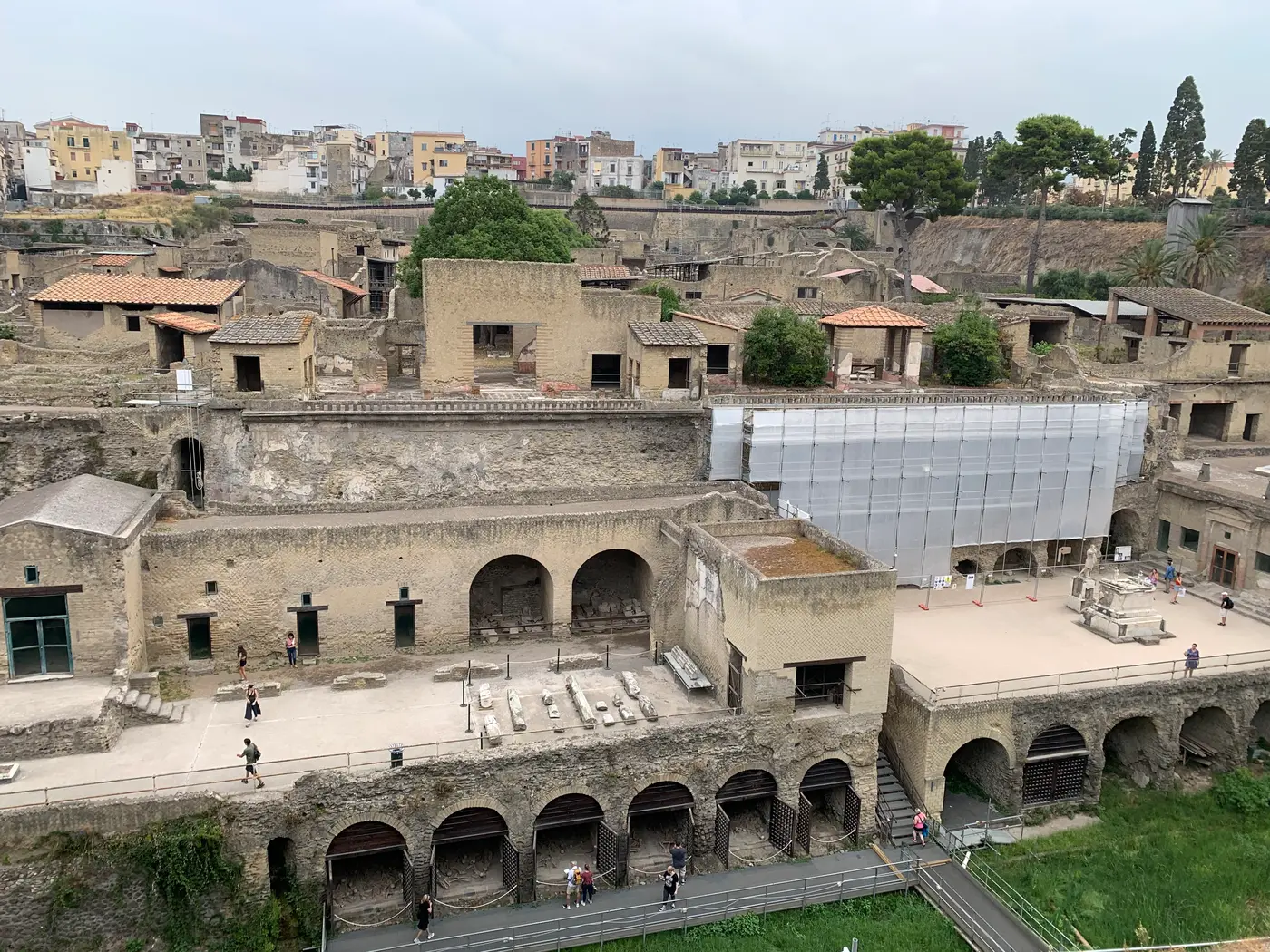
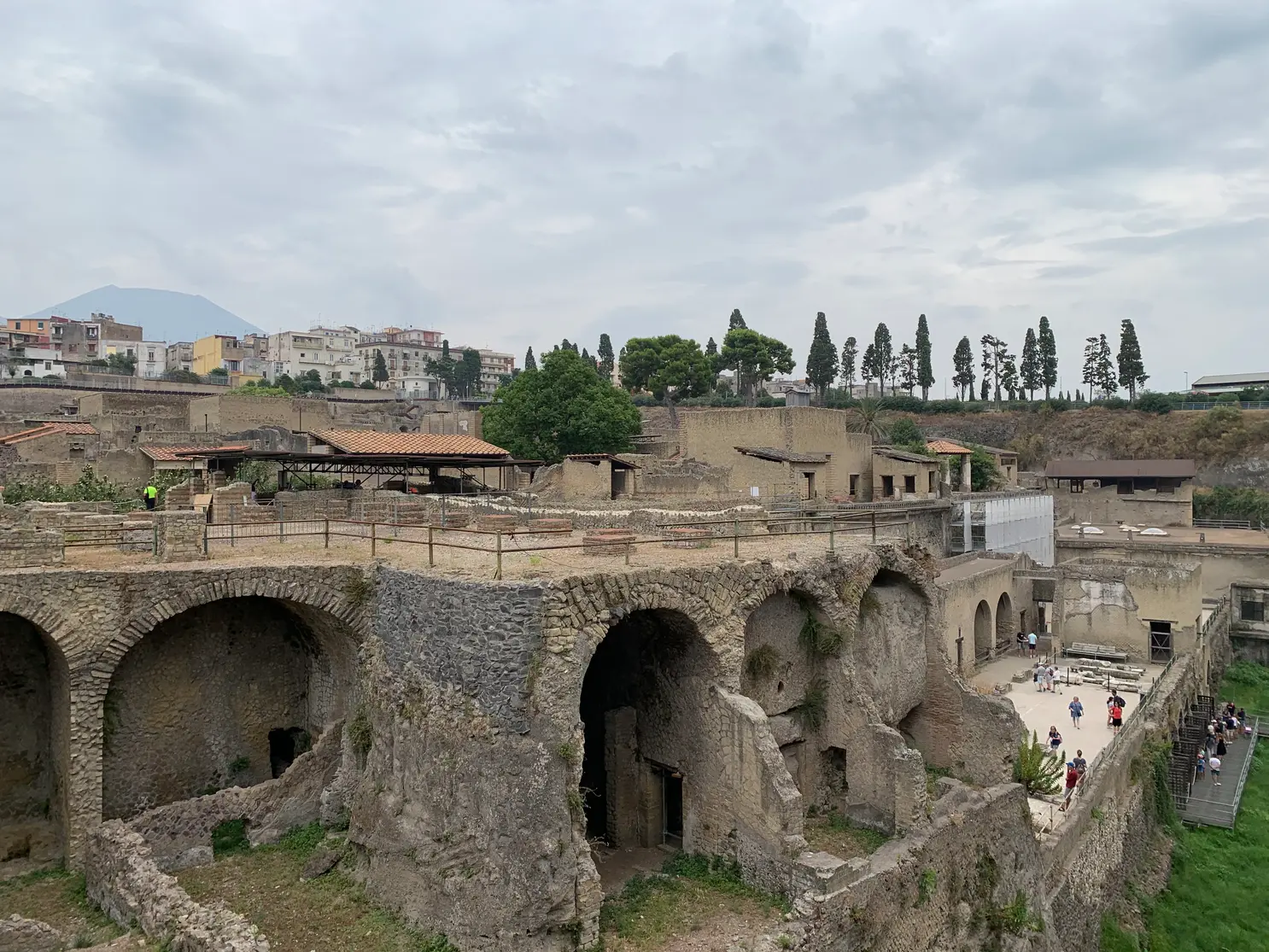
The First ViewErcolano stops at a railing and the Roman town starts twenty metres below it. Nothing prepares you for how abruptly the two sit together.The Arcades BelowThe seaward wall with its row of arched chambers, and the modern apartment blocks standing directly on the volcanic deposit above.Over the Boat ShedsThe whole waterfront front from the path: the arches at the bottom, the terraces above, the town behind.
Where They Waited
The Boat Sheds and the Shoreline
Twelve vaulted chambers on what was the beach, and what was found inside them.
The VaultsHundreds of people sheltered in these chambers on the night of the eruption and were killed where they lay by the heat of the flow. Their remains were found here in the 1980s and some are still in place.Inside a ChamberOne of the vaults from the front. They were boat stores, open to the water, and on that night the closest thing to shelter.The CrowdVisitors along the front of the arches, which is the only way to show the scale of them honestly.Face to FaceThe remains are at eye level and behind nothing. Herculaneum does not stage this and neither will we; it is the reason the site is different from Pompeii.The Old ShorelineThe sea reached this wall in 79 AD. The eruption pushed the coast several hundred metres out and it has never come back.
The Grid
Streets and Shopfronts
A short walk covers most of the excavated town, which is part of its charm.
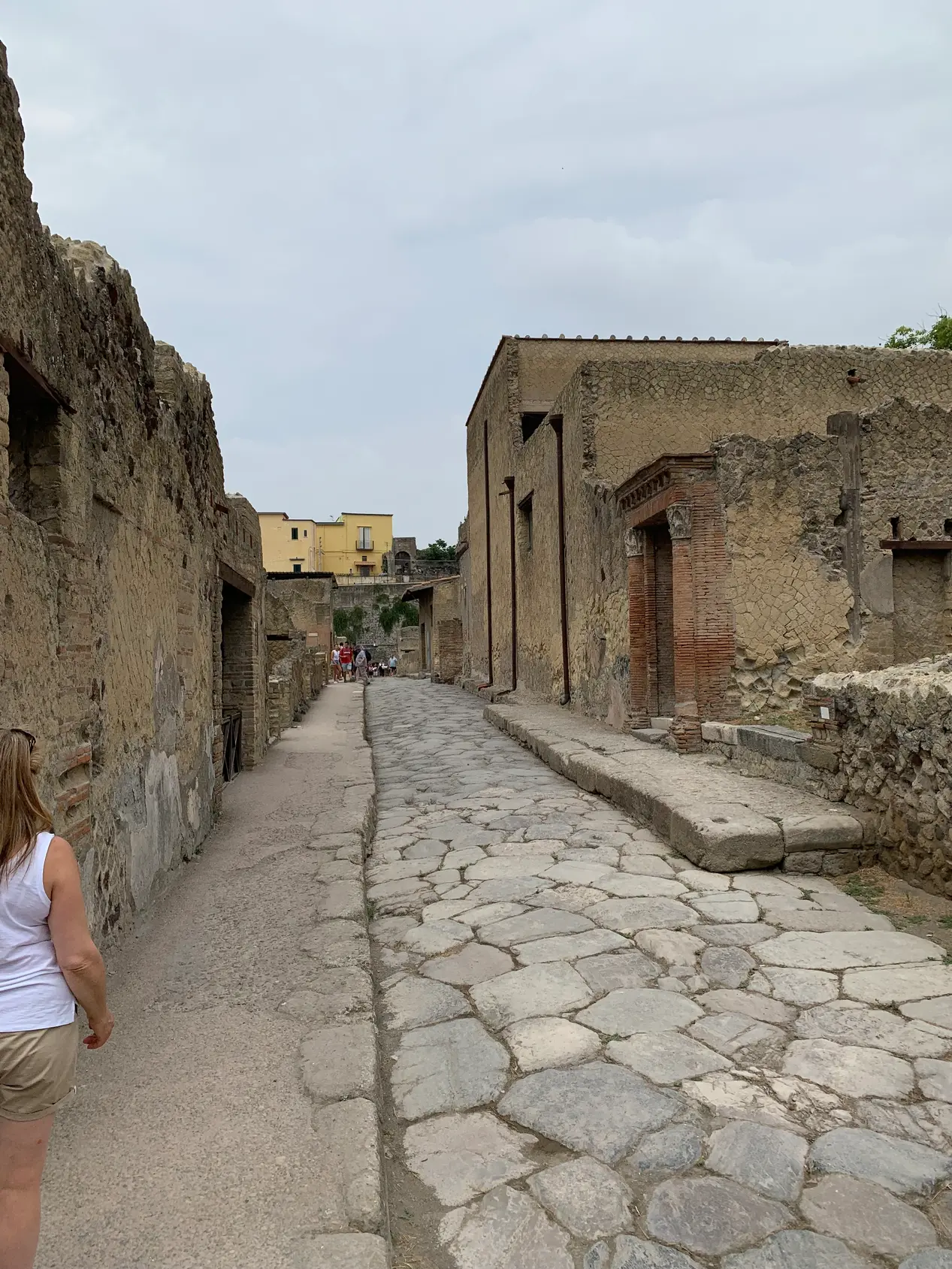
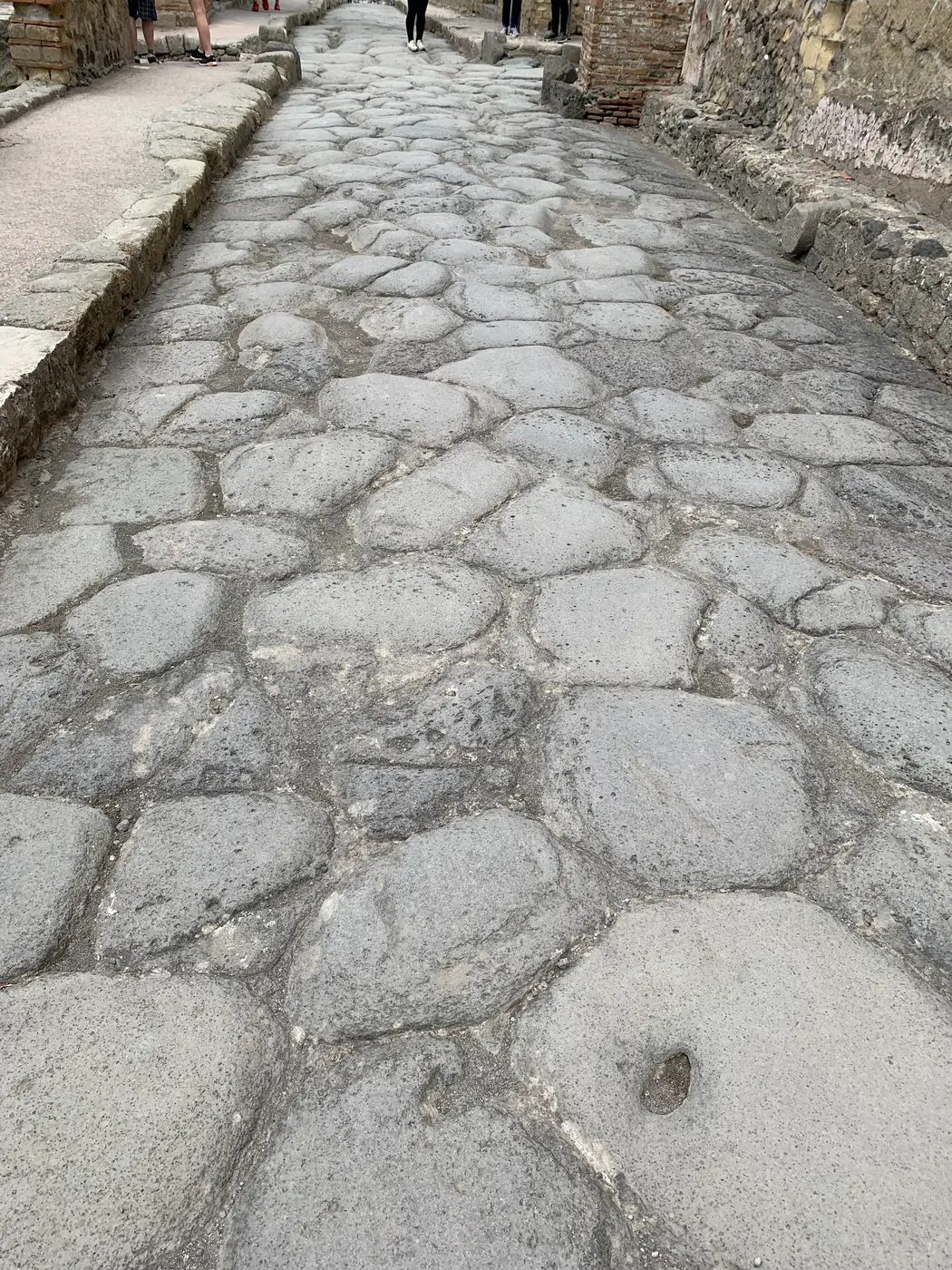
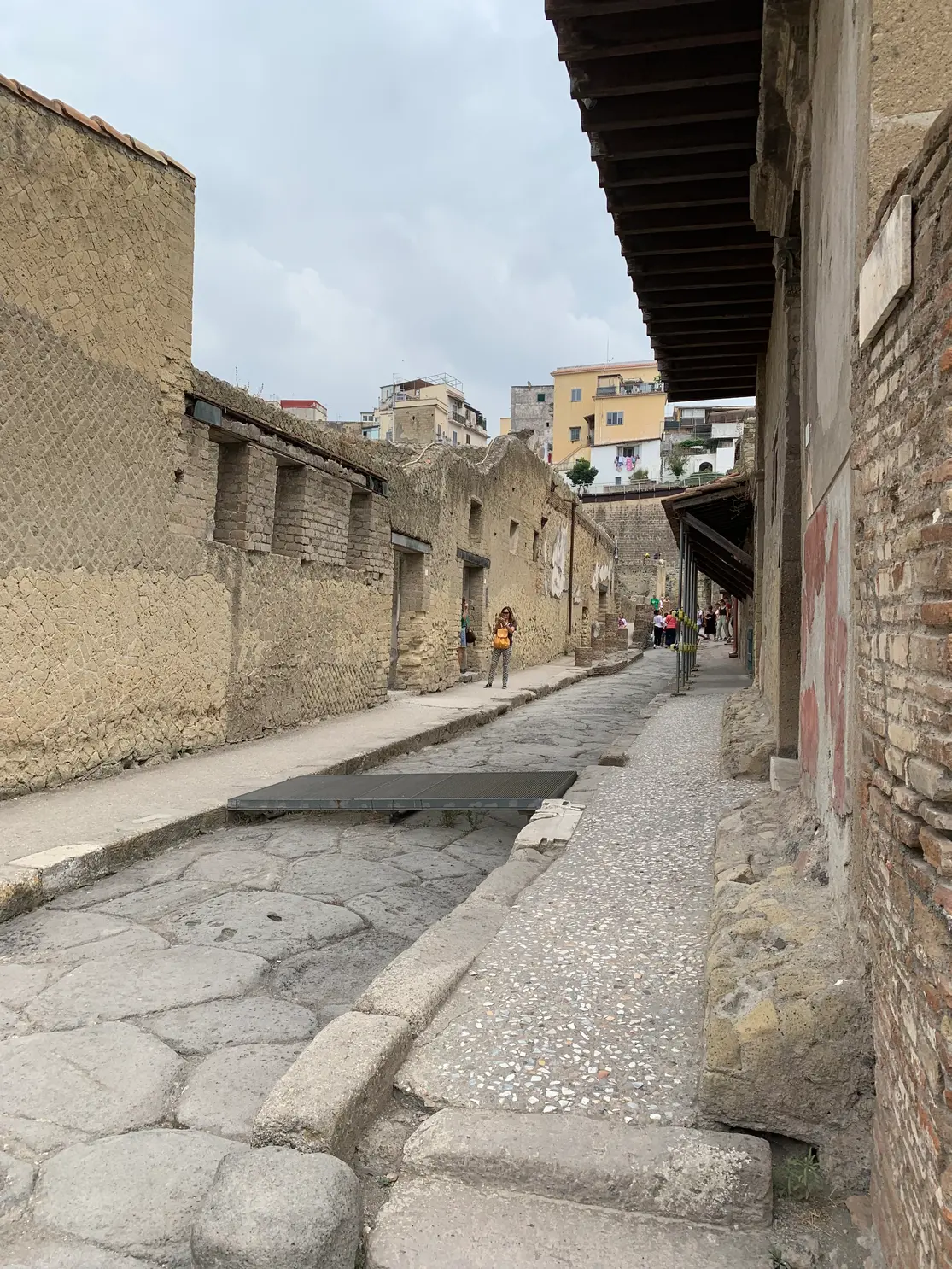
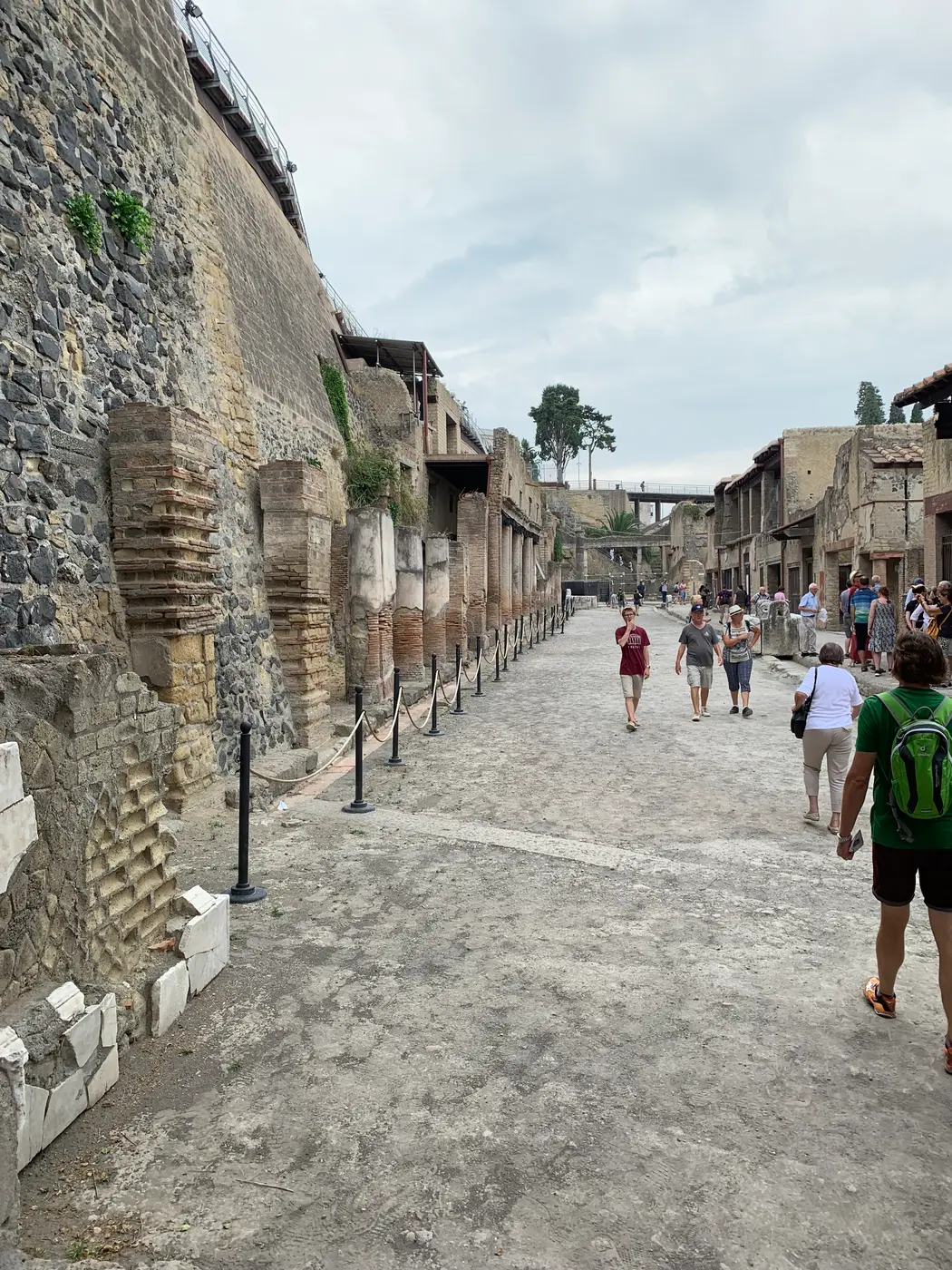
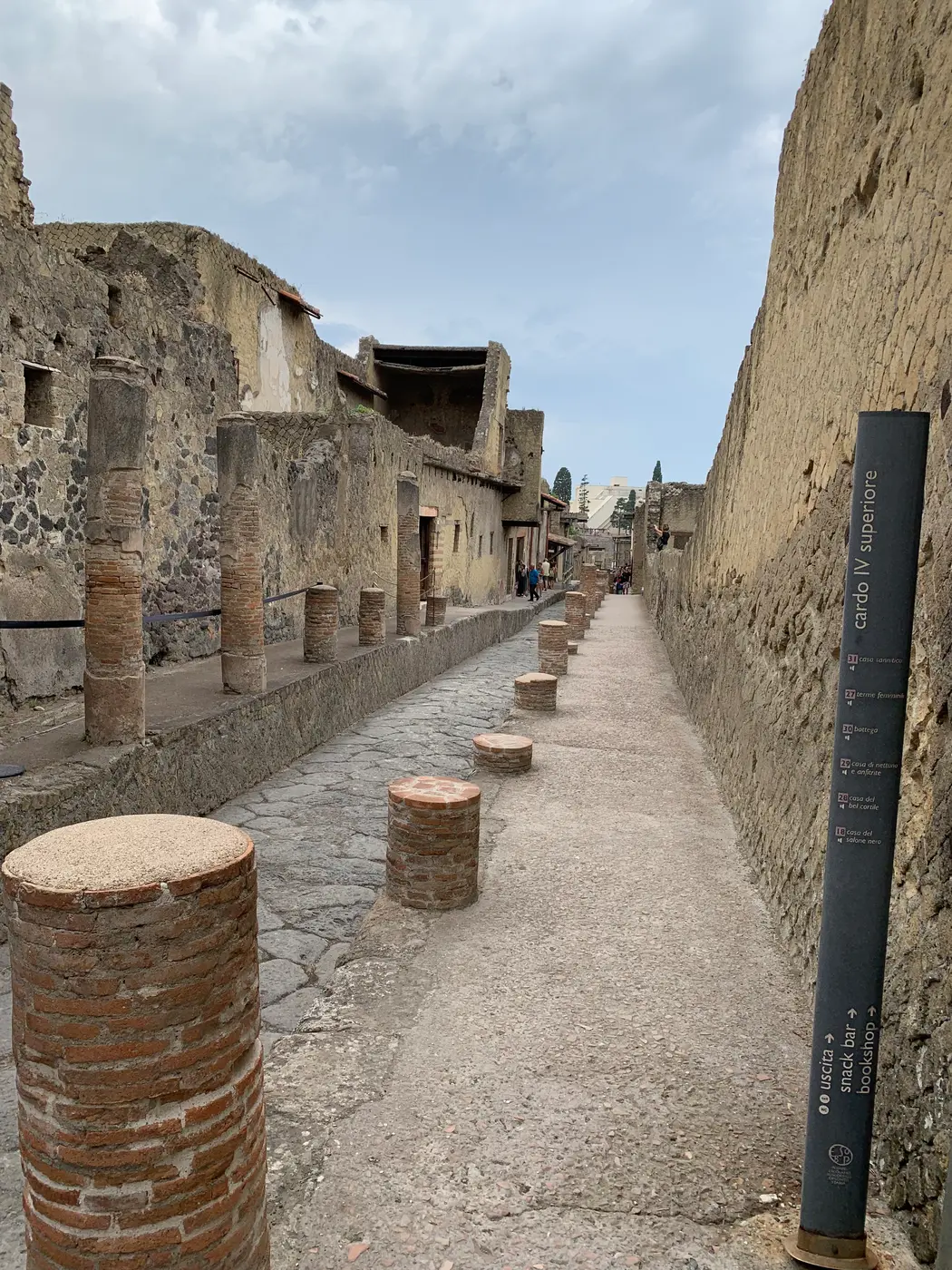
A Street in UseDoorways, thresholds and shopfronts along one of the main streets, with upper floors still standing above them.Kerbs and RutsThe kerb line, the crowned road surface and the wear where wheels ran. Herculaneum has fewer cart ruts than Pompeii because it was not a through route.The SlopeThe street falling away toward the sea, walls rising either side to their full surviving height.The Decumanus MaximusThe main east to west street, wide, colonnaded on one side, and still mostly buried under the modern town at its far end.Column StubsBrick column bases lining a street, cut off at the height the excavation reached.
Eating Out
Bars and Counters
Masonry counters with storage jars set into them, on almost every corner.
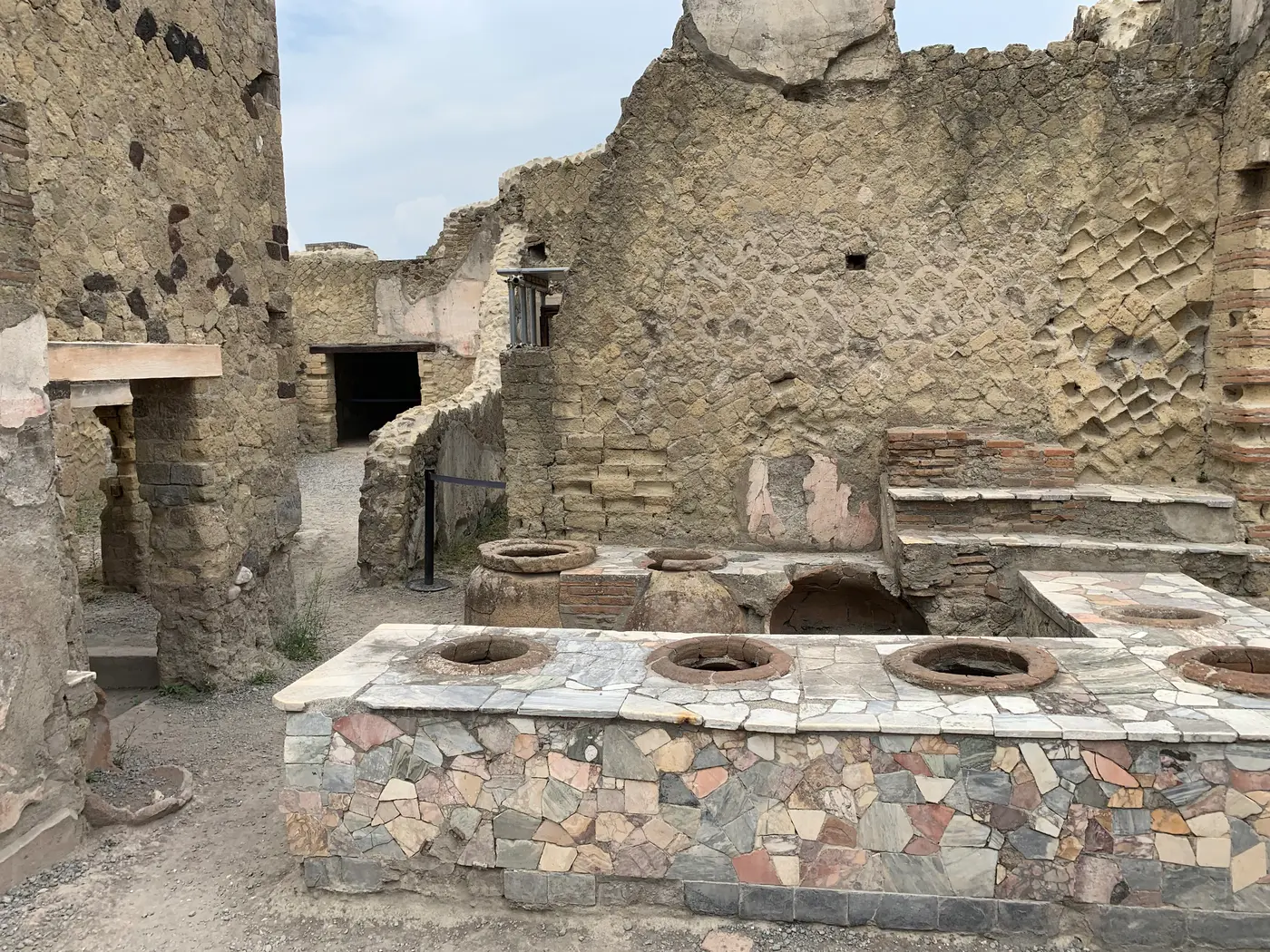
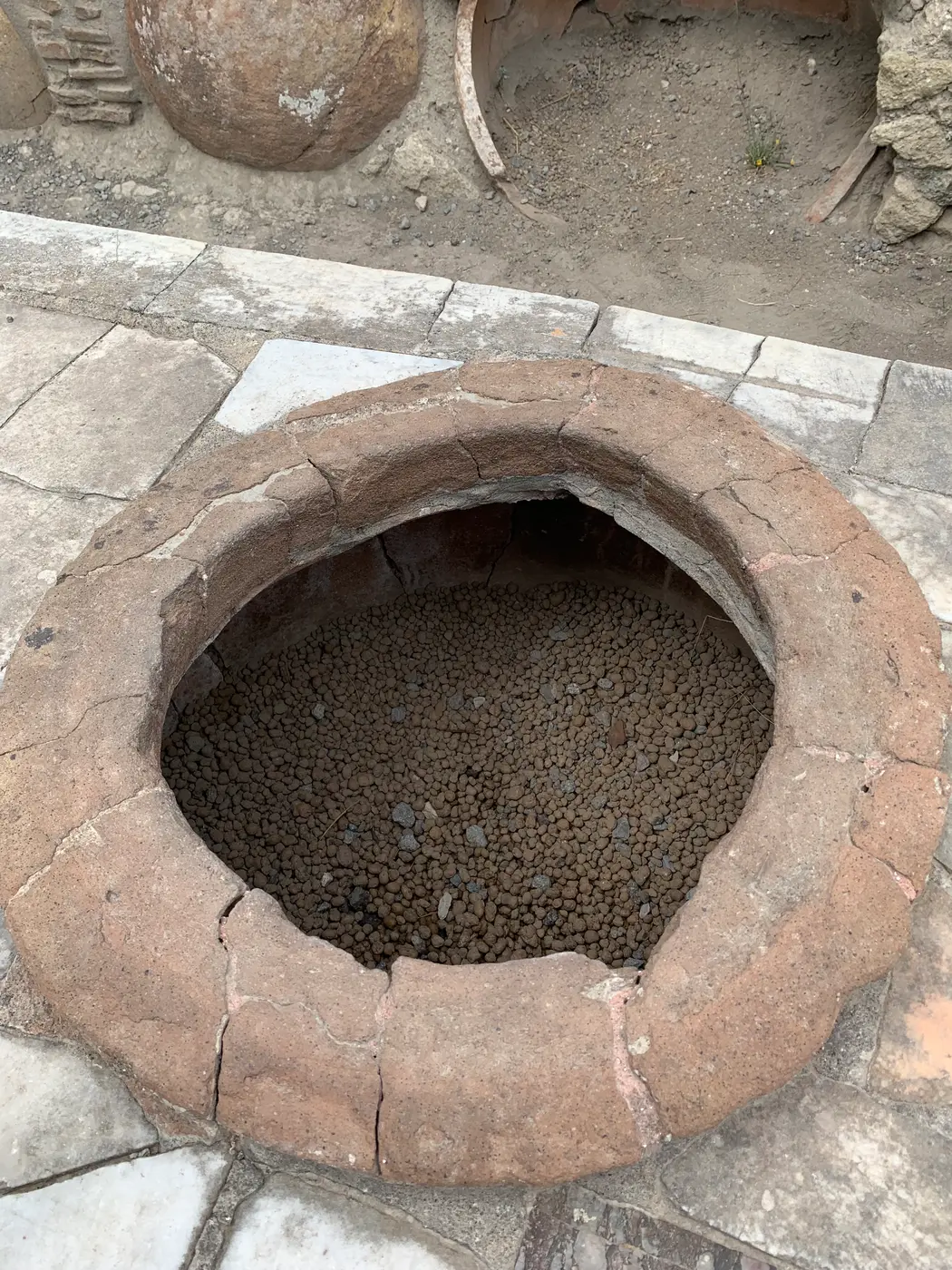
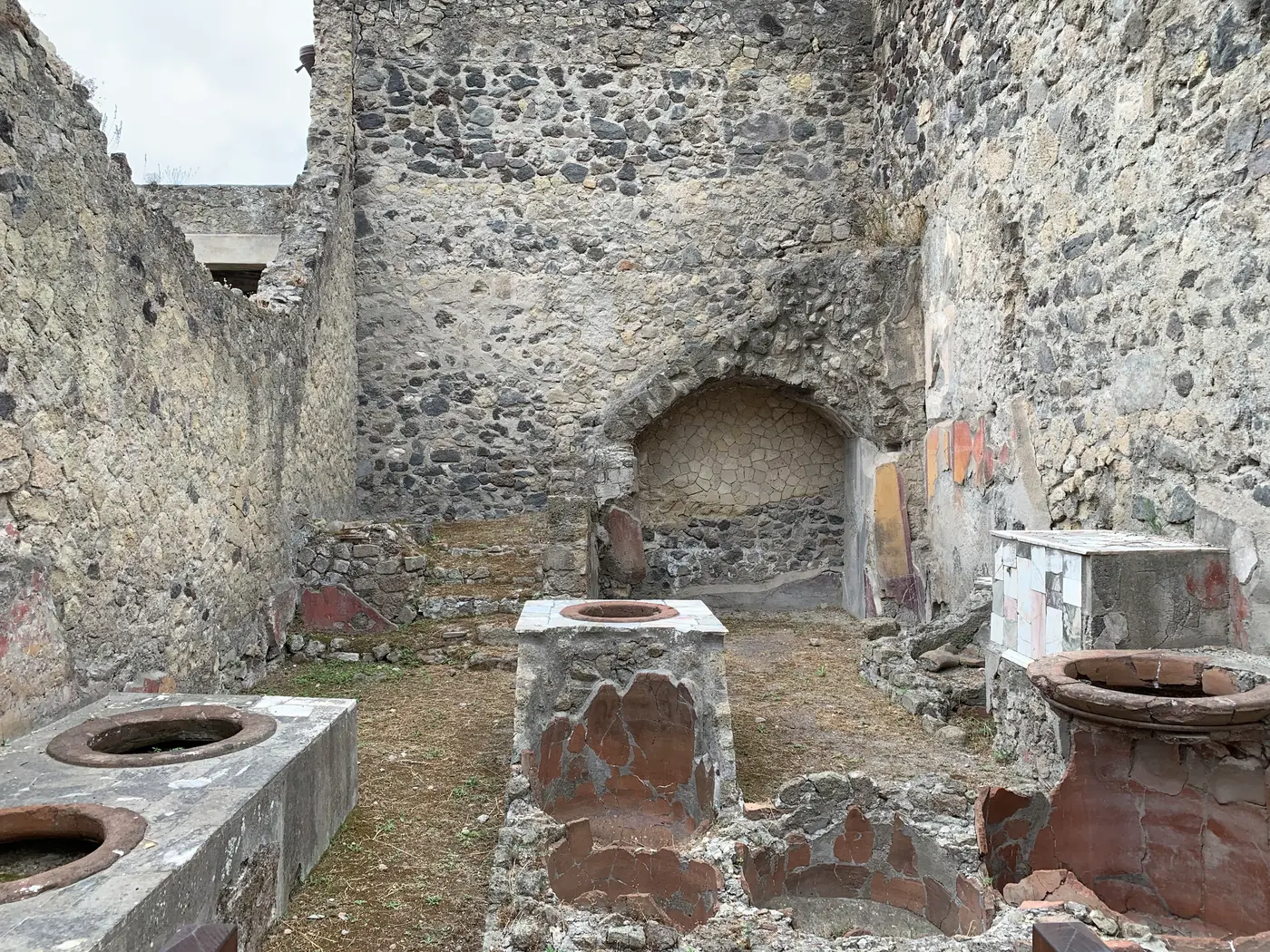
The Marble CounterA thermopolium counter faced in broken marble of a dozen colours, with four terracotta dolia sunk into the top and the shelving still standing behind it.Down Into a DoliumStraight down into one of the jars. They held dry goods and were sunk to the neck so the contents stayed cool.The Shop FrontA shop with two counters, one either side, and a niche in the back wall where a small shrine or a lamp would have stood.
The Grand House
The House of the Deer
A seafront house named for the sculpture found in its garden.
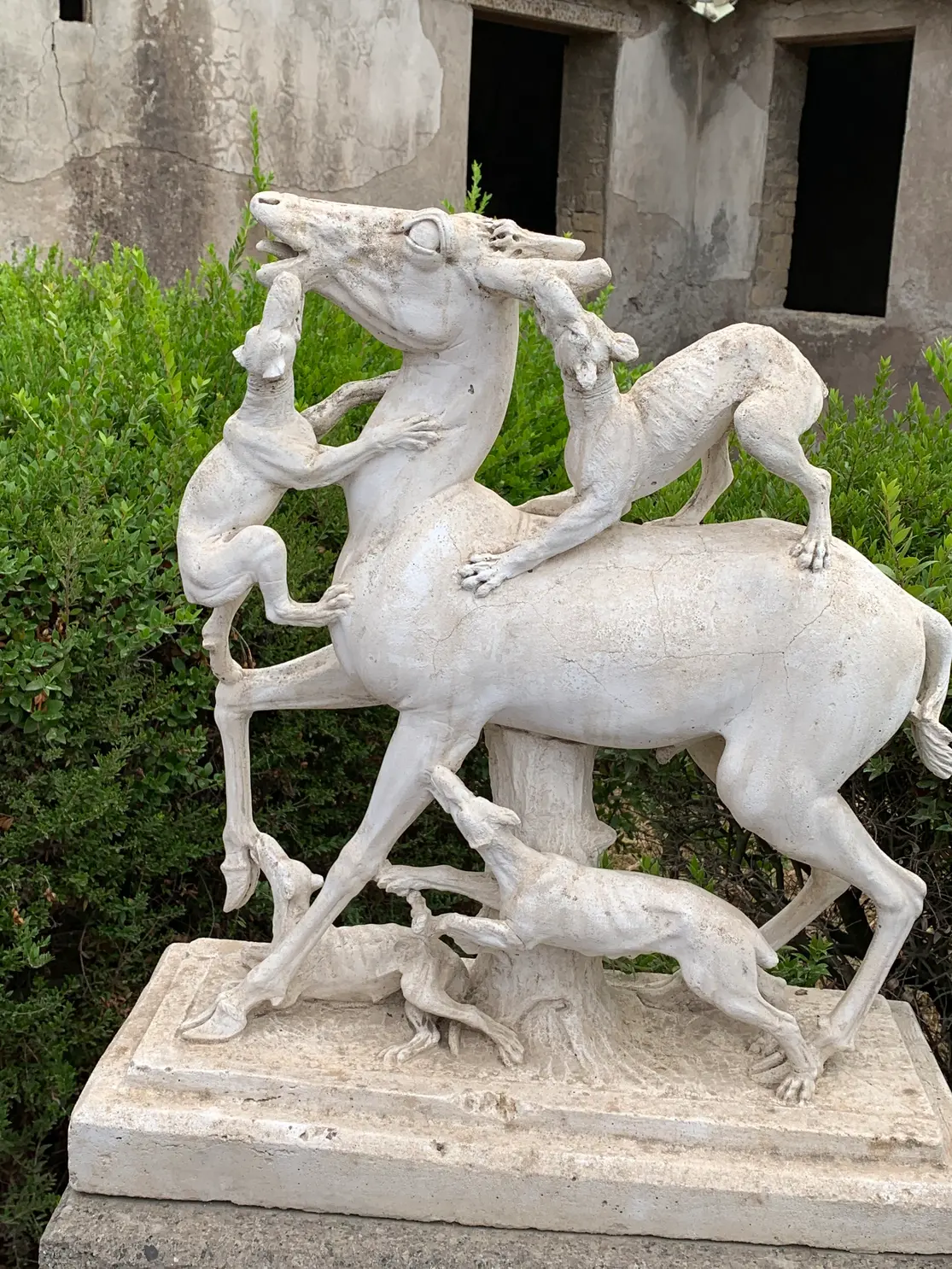
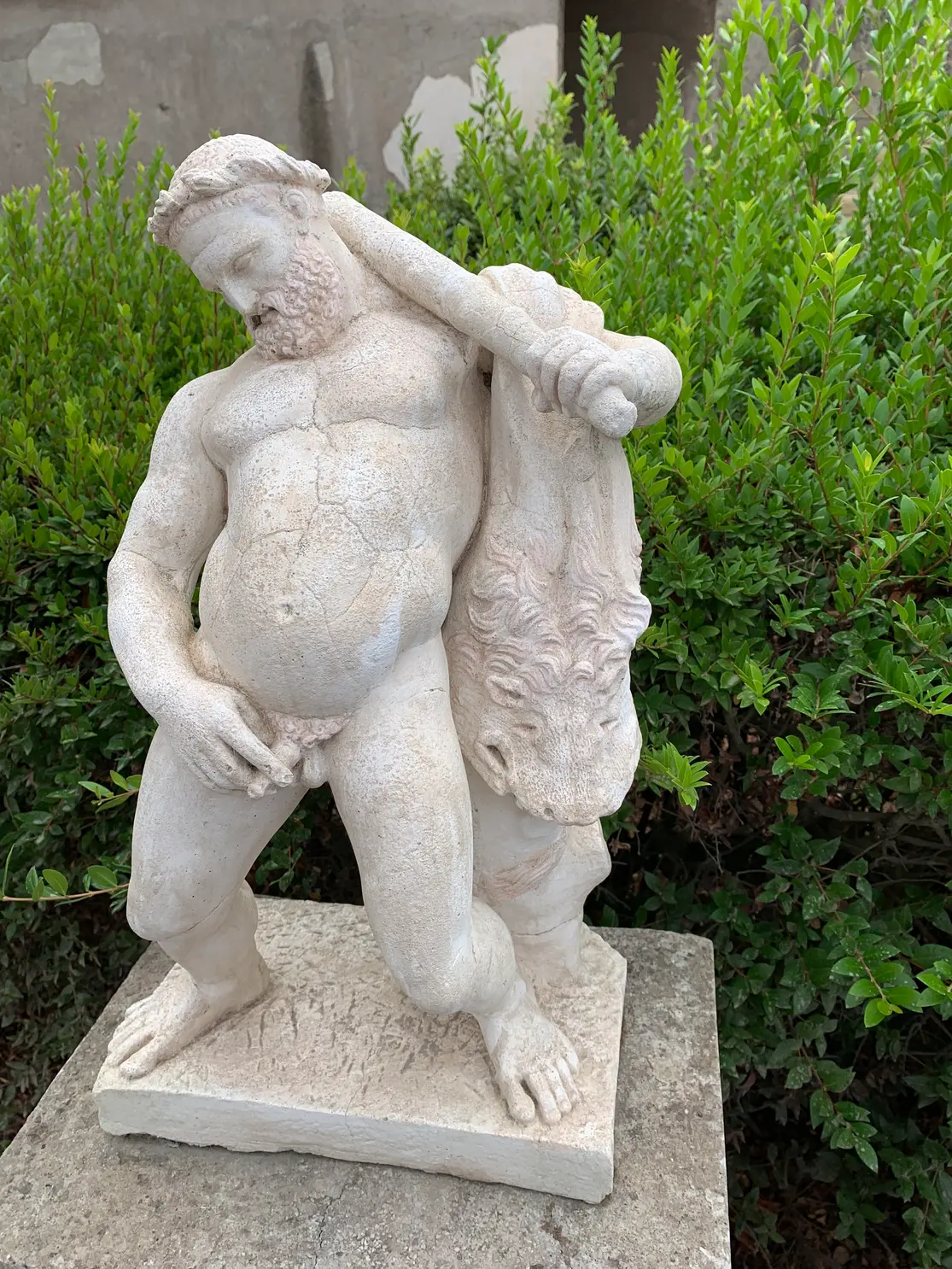
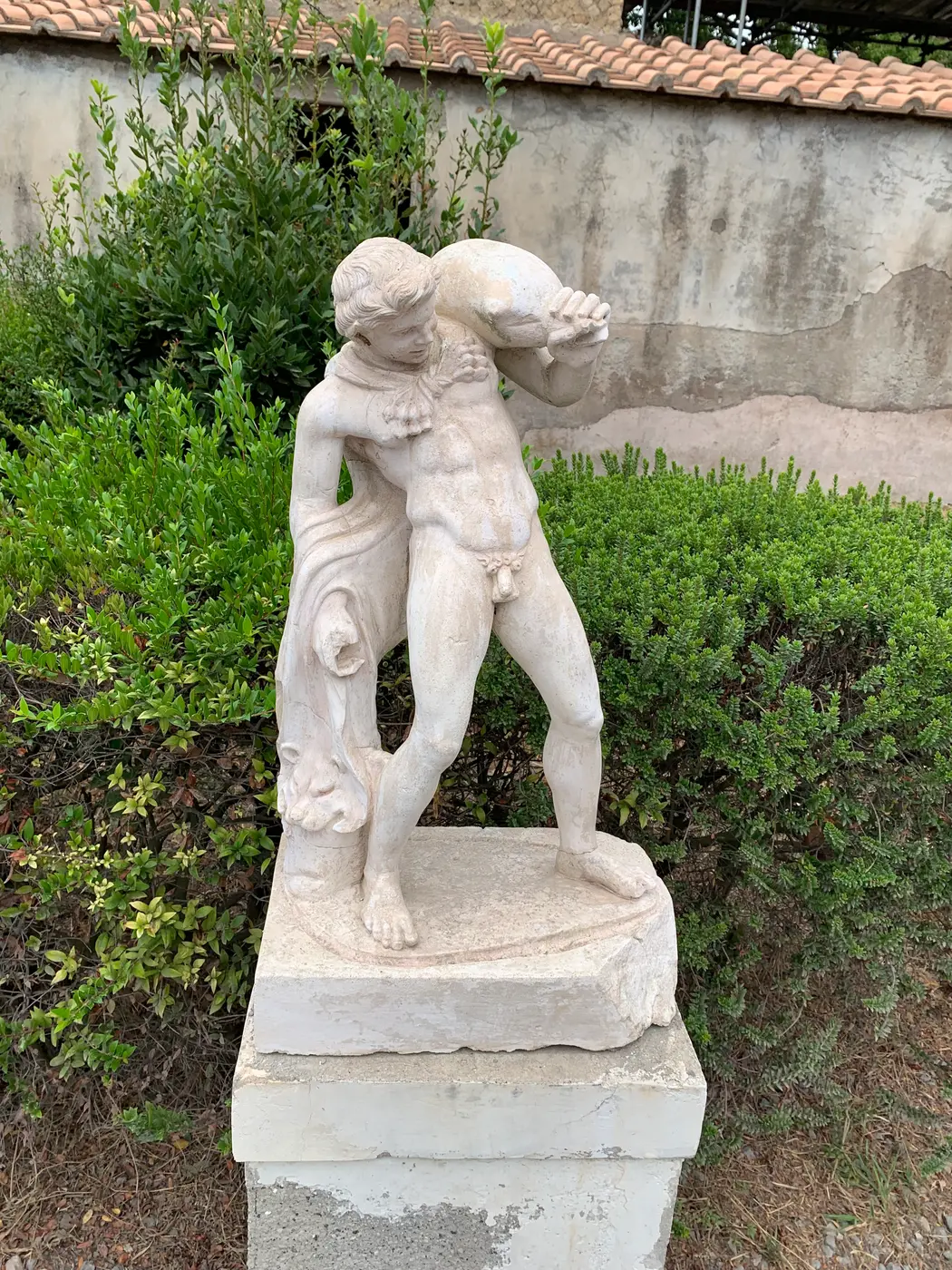
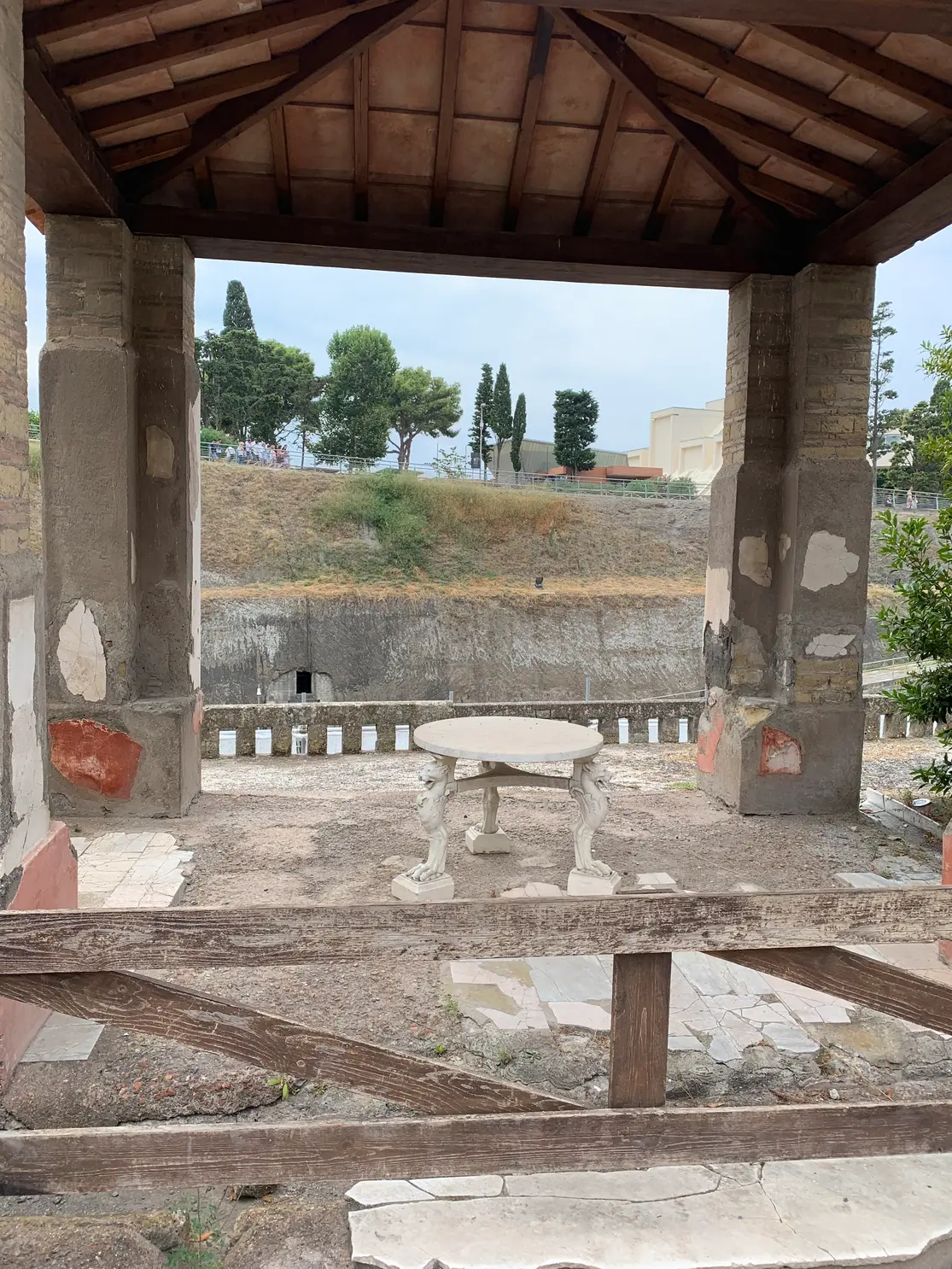
The DeerOne of the two marble groups of hounds bringing down a stag that gave the house its name. What stands here is a copy.The SatyrA satyr with a wineskin, found in the same garden and standing where it was found.HerculesA small and undignified Hercules, drunk and relieving himself, which the owner evidently thought was funny.The Garden LoggiaThe covered walk along the garden, arranged so the sea was the view from every room that mattered.
Colour
Painted Rooms
The plaster survived, and so did the paint on it.
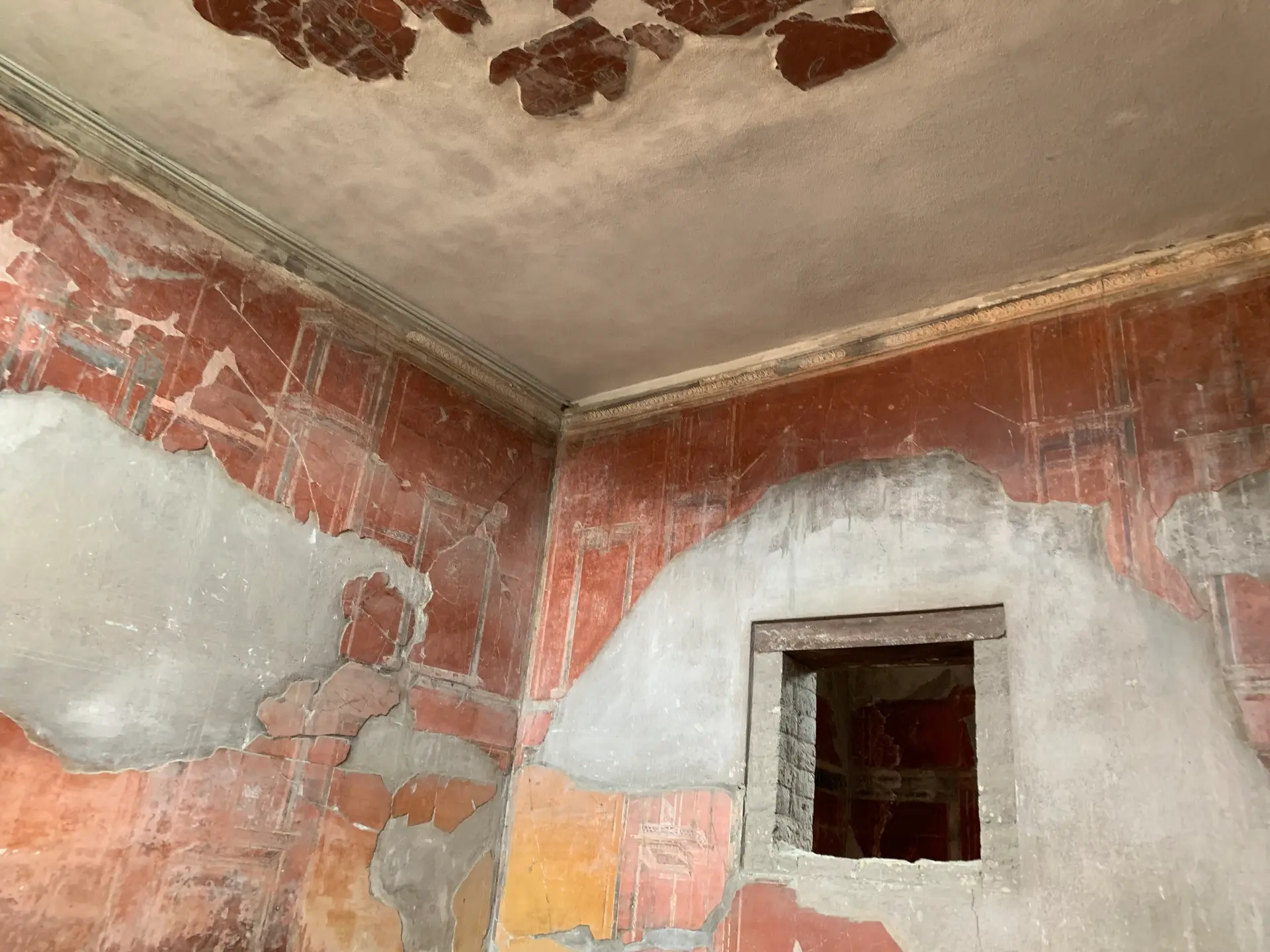
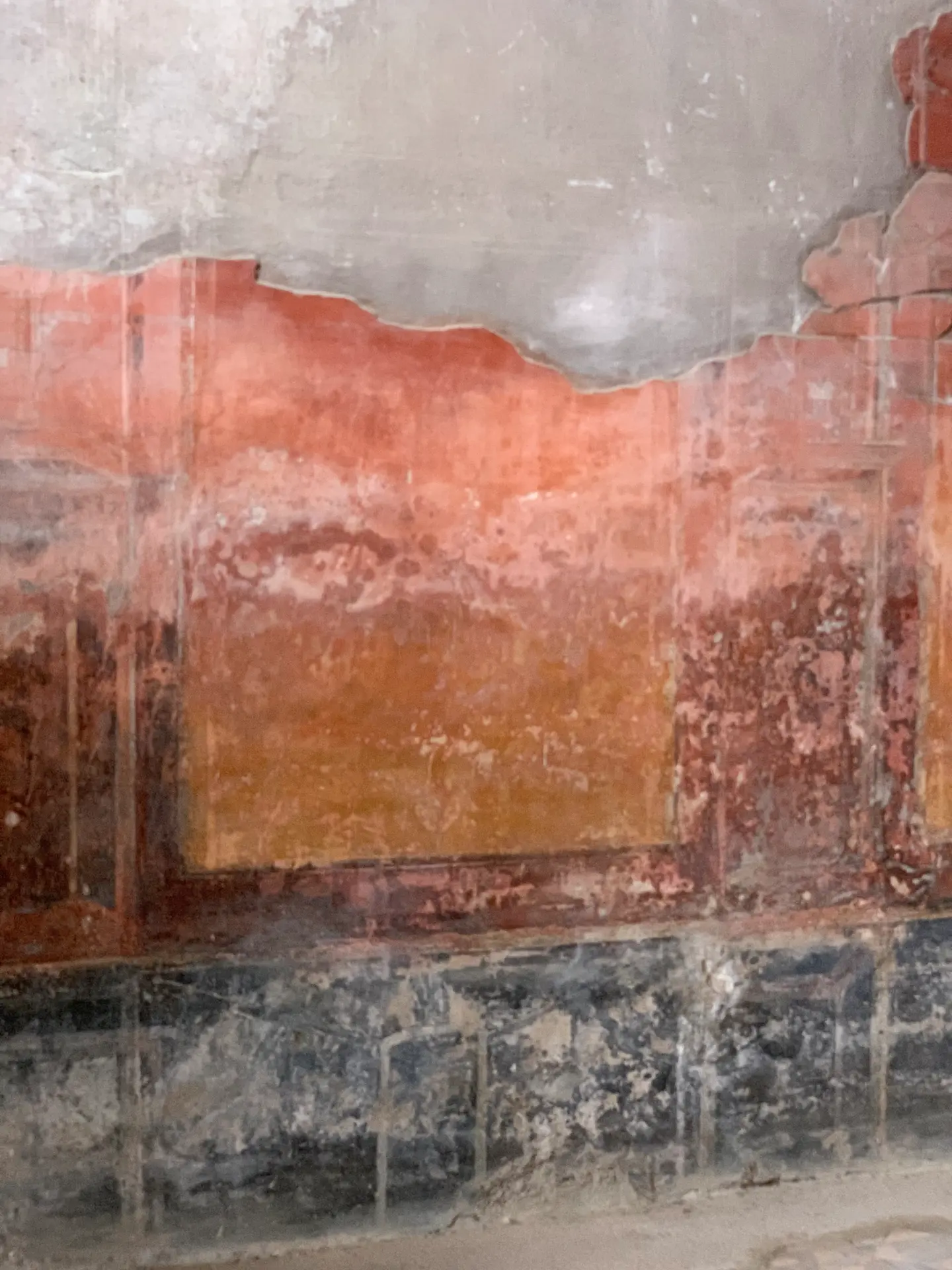
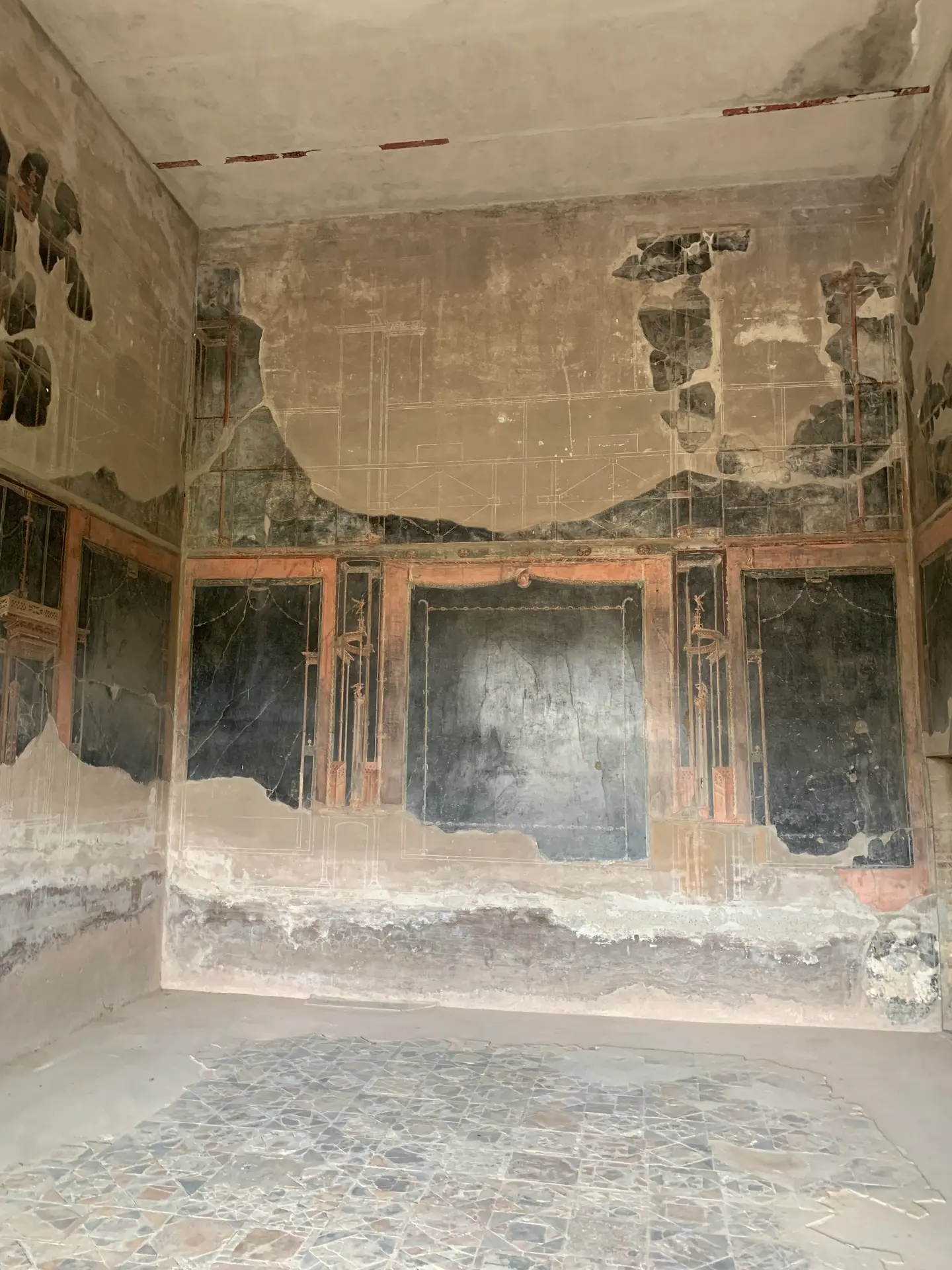
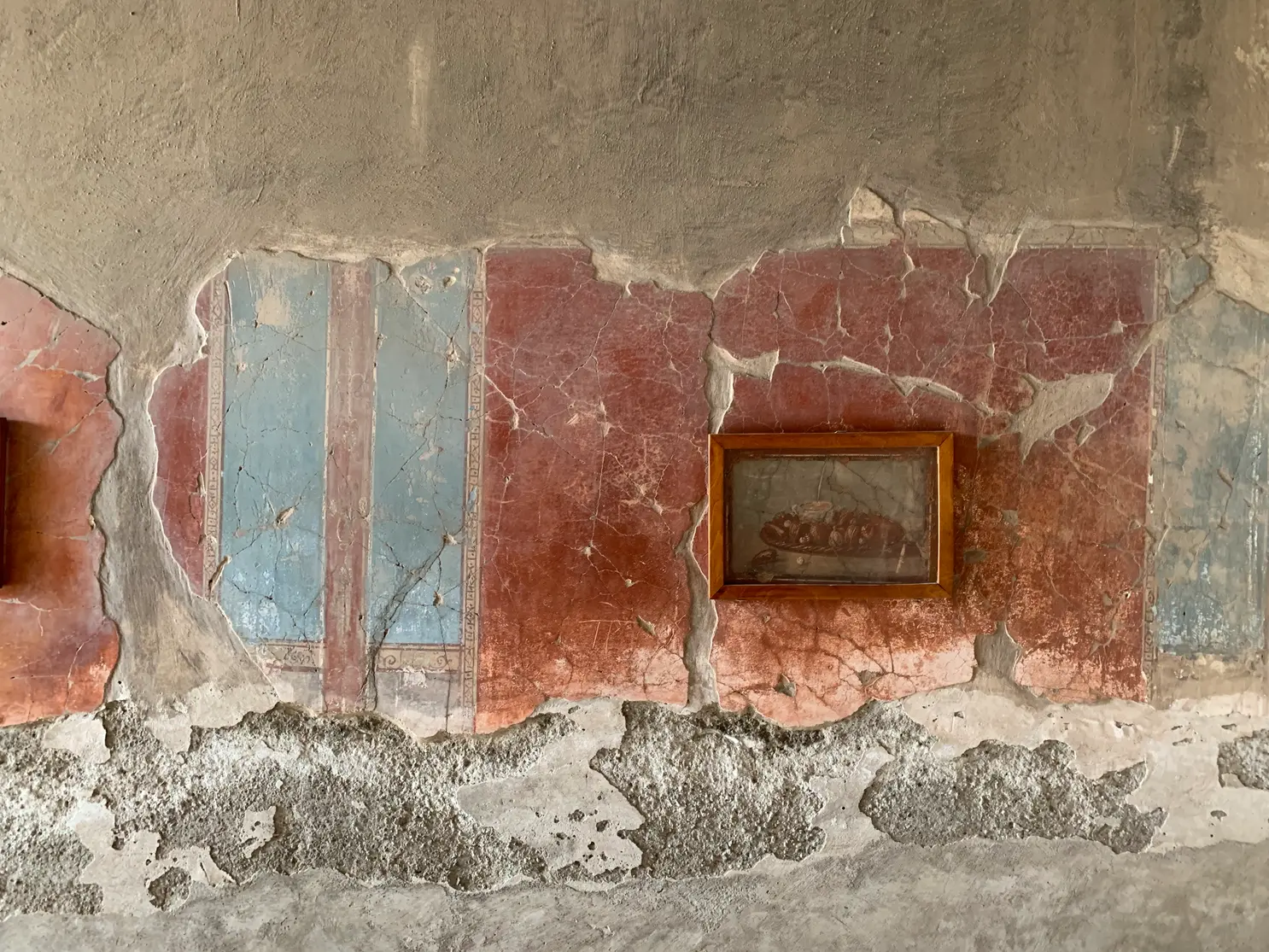
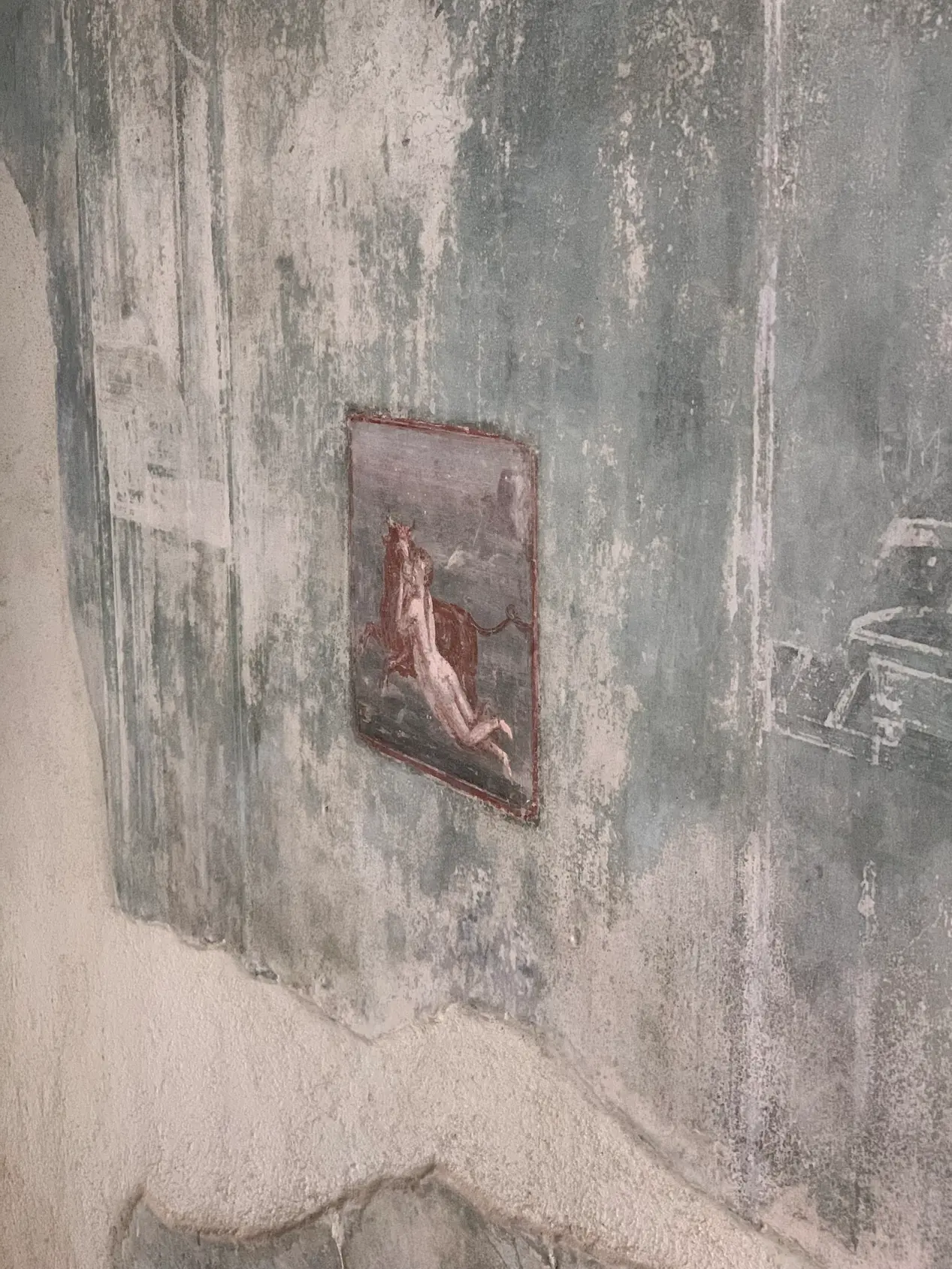
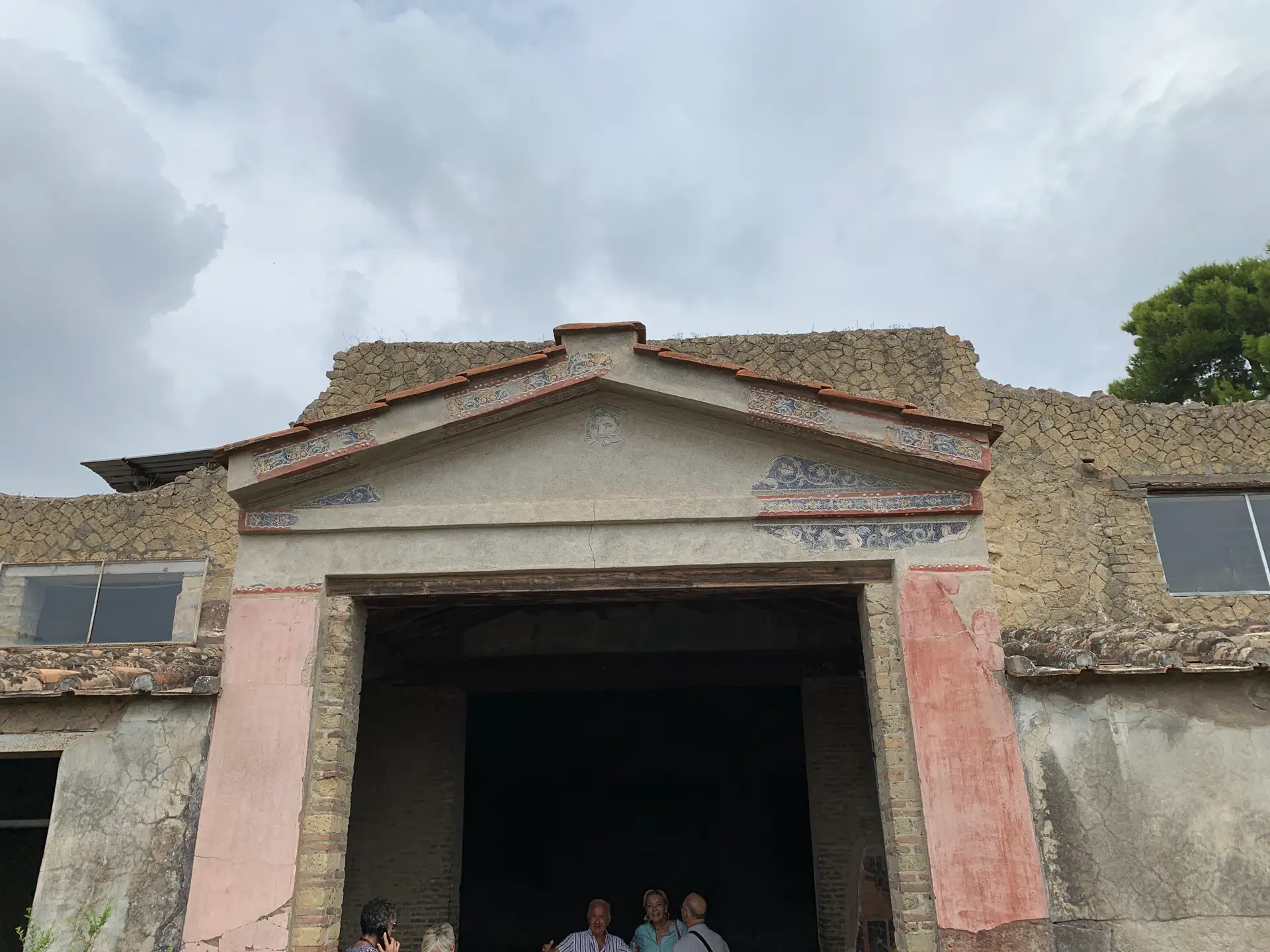
The Red RoomA small room in deep red with a window cut high in the wall, and the cornice still running unbroken around the top.Red and OchrePanels of red and yellow ochre divided by fine painted lines, over a dark dado.Black PanelsA room in black and white with a red base, and a beamed ceiling above it that is not a reconstruction.A Framed PanelA small painted landscape set into a red and blue wall, glazed where it was found rather than removed to a museum.Panel on GreyA framed painting on a grey wall, the plaster around it broken back to the rubble core.The Painted FrontThe street front of the House of the Deer, its pediment still carrying painted decoration in blue and red.
The Mosaic House
Neptune and Amphitrite
A small house with one wall that everybody comes to see.
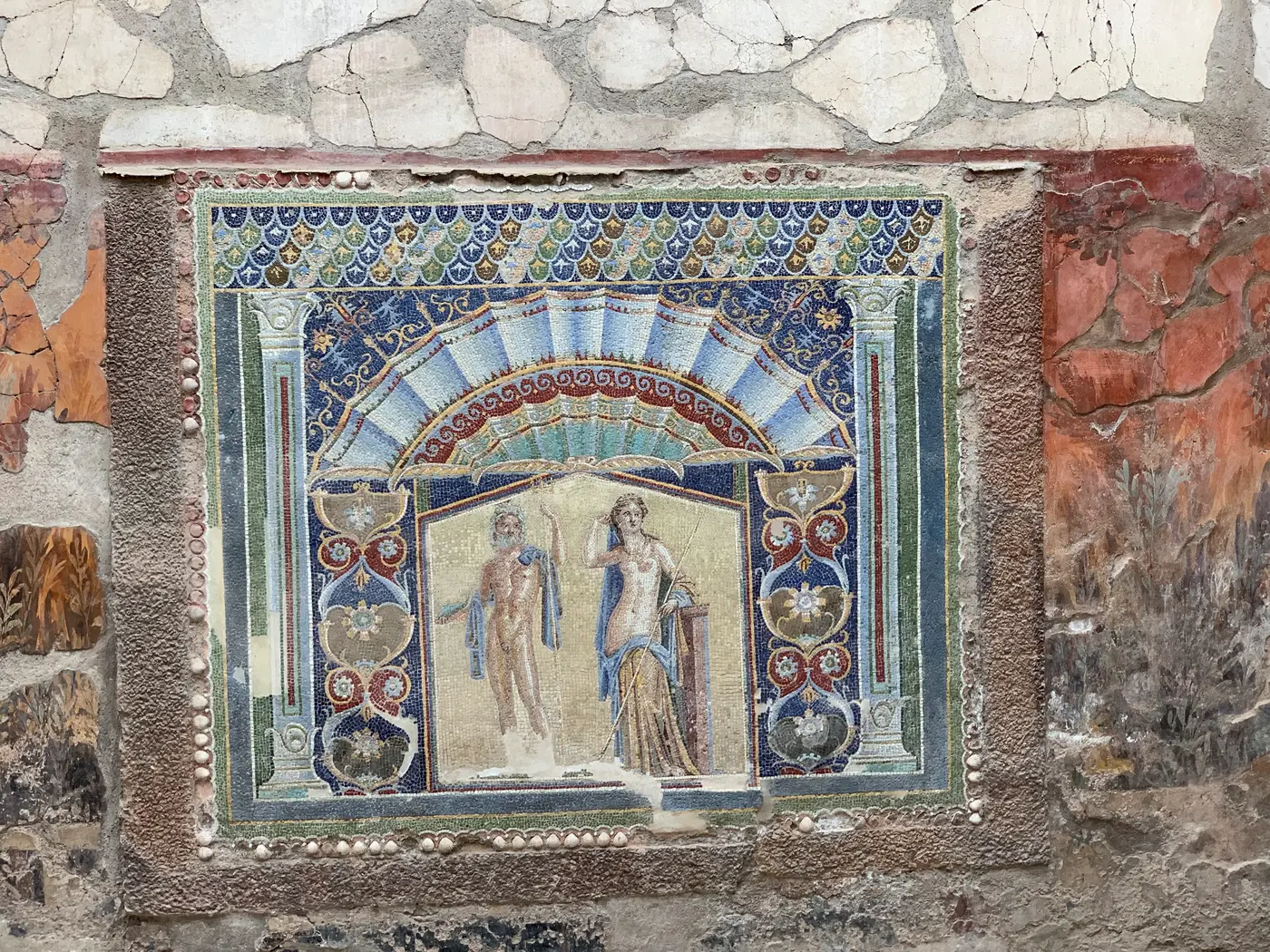
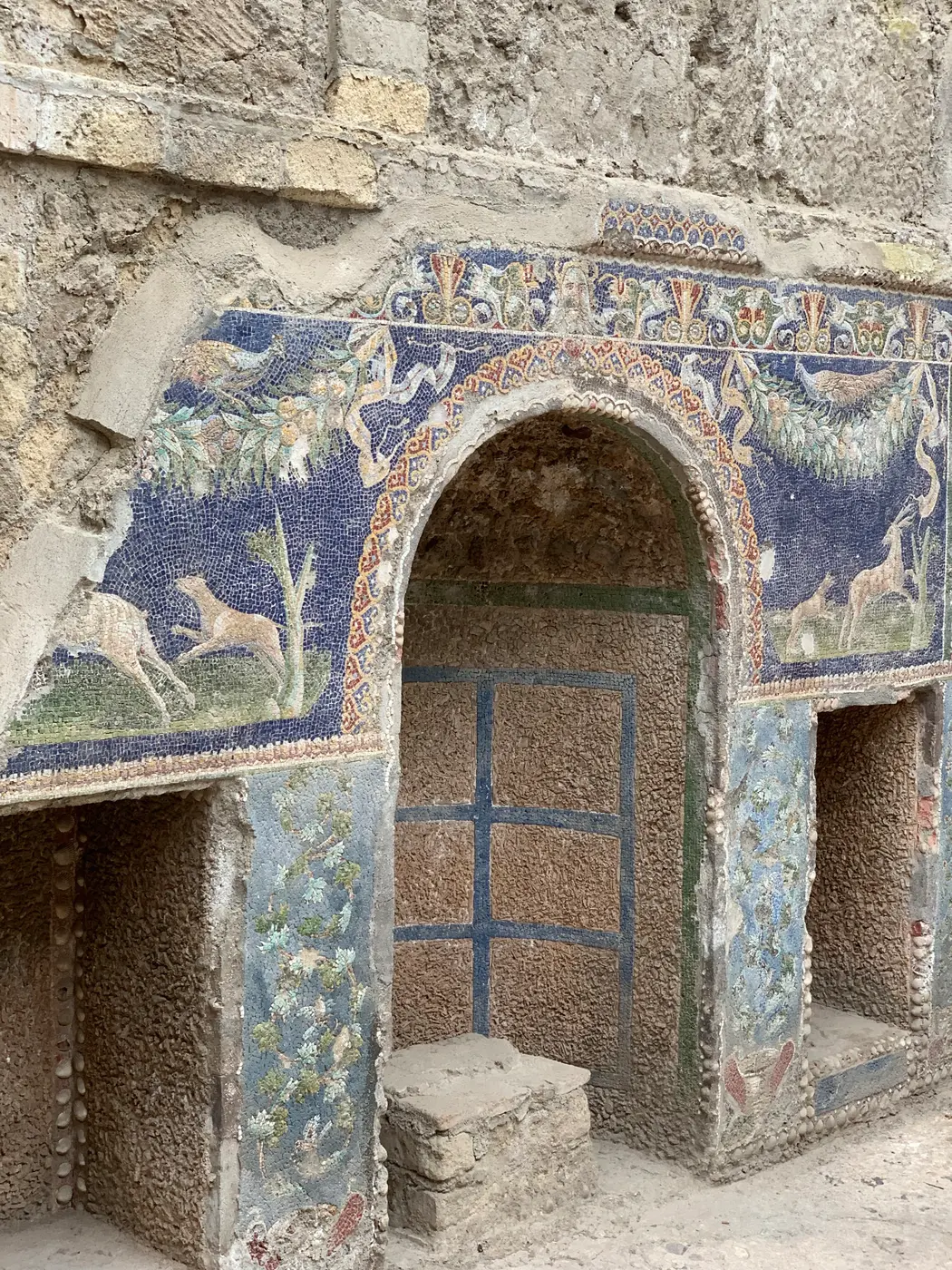
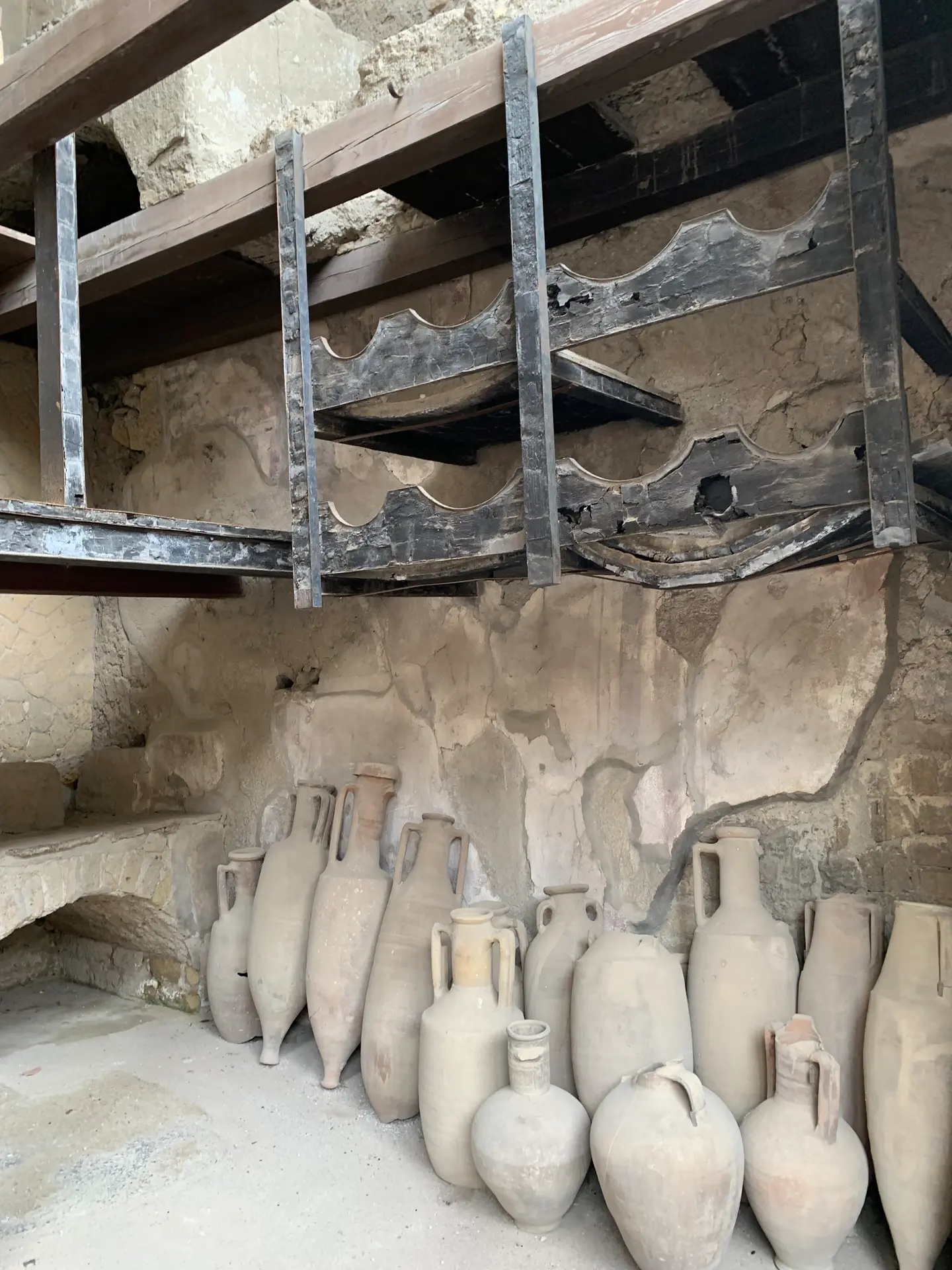
The MosaicNeptune and Amphitrite in coloured glass tesserae, as bright as the day the wall was finished.The NymphaeumThe facing wall of the same courtyard, shells and glass worked into niches around a water feature.The Shop Next DoorThe owner ran a shop off the same building, its wooden shelving carbonised and still standing.
Warmth
The Central Baths
Two bath suites, one for men and one for women, with the floors intact.
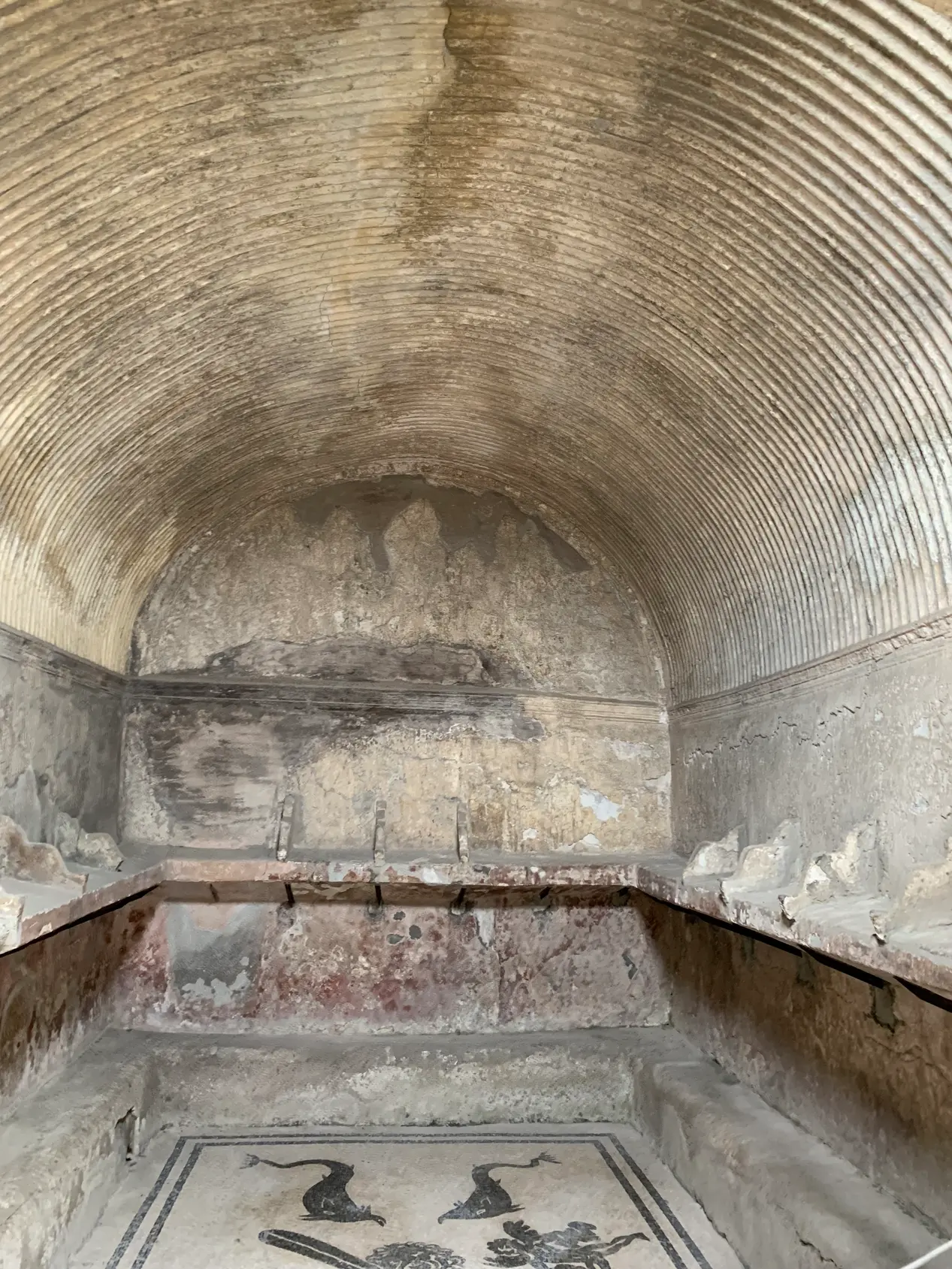
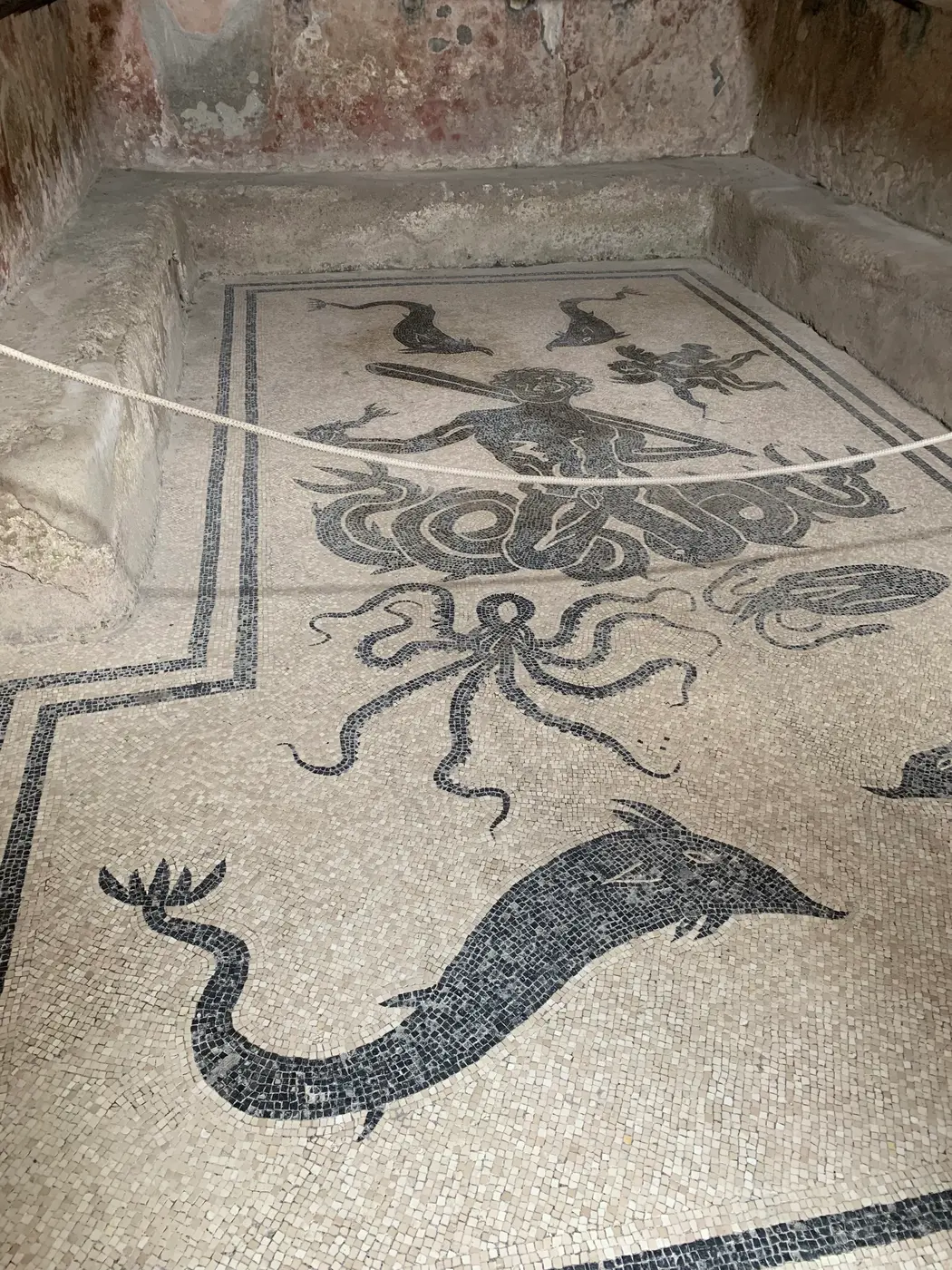
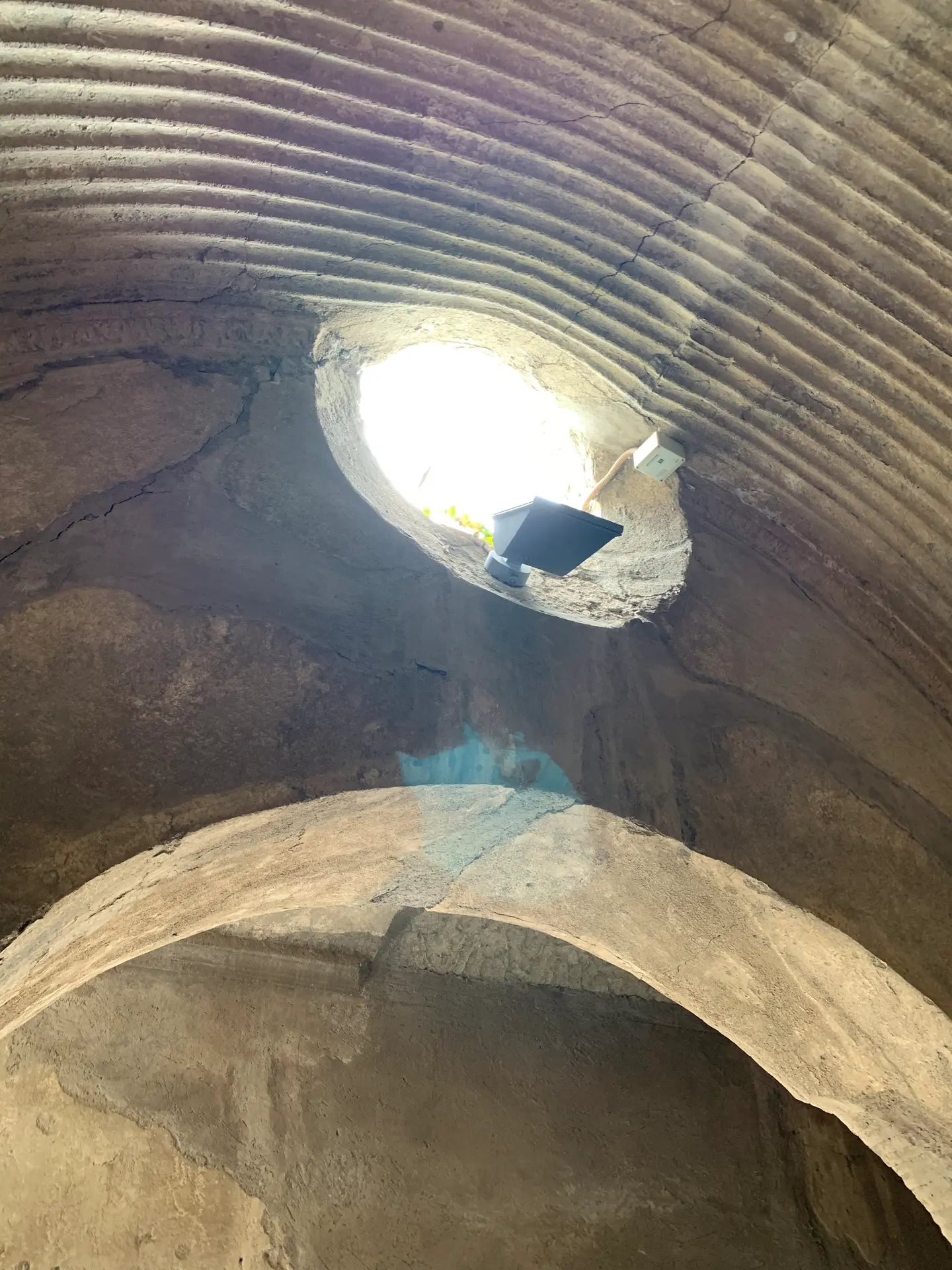
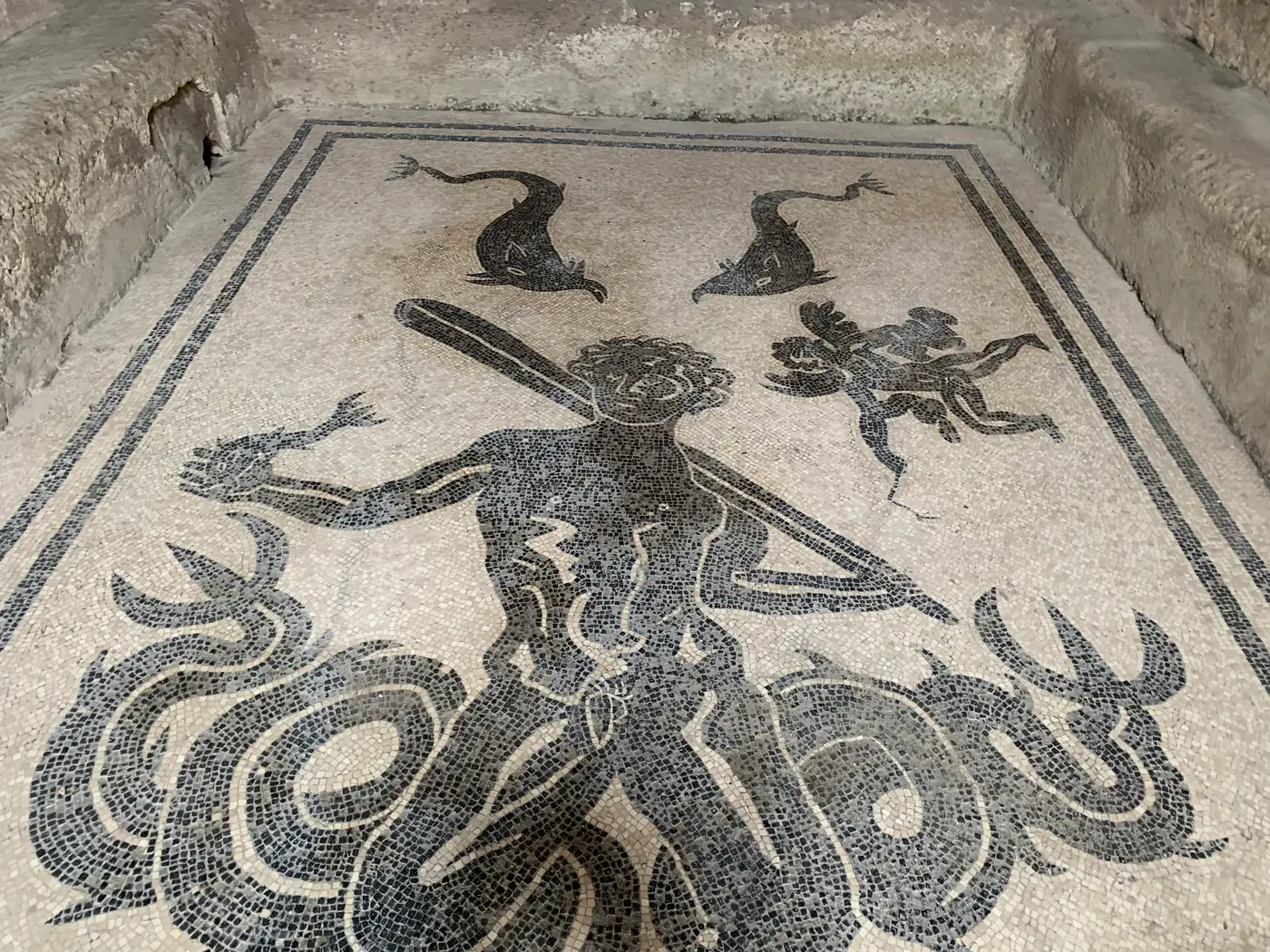
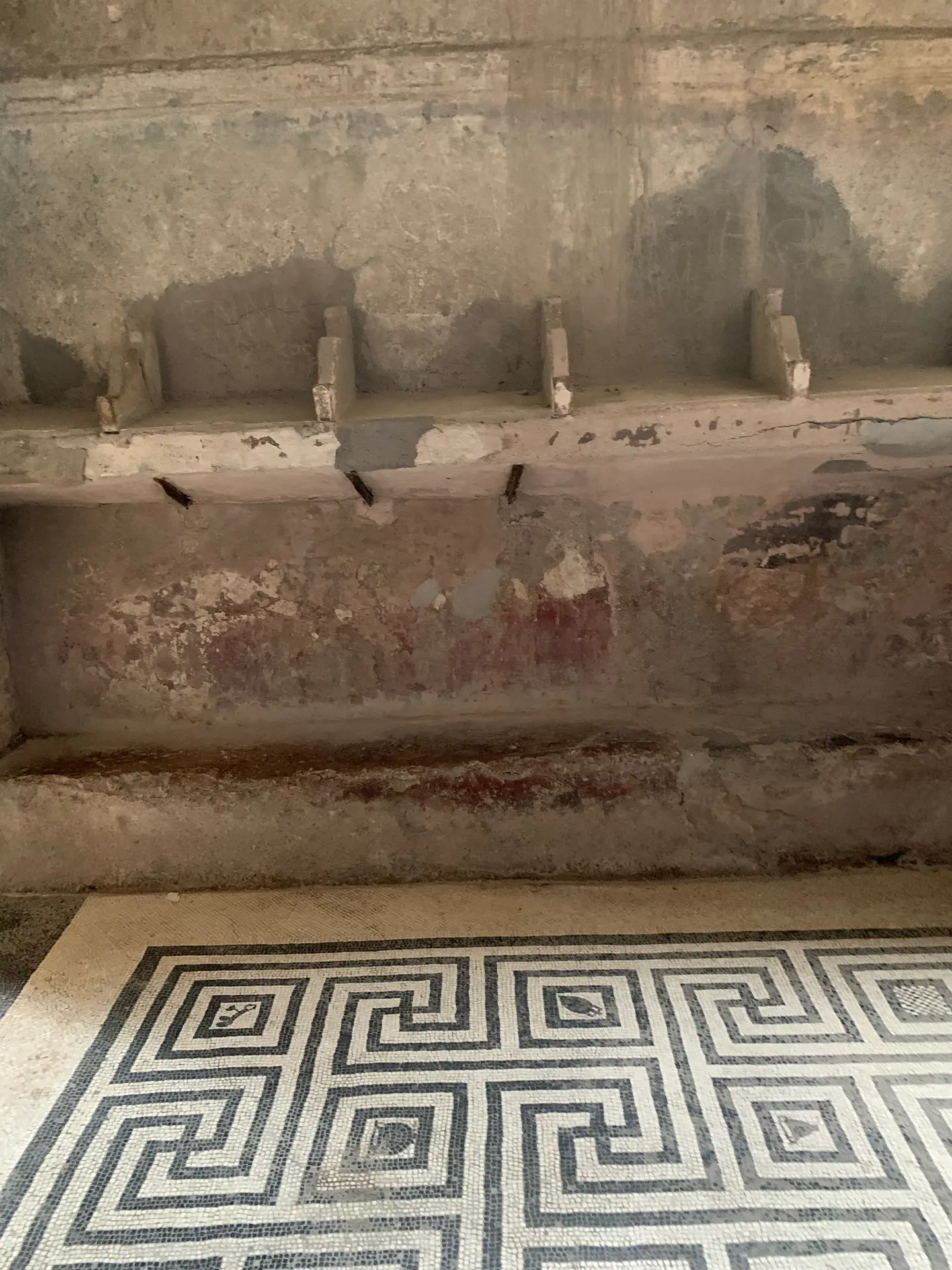
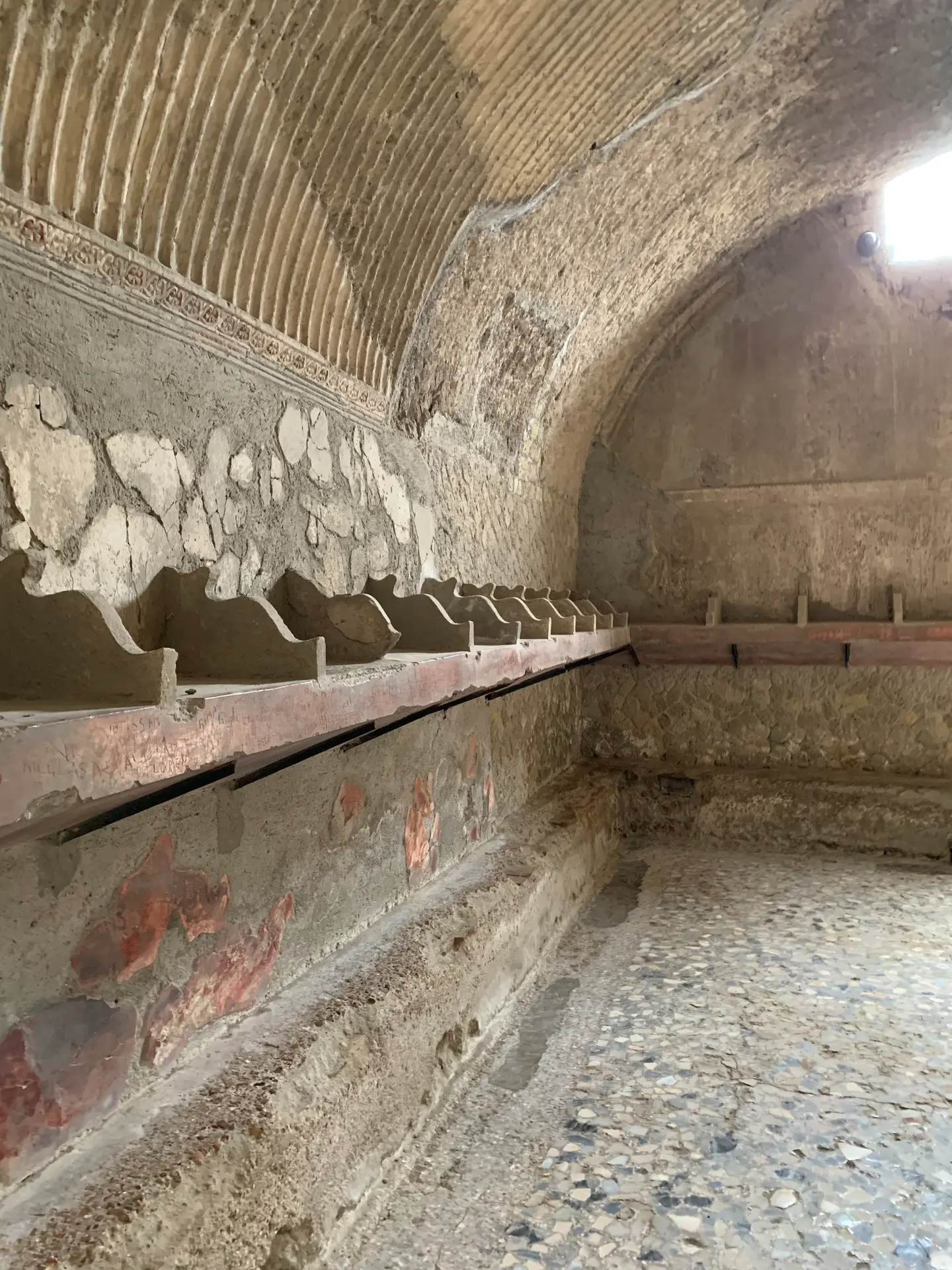
The Vaulted RoomA barrel vault over a mosaic floor, the room complete from the floor to the crown of the ceiling.Triton and OctopusA triton surrounded by dolphins and an octopus, laid in black and white across the floor of the women's changing room.The SkylightThe vault and its round opening, the only daylight the room was ever given.The Sea FloorAnother floor of sea creatures, worn where two thousand years of feet have crossed it.The Changing RoomShelves for clothes along the wall, a bench below them, and the patterned floor running the length of the room.The VaultFluted stucco running the length of a bath ceiling, undamaged.
Underfoot
Floors
Marble, mosaic and terracotta, mostly where they were laid.
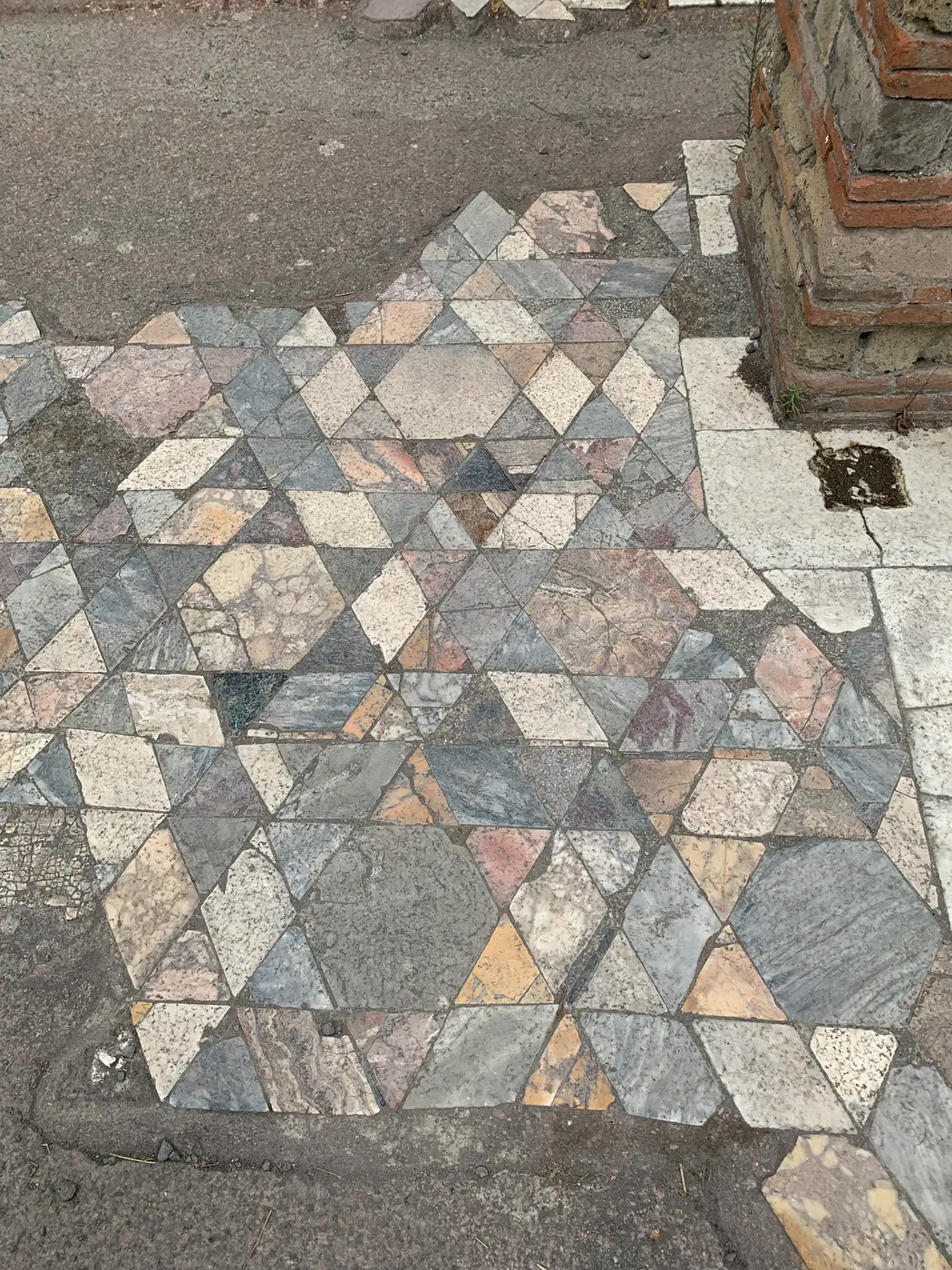
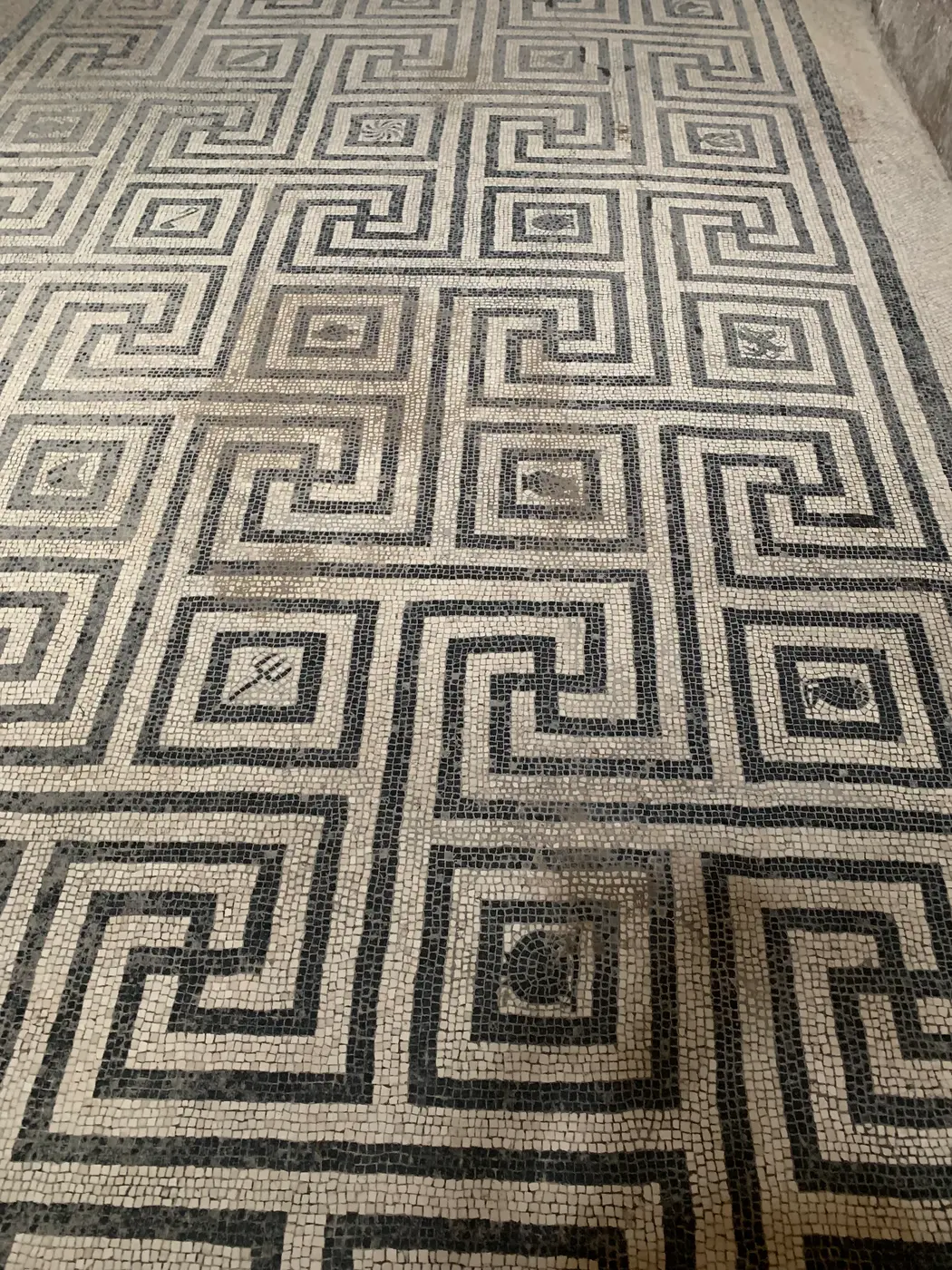
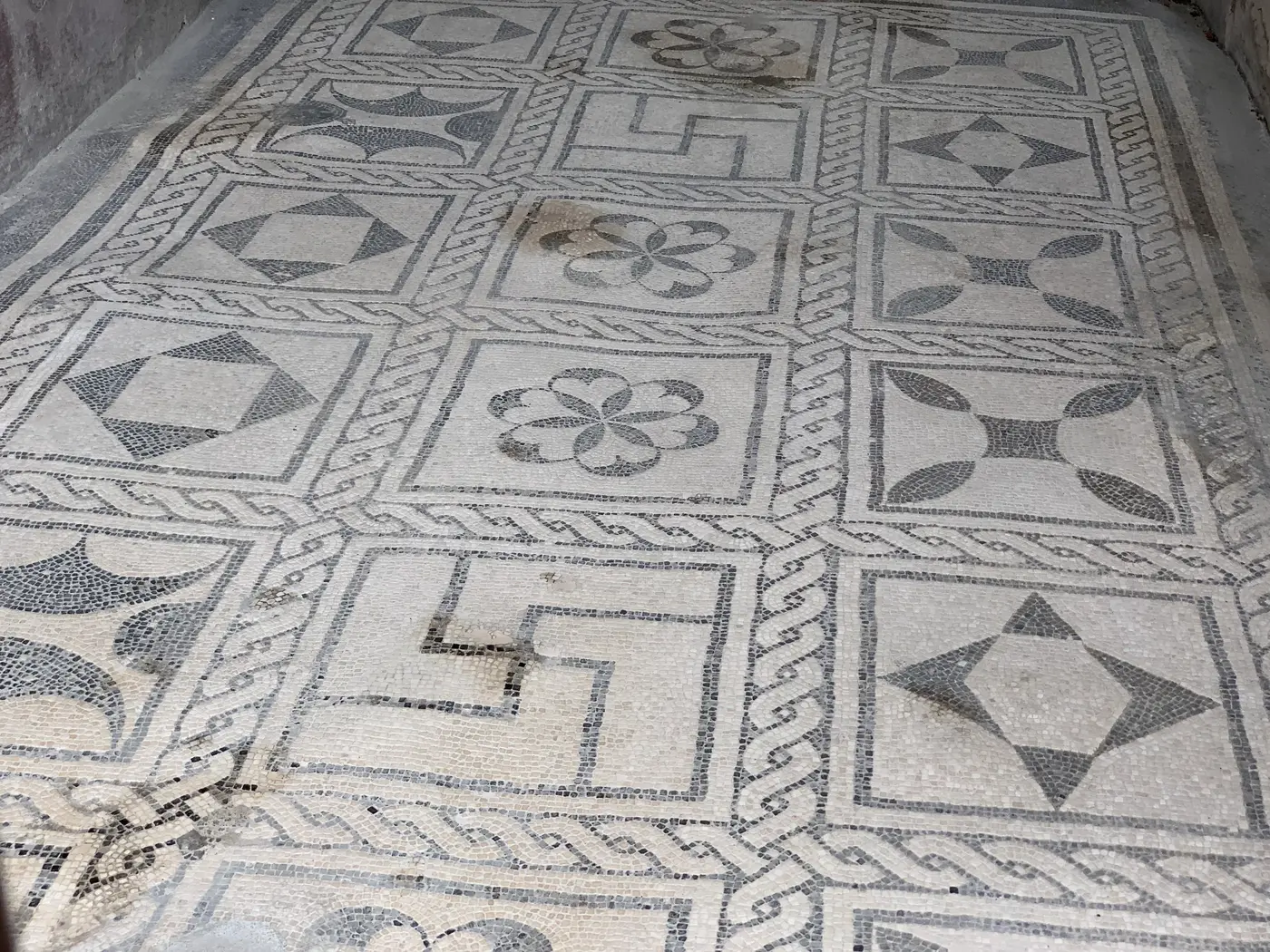
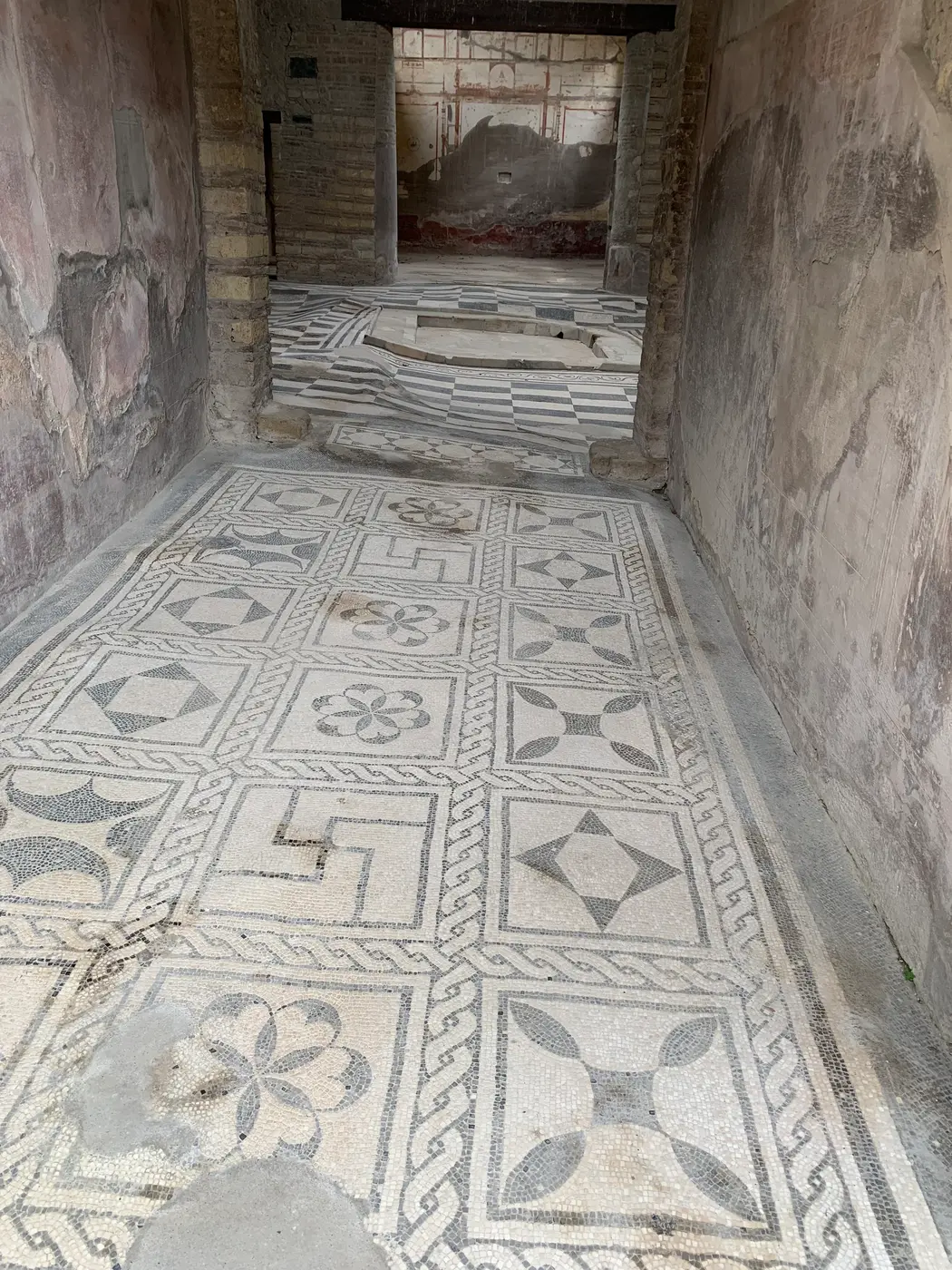
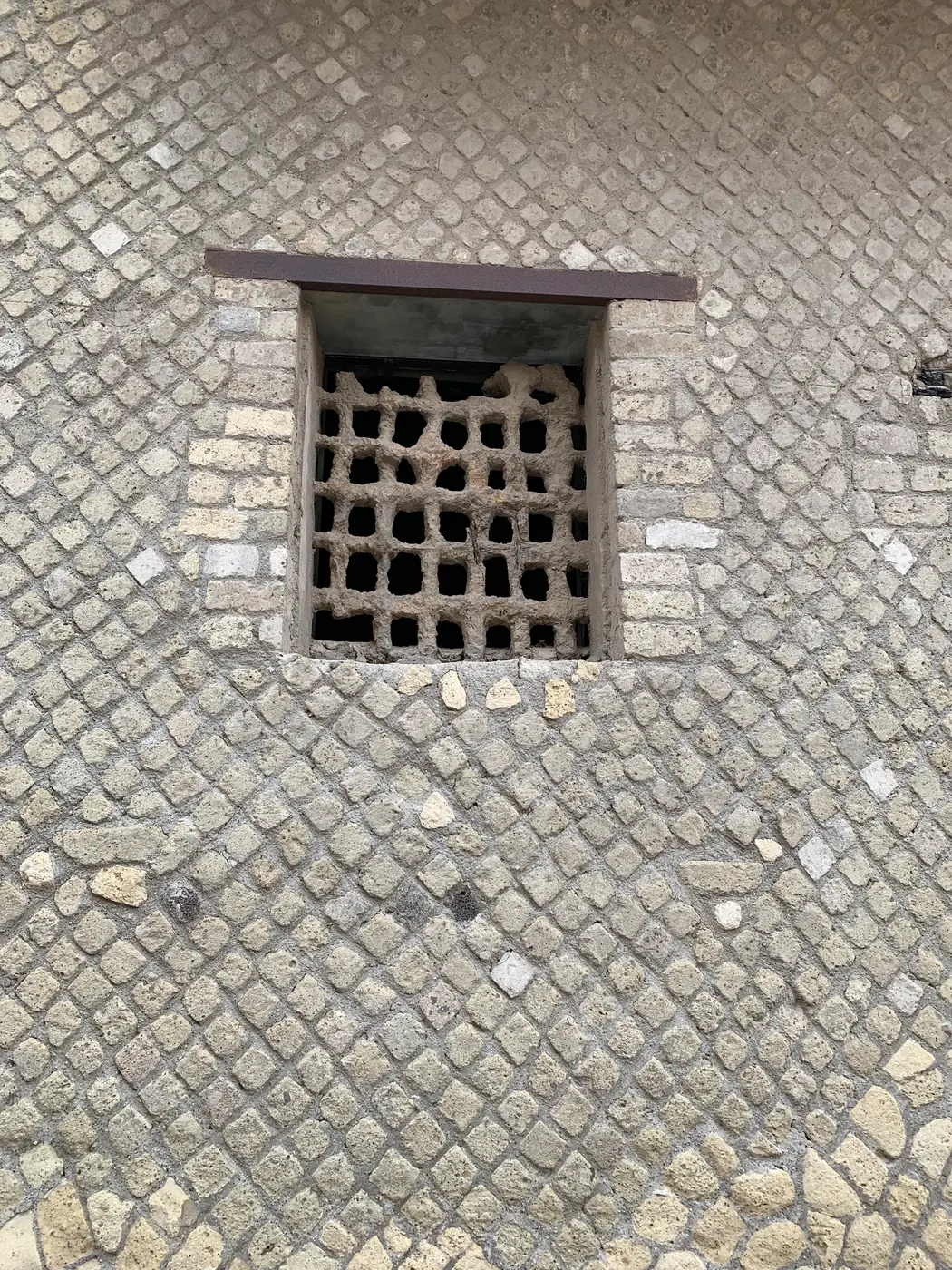
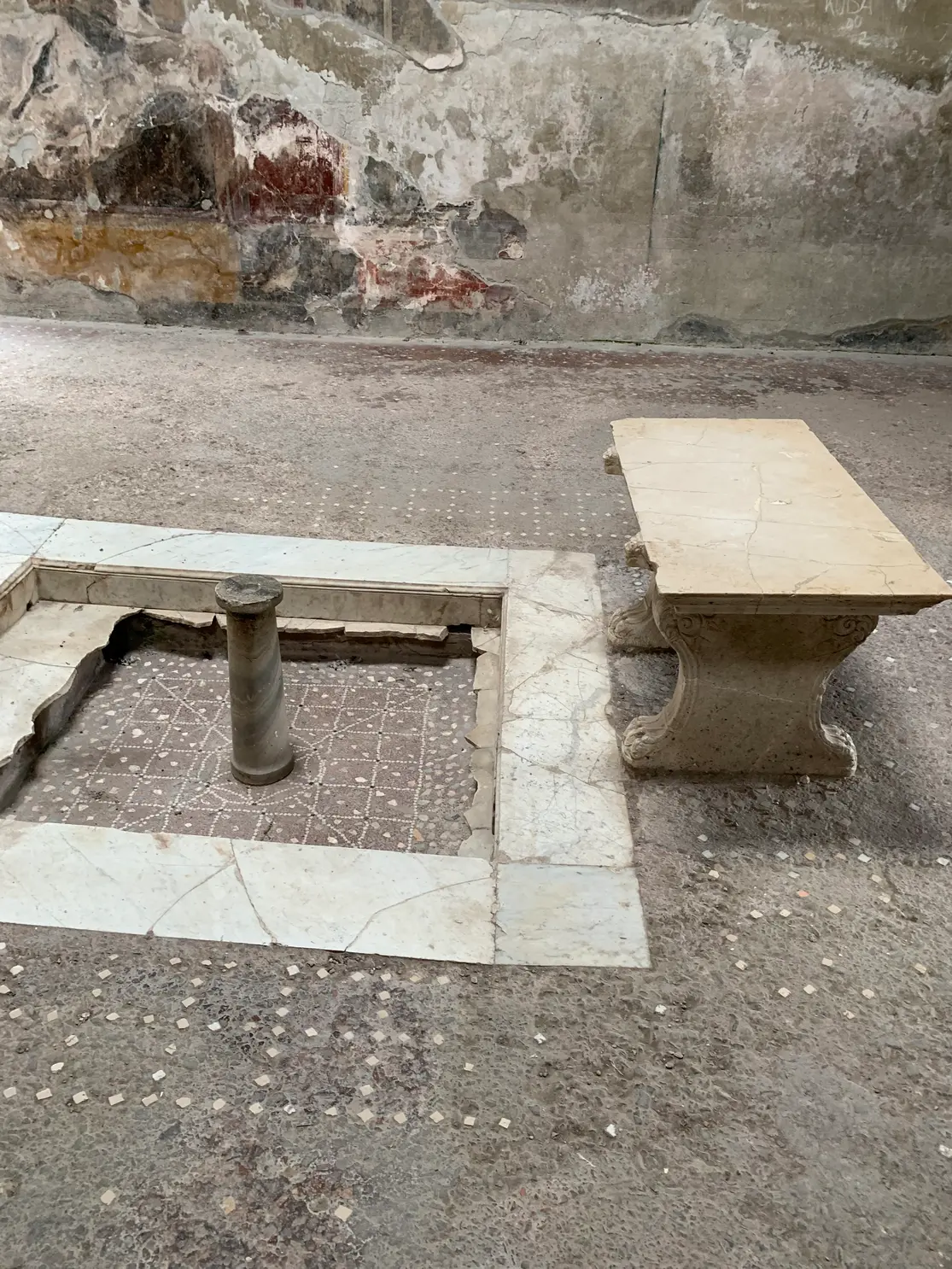
Opus SectileCut marble in geometric shapes, an expensive floor and a sign of who lived here.The MeanderA black and white meander border running around a patterned field.The Patterned FieldA full room of mosaic laid in repeating panels, flowers and knots and stars, every one slightly different.The Corridor FloorThe same house, the corridor running away, the pattern following it.The Lattice WindowA terracotta lattice set into a wall of opus reticulatum, which let light and air in and kept everything else out.
Carbonised
Wood That Should Not Exist
The flow that buried Herculaneum charred the wood instead of burning it, and it is still here.
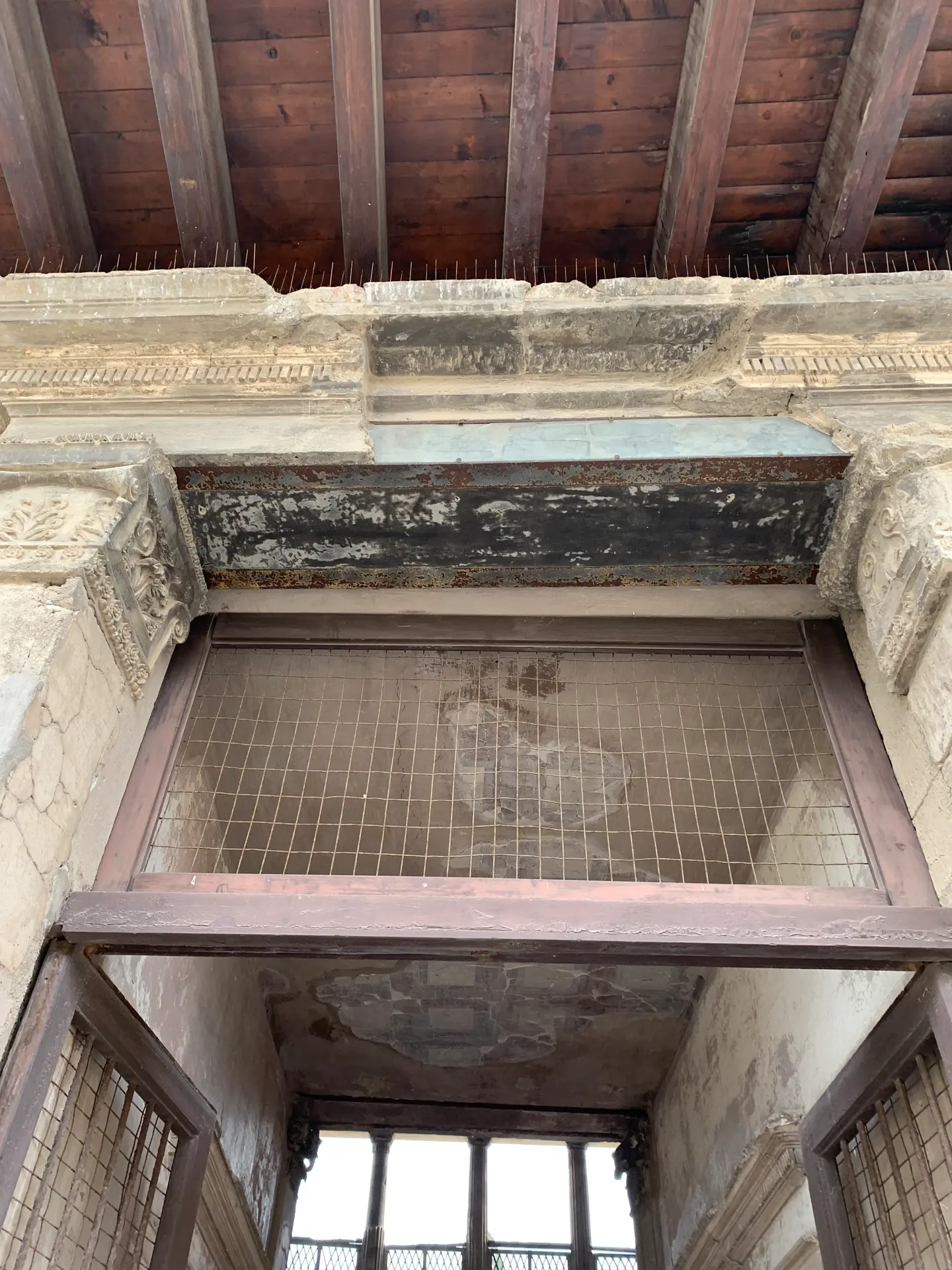
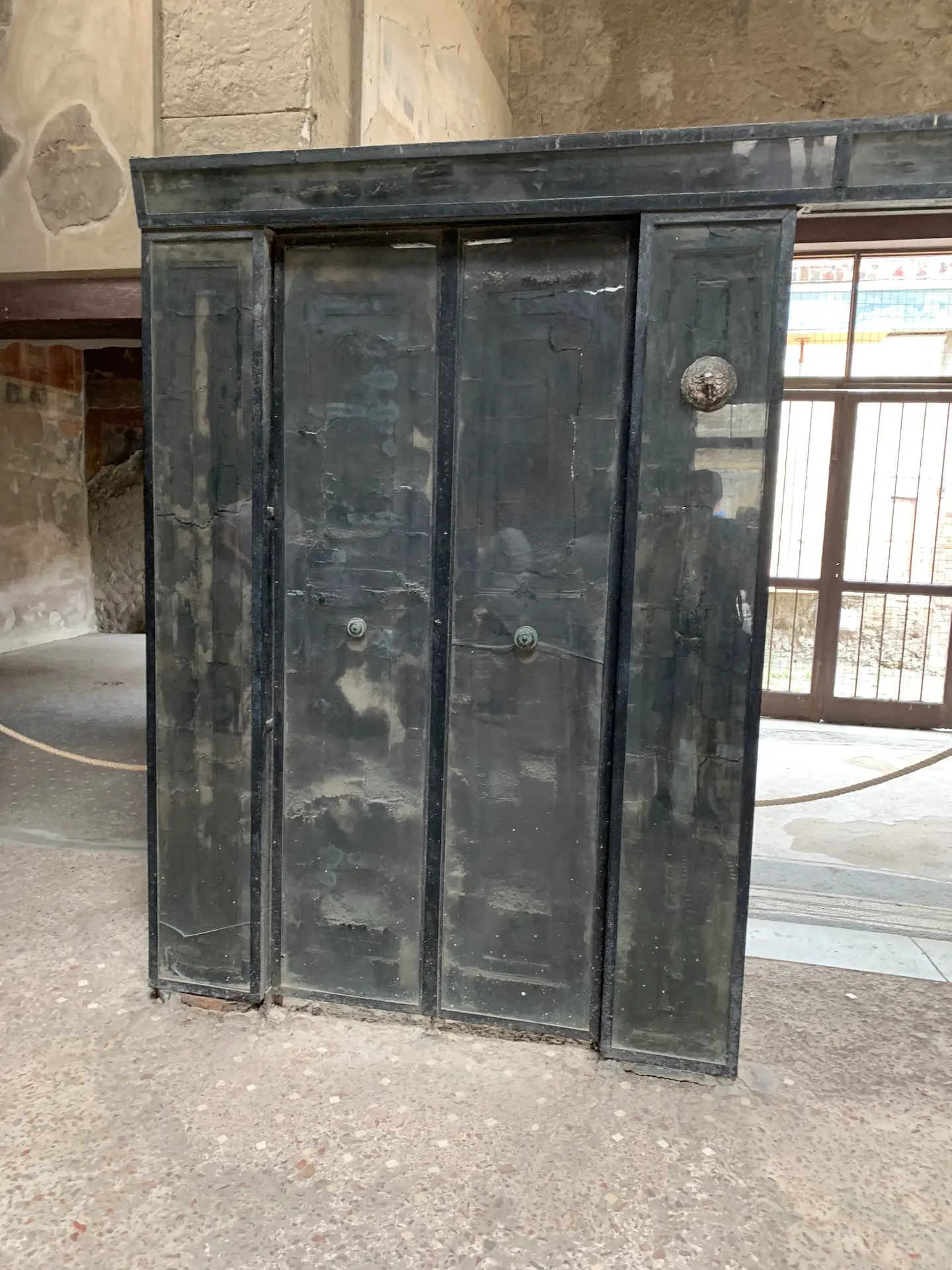
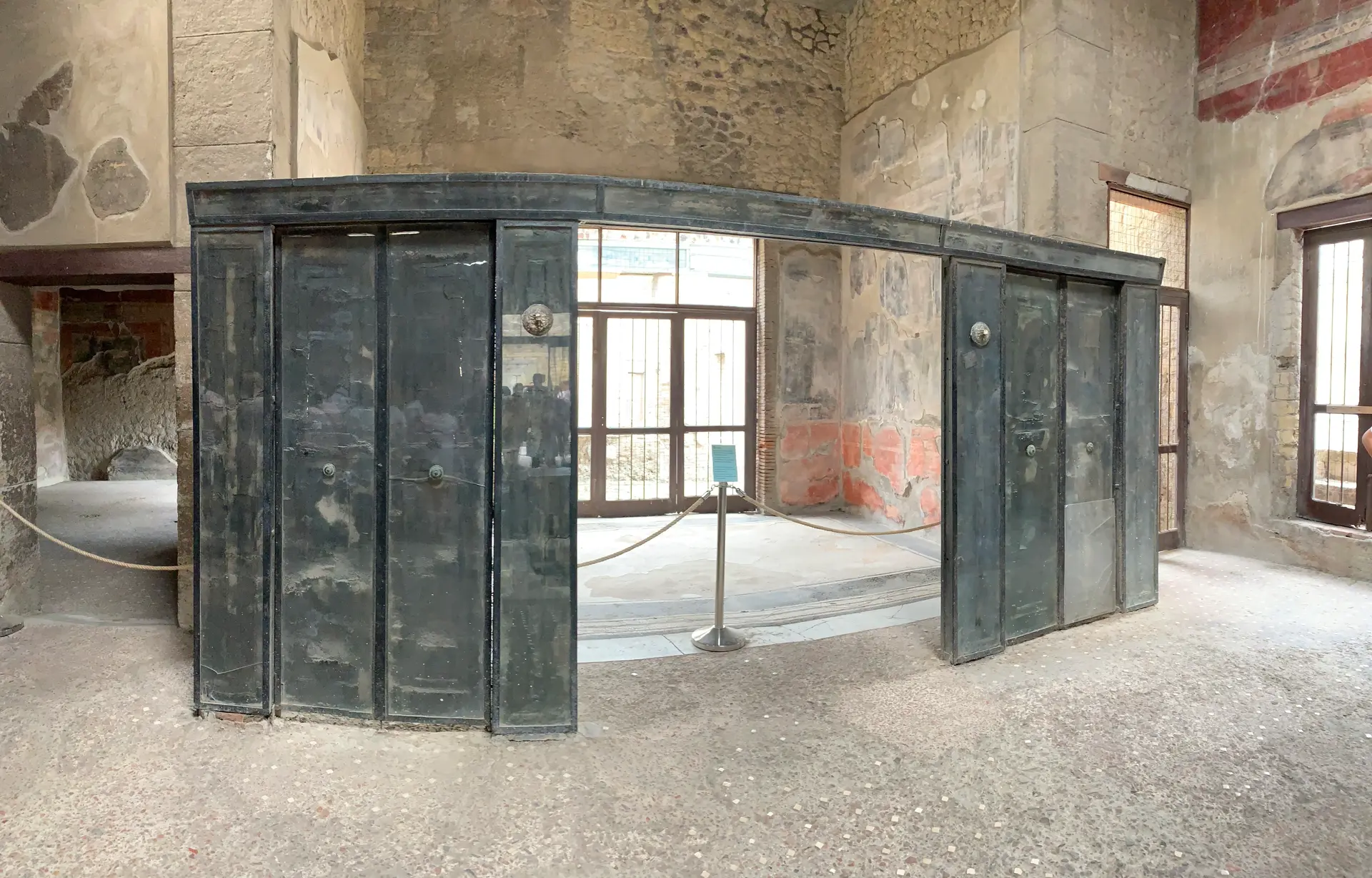
The CeilingCarbonised roof beams still carrying the floor of the room above them. This is the thing that makes Herculaneum different from every other Roman site, and it is easy to walk under without looking up.The PartitionA folding wooden screen that divided a room, charred black and standing where it stood.The Screen RoomThe room the partition divides, seen from the other side.The DoorsA pair of doors on their frame, the bronze fittings still on them.The CupboardA wooden cupboard with its shelves, contents and all, from a house where somebody simply left.
Writing on the Wall
Signs and Inscriptions
Painted and carved lettering that survived along with everything else.
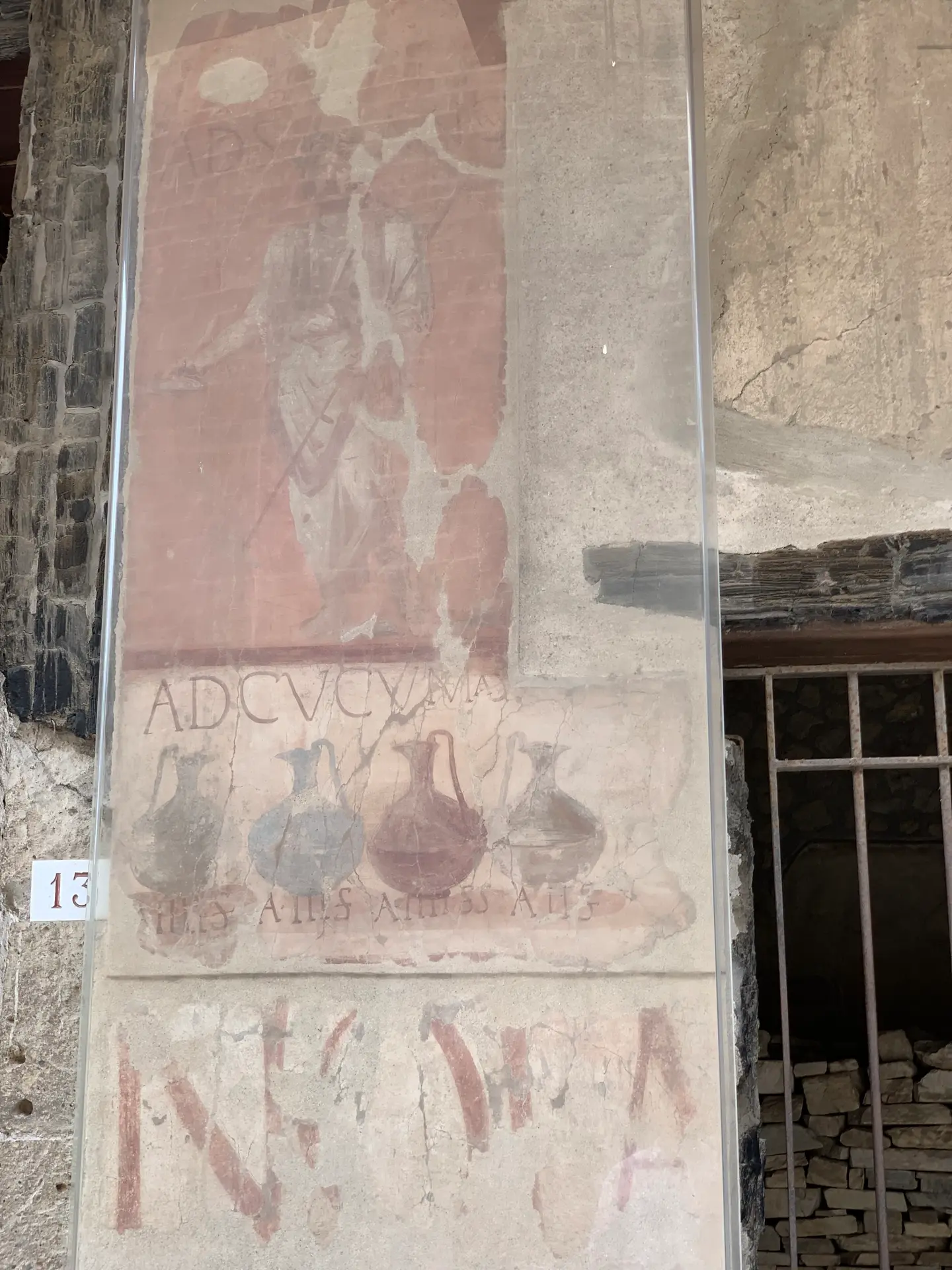
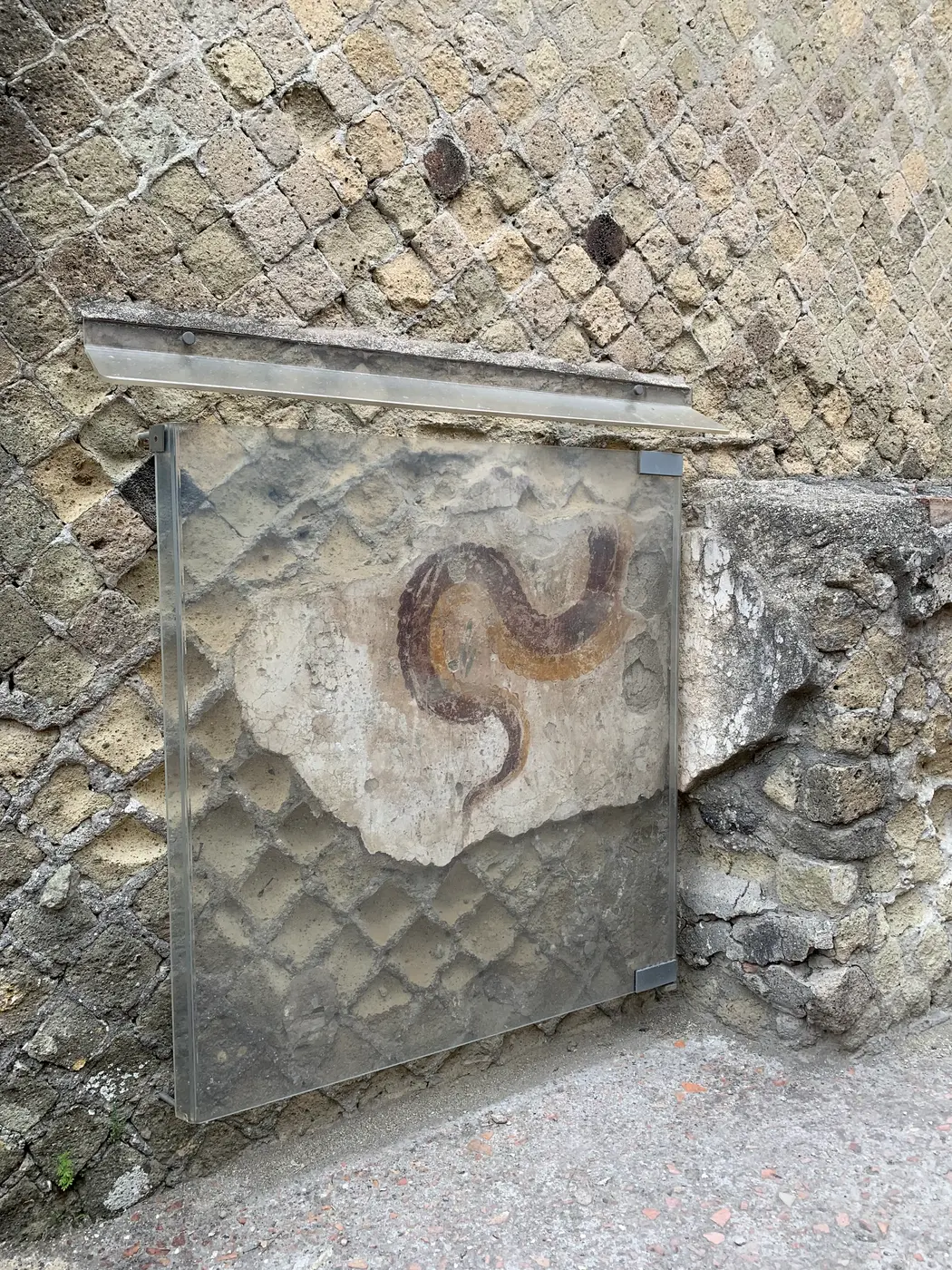
Painted LettersRed lettering painted straight onto a pillar, still legible. Painted notices like this were the ordinary advertising of a Roman street and almost none of them survive anywhere else.The SerpentA carved marble panel of a serpent set into a wall of reticulate stone, a household protective sign left in place.
The Imperial Cult
The Augustales
A hall for the college that ran the emperor's cult in the town.
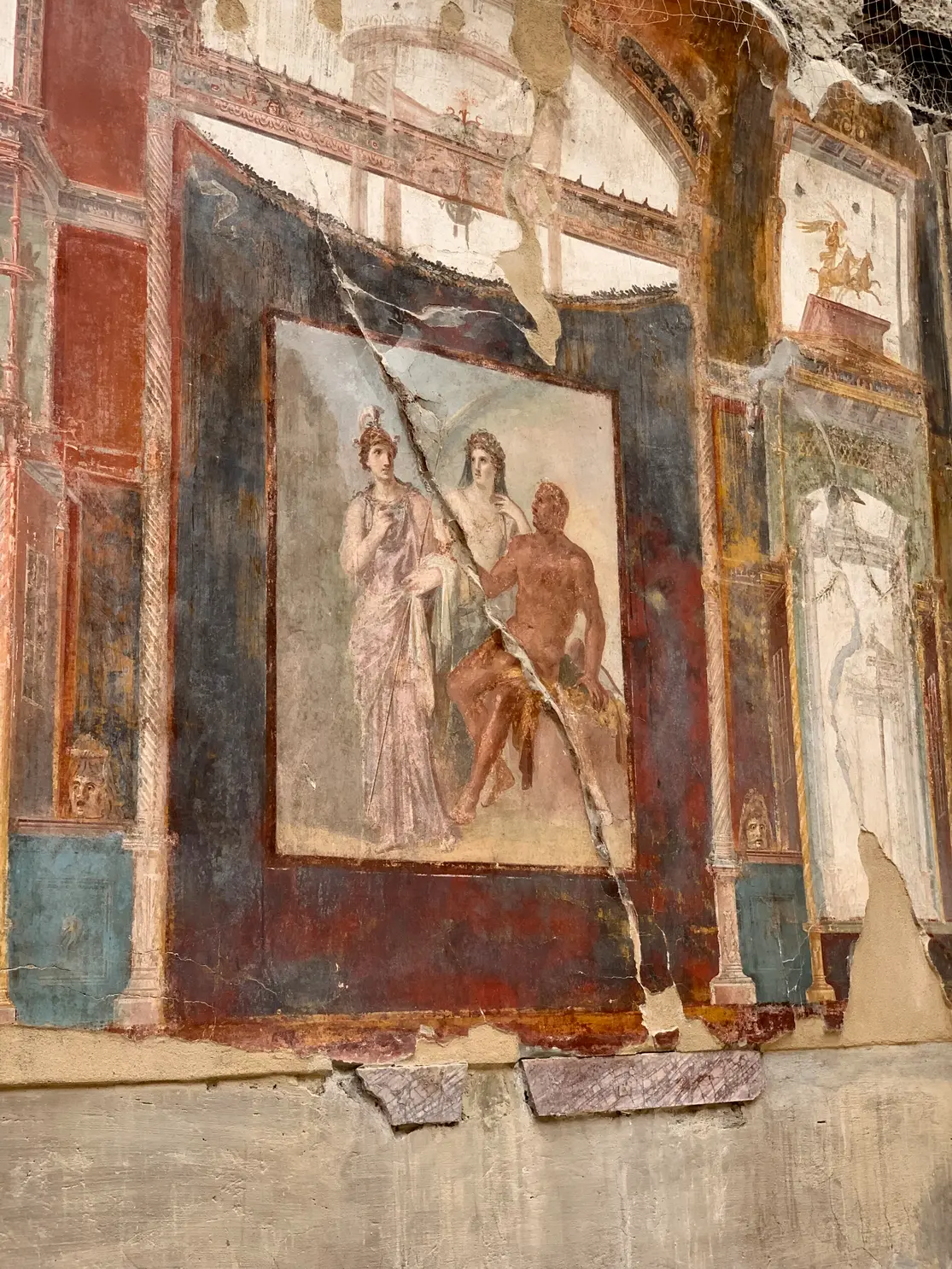
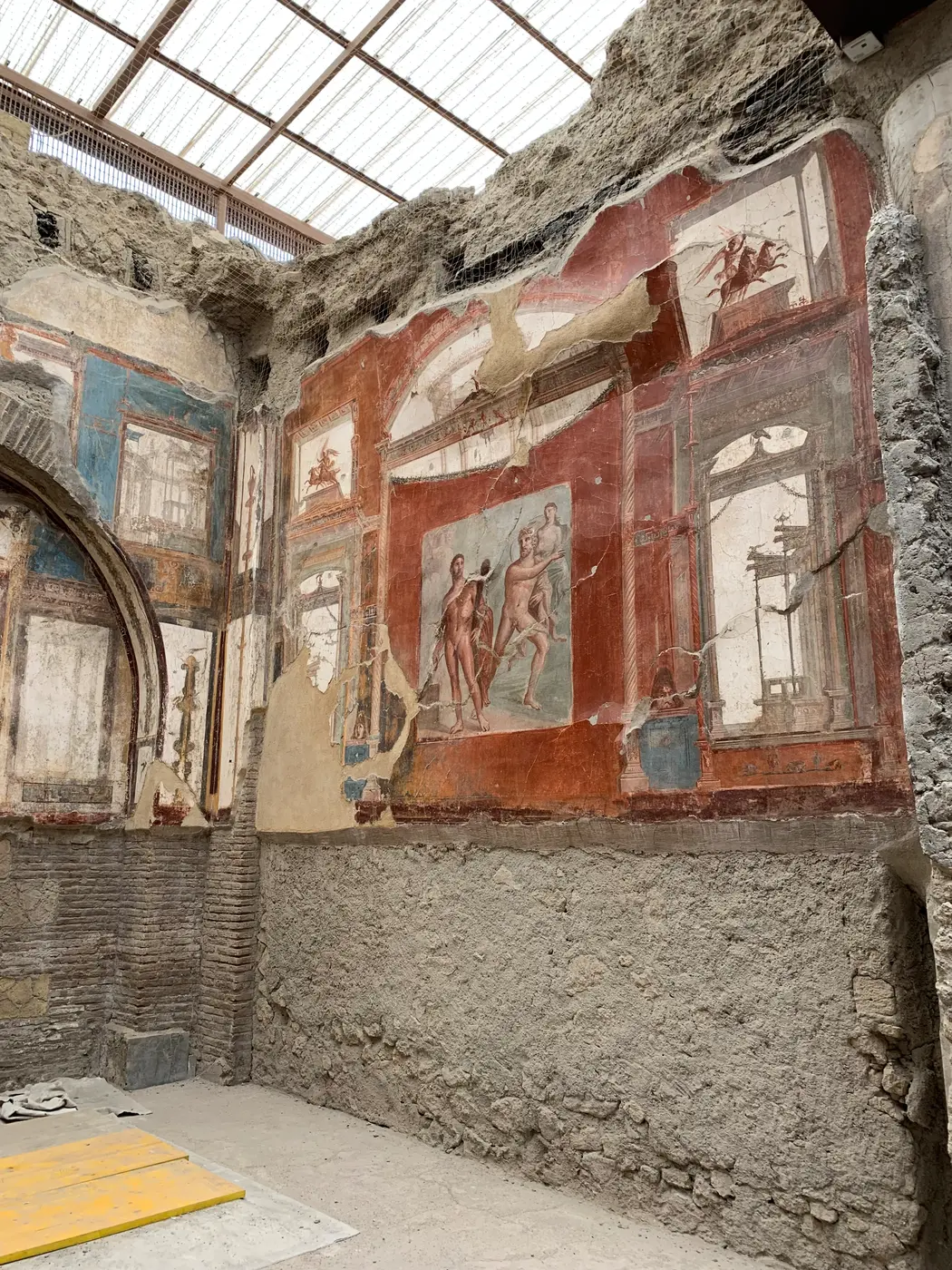
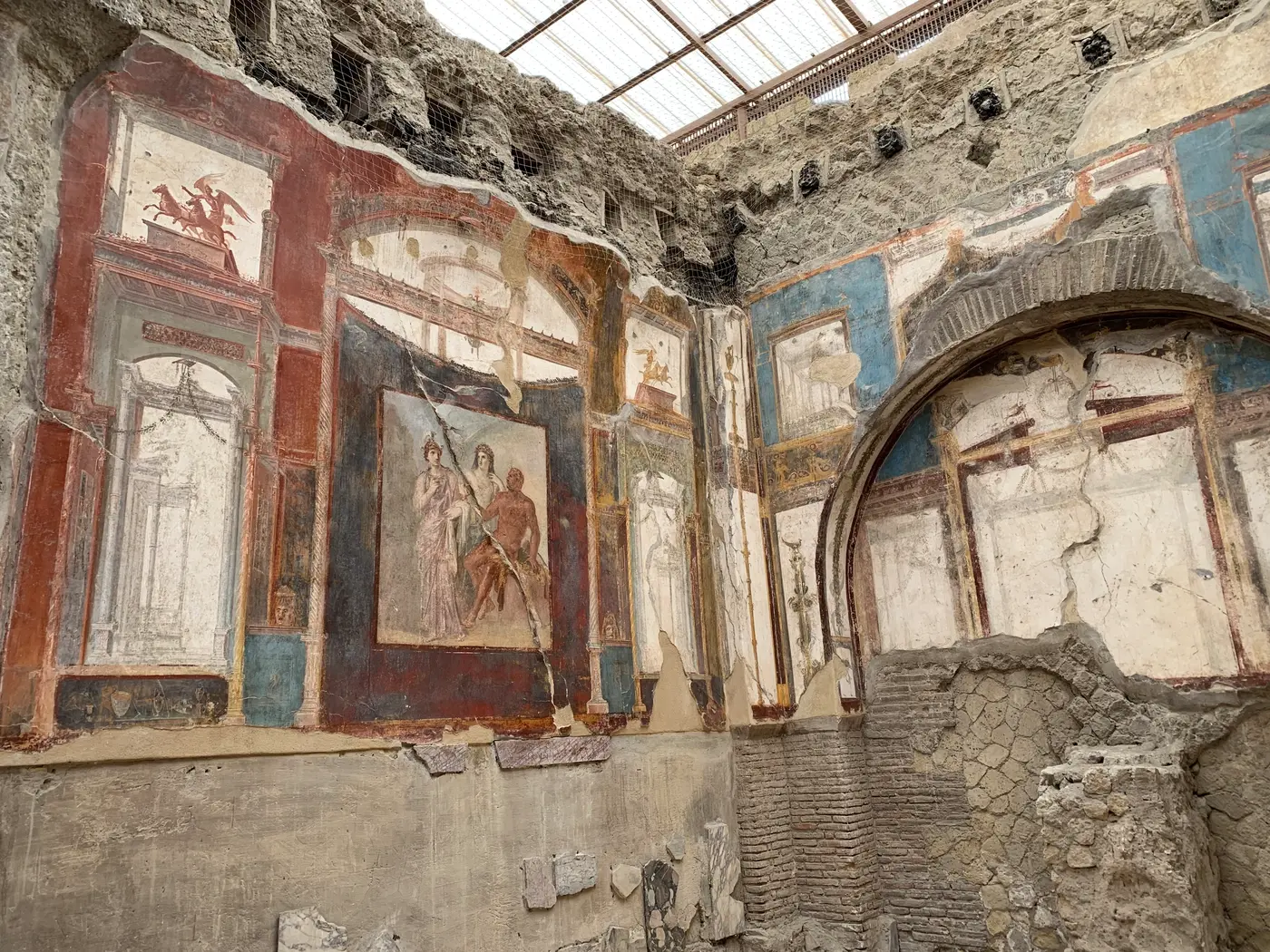
Hercules on the WallHercules entering Olympus, painted across one end wall of the hall at nearly full scale.The Other PanelThe facing wall, and a different painting: Hercules with the river god Achelous, whose horn he tore off. Two walls of this size in one room is the point.The HallThe room itself, with its marble floor and the small shrine chamber at the back.
What They Left
The Antiquarium
The site museum, and the reason to allow an extra hour.
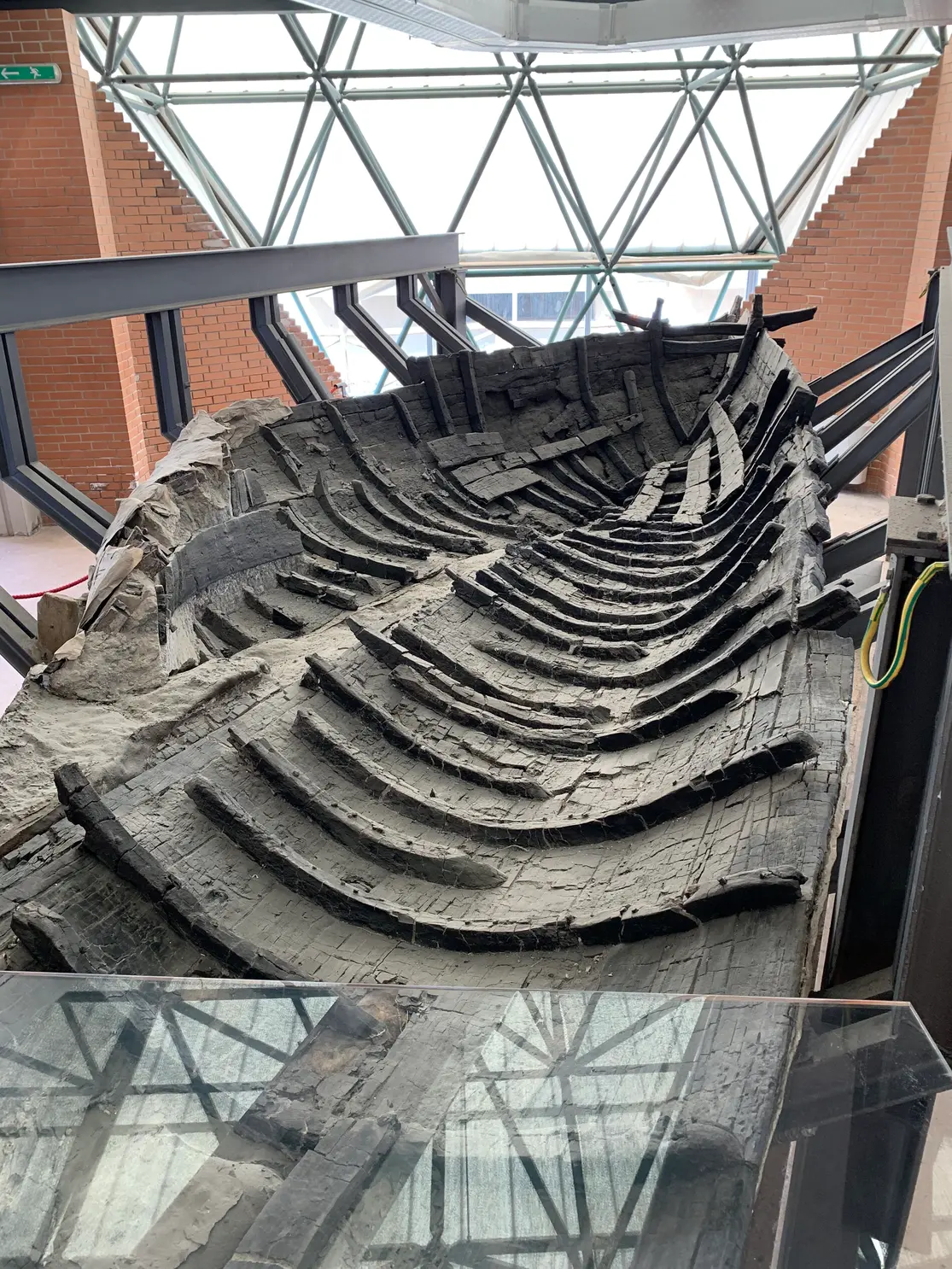
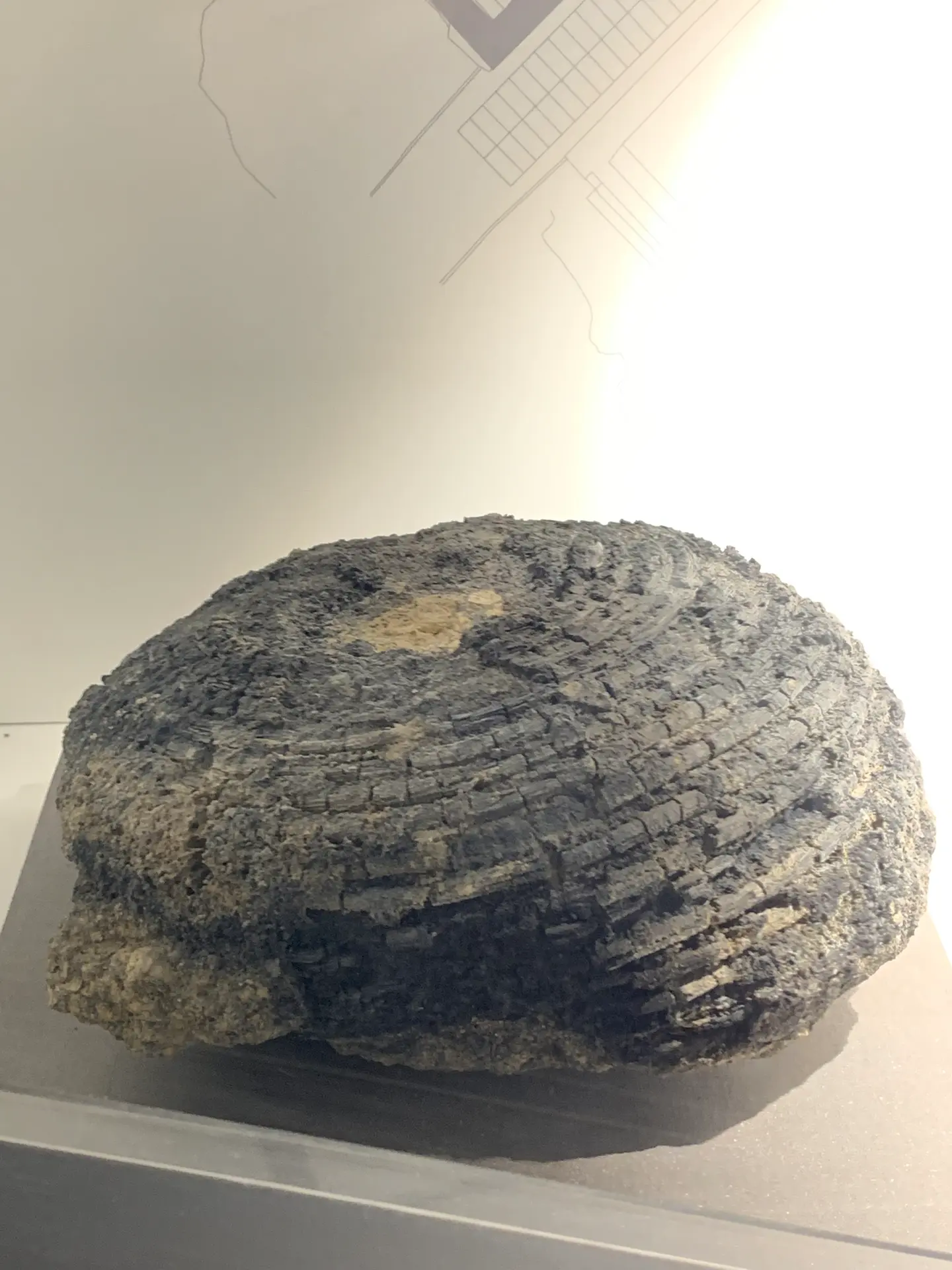
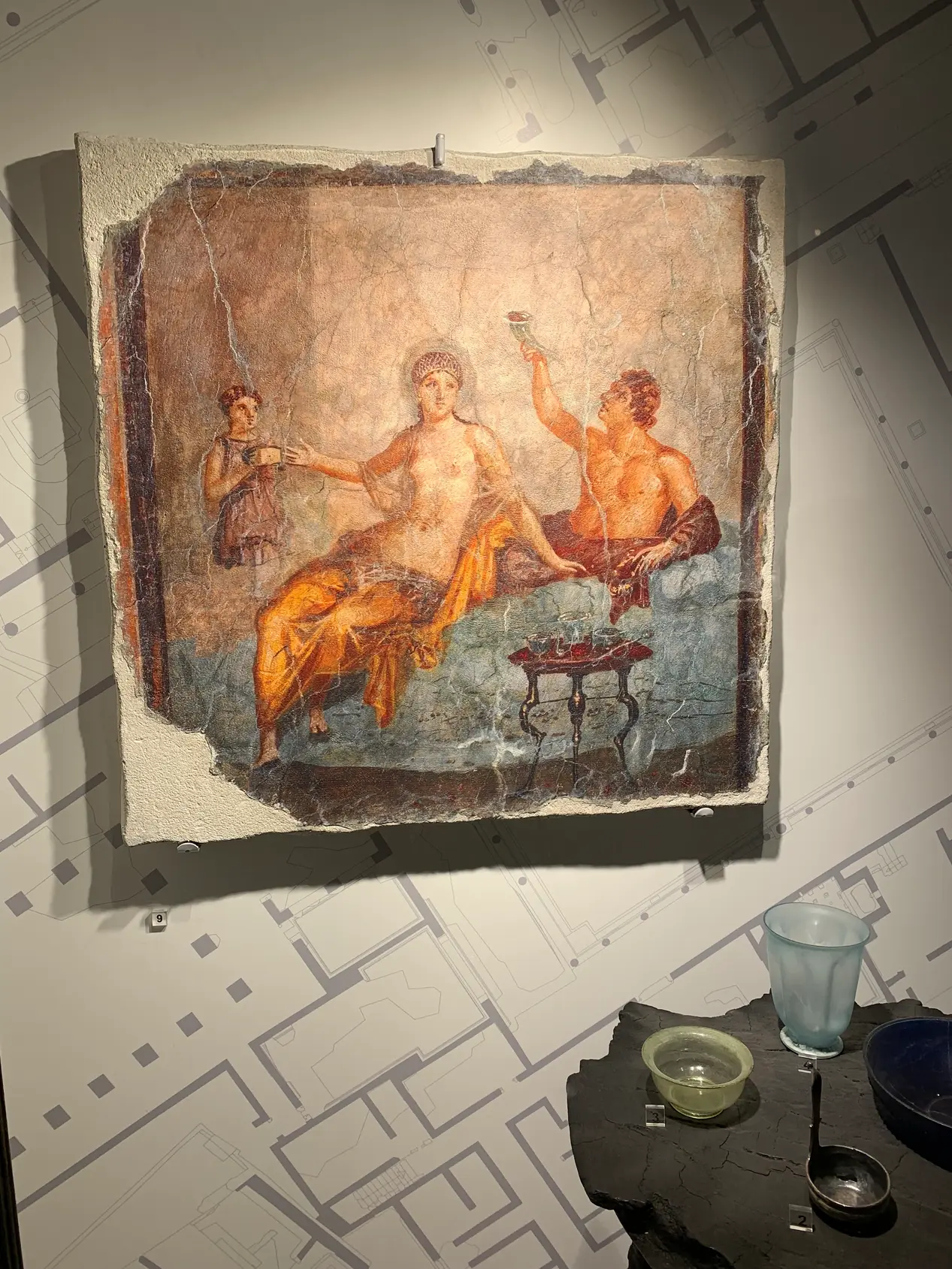
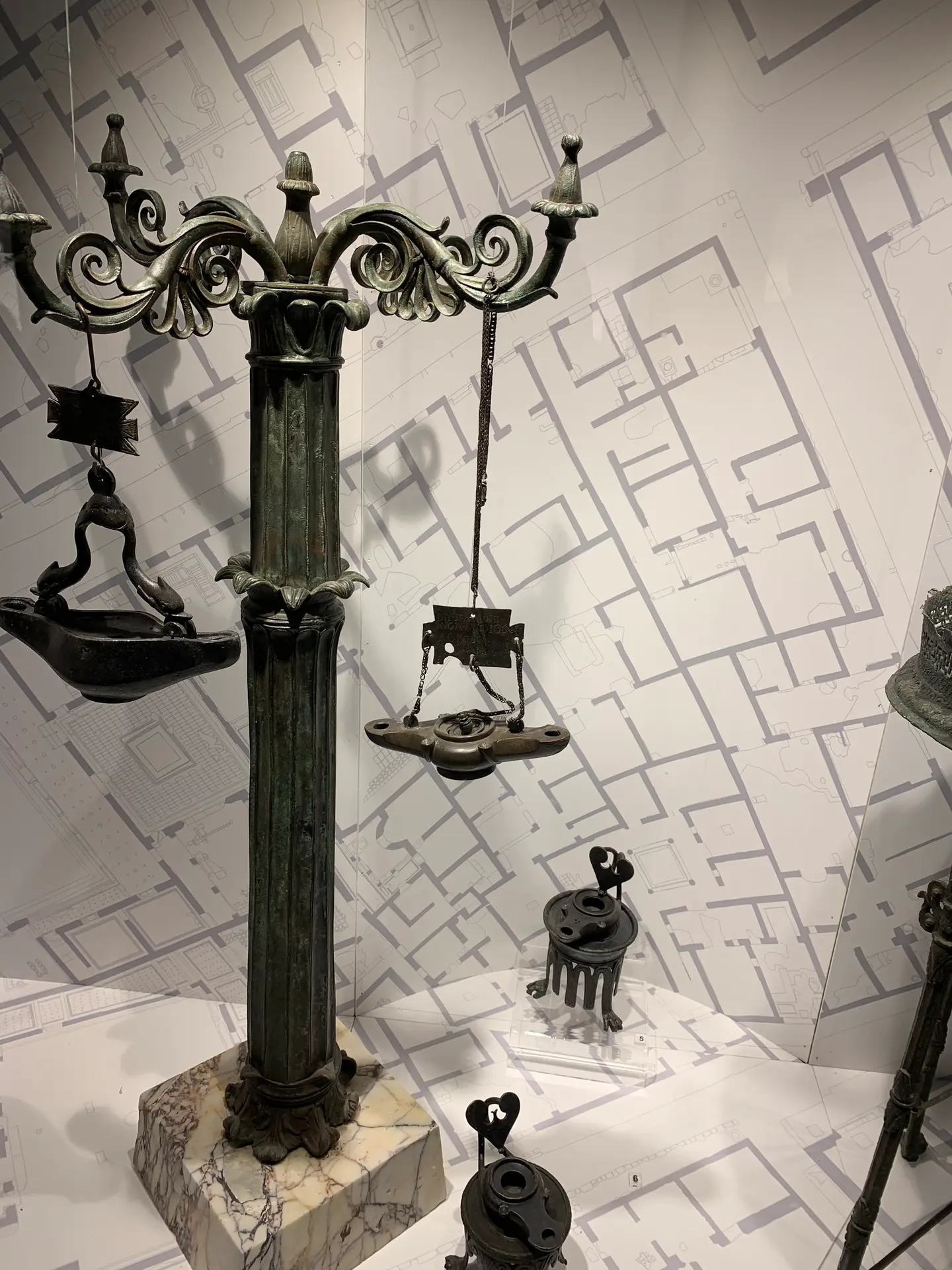
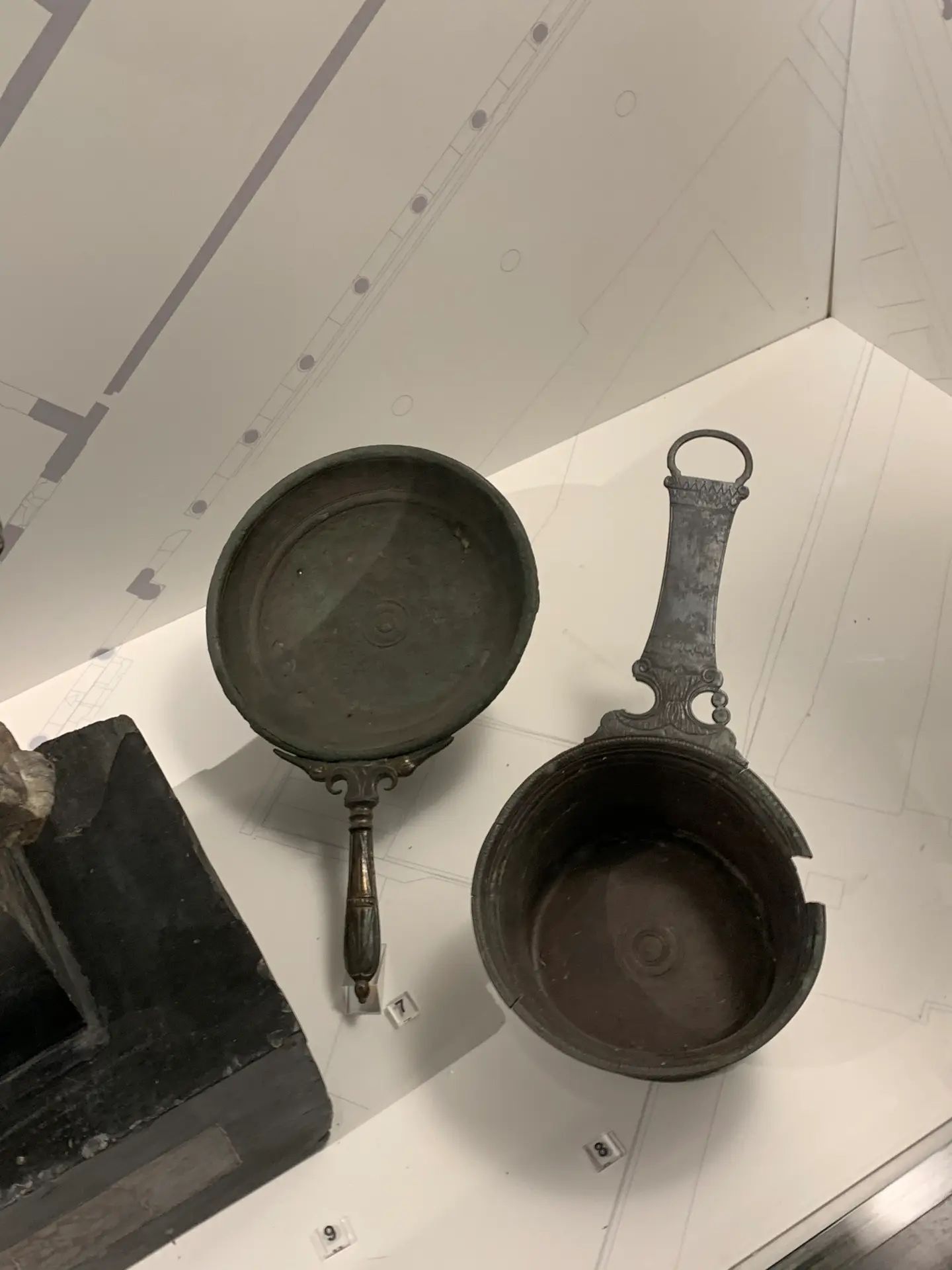
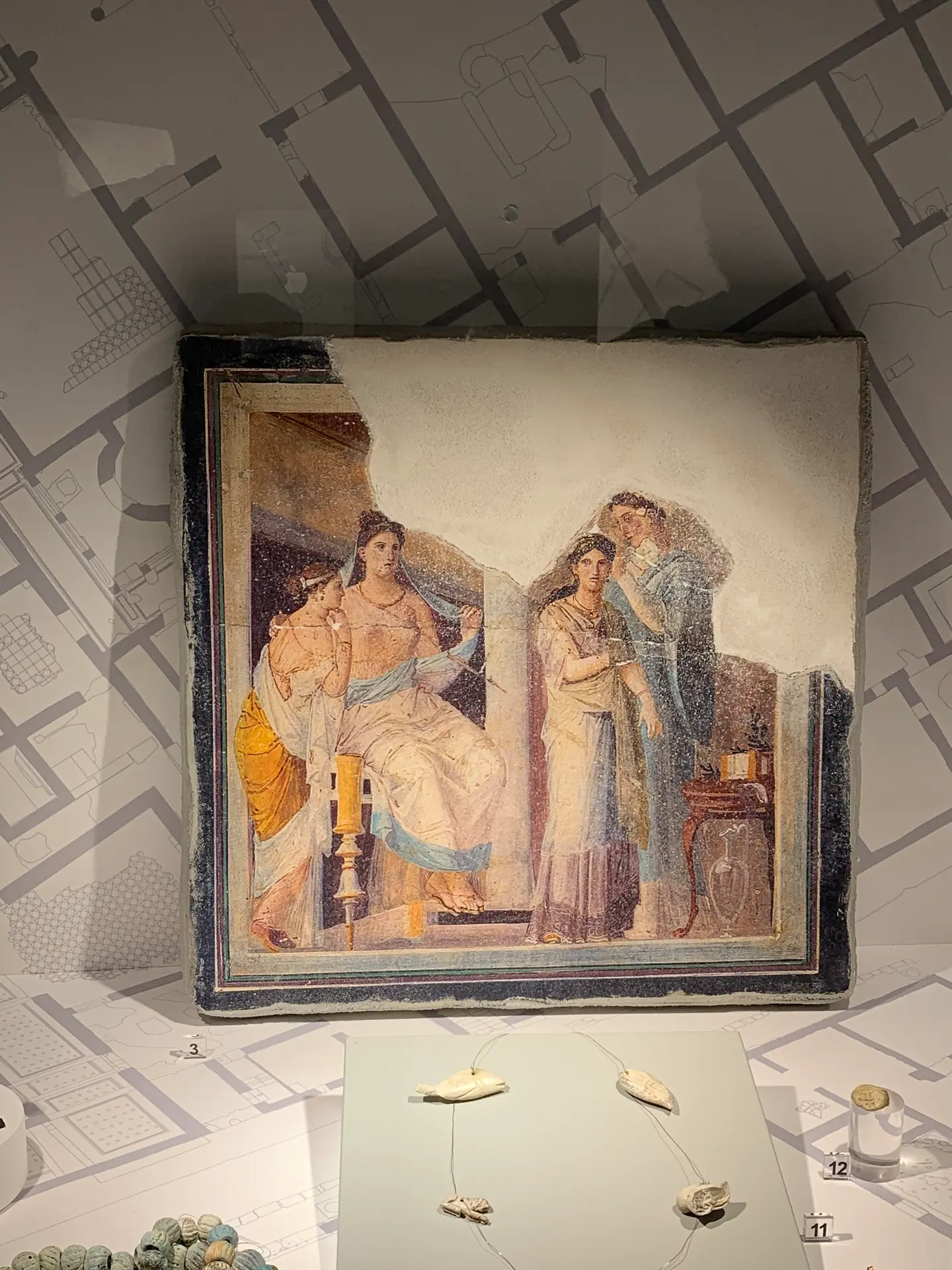
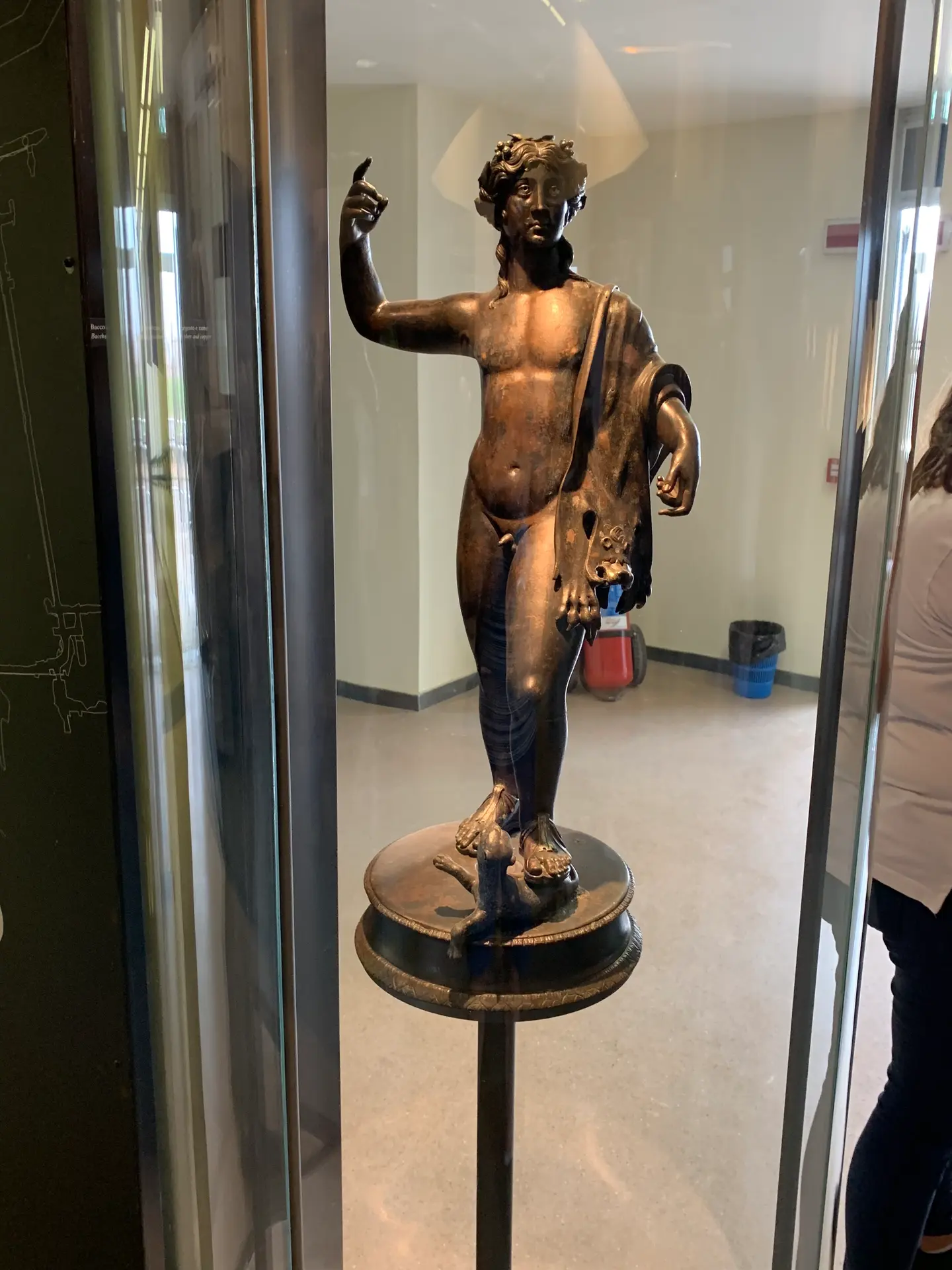
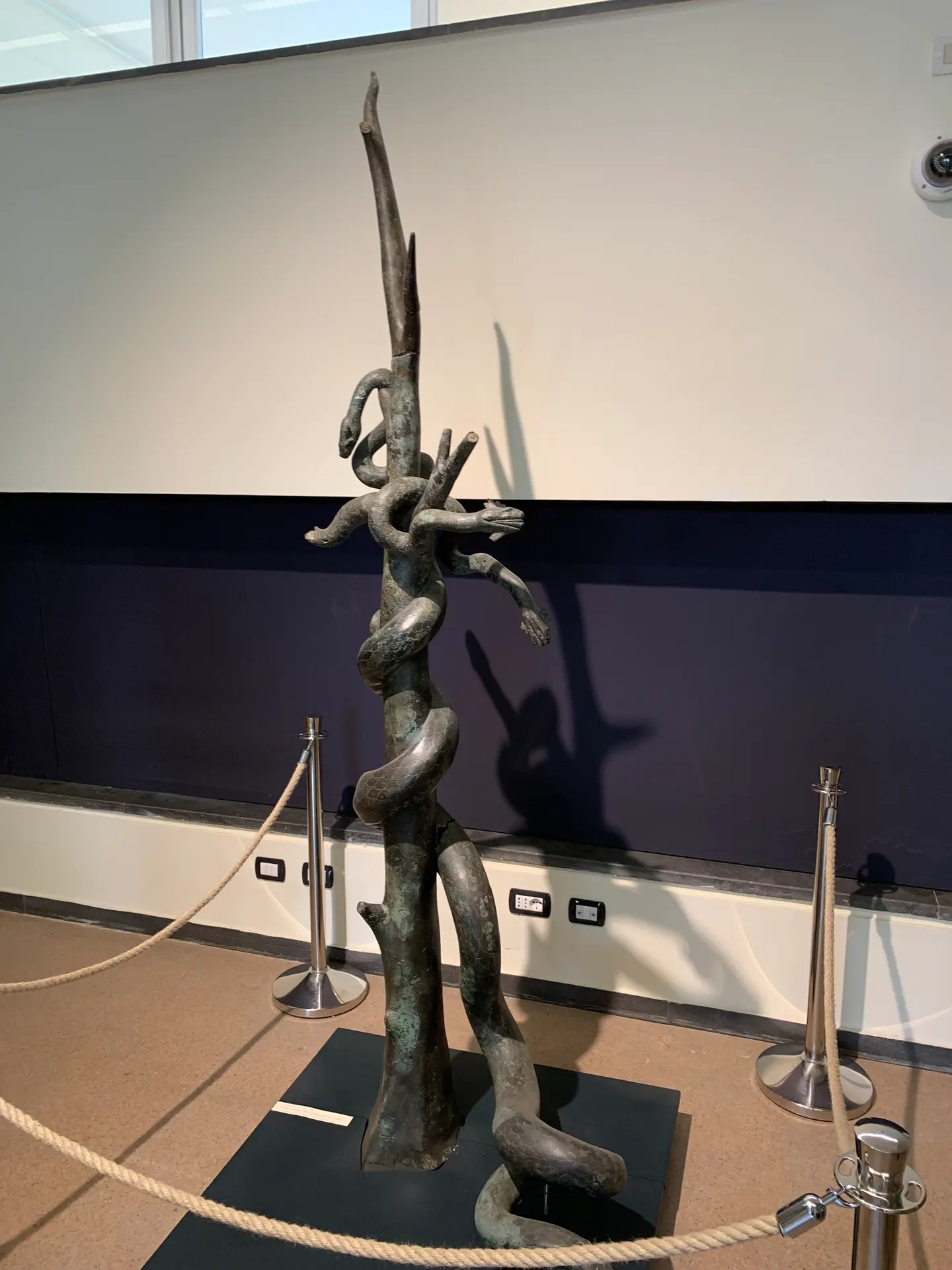
The BoatA Roman boat found overturned on the ancient beach, carbonised and lifted whole.The LoafA loaf of bread, carbonised in the oven and still showing the scoring where it was marked into portions.A Painted PanelA wall painting lifted from a house and hung at eye level, which is not how anybody in the house ever saw it.The CandelabrumA bronze lamp stand, tall, thin and completely intact.Bronze in the KitchenPans and jugs in bronze, the ordinary contents of a Roman kitchen.Two WomenA painted panel of two figures, the colour barely faded.The Bronze YouthA life-size bronze of a young man, one of the pieces that made the site famous in the eighteenth century.The BronzeA second bronze, lit hard against a dark wall the way the museum prefers.
Edges of the Dig
The Palaestra and the Tunnels
The parts of the town that are still underground, and how anyone found it.
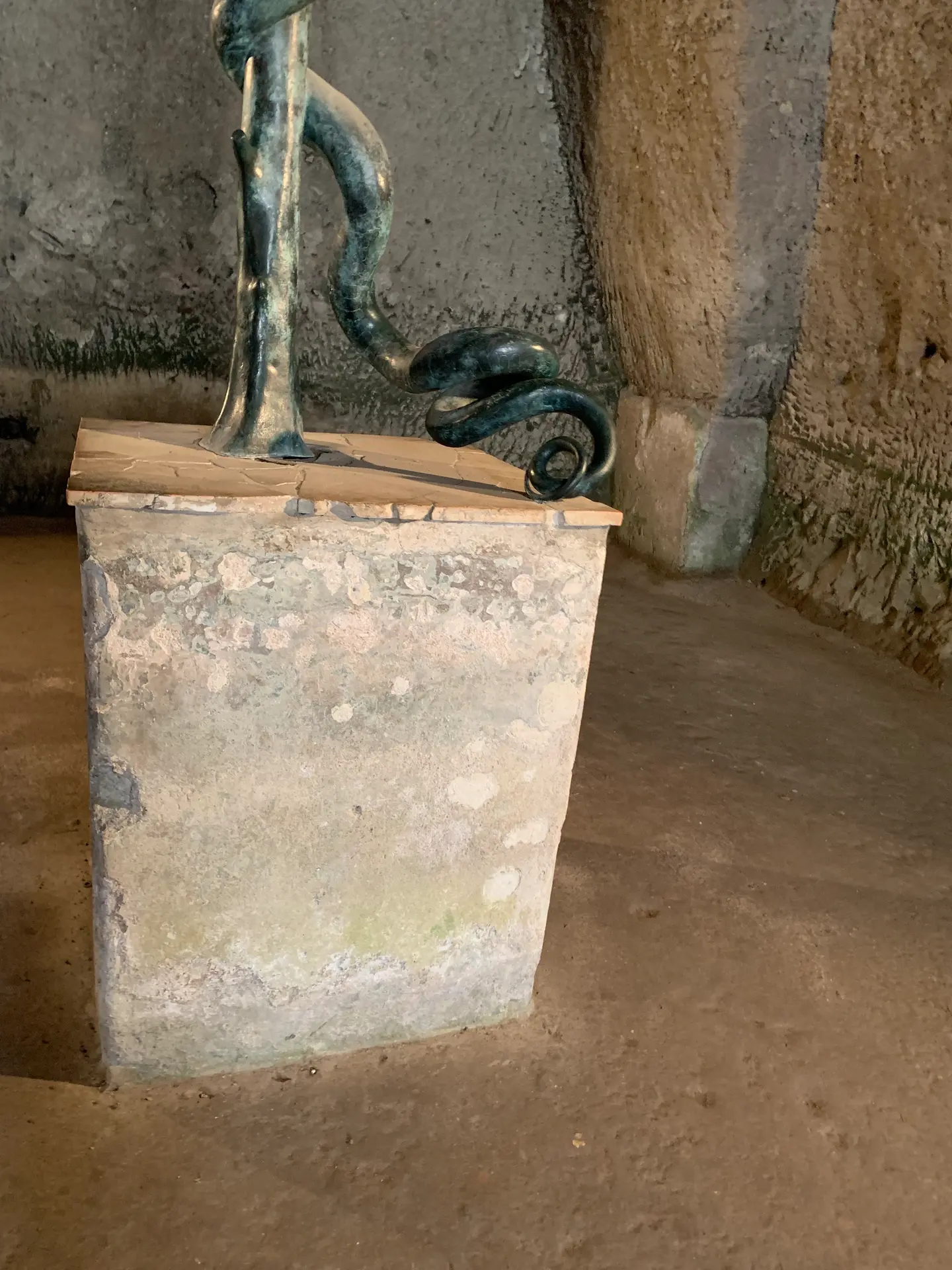
The PalaestraThe exercise ground, arcaded on one side, with the modern town sitting on the volcanic deposit directly above it.The TunnelHerculaneum was found by well diggers and then explored in the eighteenth century by cutting tunnels through the deposit. This is one of them, and most of the town is still beyond it.Bronze in the DarkA modern bronze standing in the cut, which is a decision the site made and not a Roman one.
Some links may earn us a commission at no cost to you. We only recommend places we would stay.
Local Tips
Look up. The reason to come here is the carbonised wood, and most of it is overhead: beams, upper floors, a mezzanine still sitting on its joists.
Do the boat sheds early or late. They are at the bottom of the site and the light in the arches is better when the sun is off them.
Give the Antiquarium an hour. The boat, the bronzes and the carbonised loaf are there, and most people walk past the door.
Pair it with Pompeii on separate days rather than the same one. They answer different questions and doing both in an afternoon does justice to neither.
Frequently Asked Questions
Herculaneum or Pompeii?
Pompeii for scale and fame, Herculaneum for preservation and calm. Herculaneum kept wood, upper floors and paint that Pompeii lost, and you can finish it in half the time.
How long does Herculaneum take?
Two to three hours for the site and another hour for the Antiquarium. It is a fraction of the size of Pompeii and much less tiring.
Is it worth it if I have already seen Pompeii?
Yes, and arguably more so. You arrive knowing what a Roman town looks like at ground level, and Herculaneum shows you the storey above it.
What is the deal with the skeletons?
Hundreds of people sheltered in the boat sheds on the beach and were killed by the heat of the flow. Their remains were found in the 1980s and some are still in place, at eye level and unscreened.
Join thousands who discovered the real Naples. Get our comprehensive guide with the best pizzerias, safety tips, day trip planning, and authentic local experiences.
Some links on this site are affiliate links. If you book through them, we may earn a commission at no additional cost to you. We only recommend tours and stays we would book ourselves.